Introduction
This guide explains how to determine the optimal projector screen size for a backyard setting and provides practical recommendations for selecting a screen that matches one’s viewing environment, budget, and portability requirements. Readers will learn the mathematics behind screen‑to‑distance ratios, the impact of aspect ratio on image quality, and the trade‑offs between fixed‑frame and inflatable designs. The article also showcases two highly rated Amazon products that illustrate the concepts discussed. By the end of the guide, one will be able to calculate a suitable screen size, compare options confidently, and implement best‑practice installation techniques.
Background and Context
Projector screen size is governed by three primary variables: throw distance, aspect ratio, and viewing distance. Throw distance refers to the space between the projector lens and the screen surface; most home‑theater projectors recommend a throw ratio between 1.5:1 and 2.5:1. Aspect ratio, commonly 16:9 for modern media, determines the width‑to‑height relationship of the projected image. Viewing distance, measured from the screen to the audience, influences perceived sharpness and immersion; a general rule of thumb suggests a distance of 1.5 to 2.5 times the screen width for comfortable viewing.
Understanding these variables enables a homeowner to avoid common pitfalls such as pixelation caused by excessive enlargement or insufficient immersion caused by an undersized screen. Additionally, environmental factors—including ambient light, wind, and surface stability—affect the choice between a rigid frame and an inflatable solution.
Calculating the Ideal Screen Size
Step 1: Measure the available throw distance. Use a tape measure to record the distance from the projector location to the intended screen plane. For example, a throw distance of 12 feet is typical for a backyard setup where the projector sits on a table and the screen is positioned on a stand.
Step 2: Apply the projector’s throw ratio. If the projector specifies a 1.8:1 throw ratio, divide the throw distance by the ratio (12 ft ÷ 1.8 ≈ 6.7 ft). The result represents the maximum screen width that the projector can fill without loss of image quality.
Step 3: Adjust for aspect ratio. Multiply the calculated width by the height factor for a 16:9 screen (height = width ÷ 1.78). A 6.7‑foot width yields a height of approximately 3.8 ft, resulting in a 6.7 × 3.8 ft screen, or roughly 96 inches diagonal.
Step 4: Consider viewing distance. If the primary seating area is 12 feet from the screen, the recommended diagonal range is 96 inches to 160 inches (1.5 × width to 2.5 × width). In this scenario, a 120‑inch diagonal screen offers a balanced experience.
Choosing Between Fixed‑Frame and Inflatable Screens
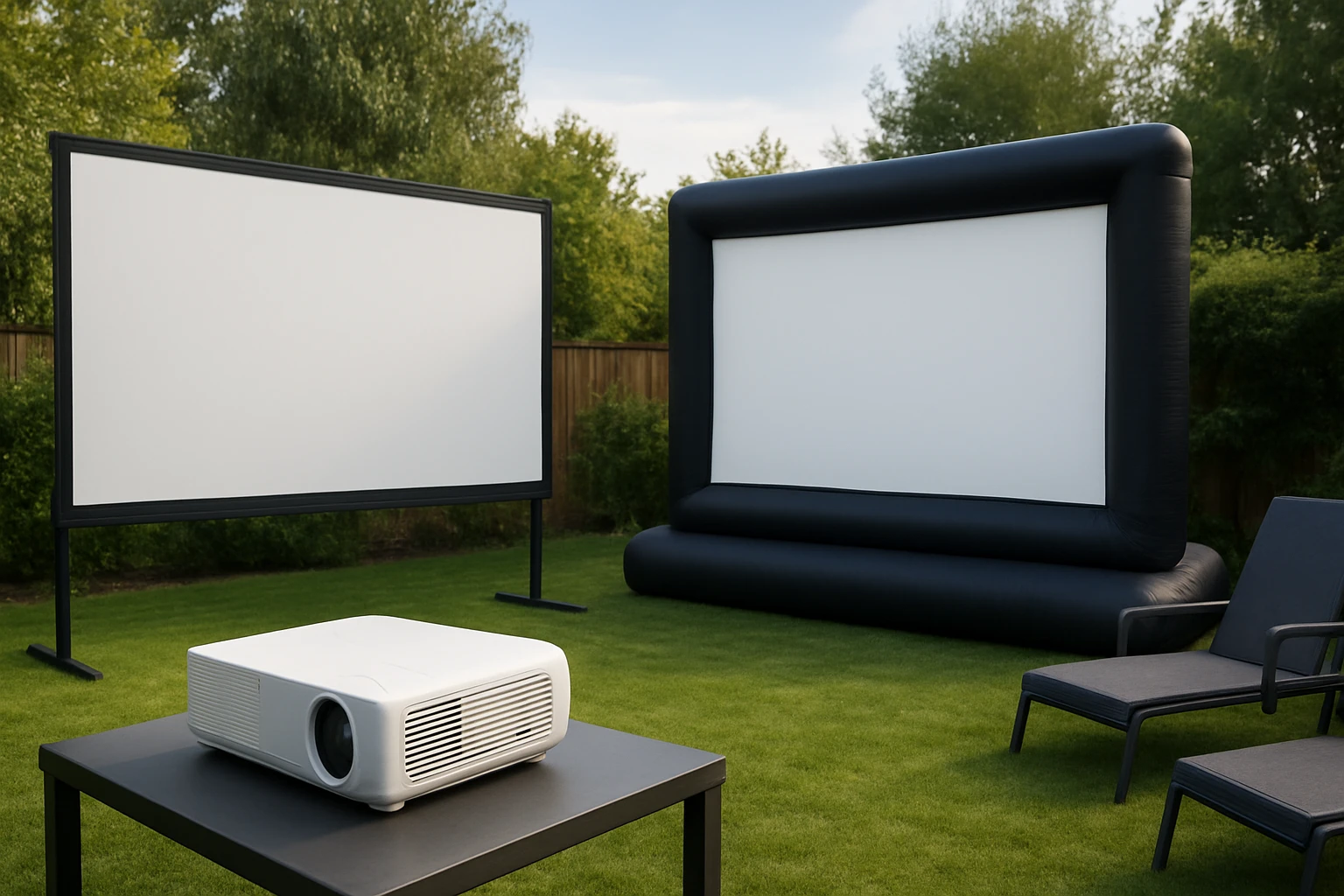
Fixed‑frame screens, such as the STWUI 120 Inch Projector Screen, provide a stable, tensioned surface that minimizes wrinkles and maintains consistent image geometry. They are ideal for semi‑permanent installations in backyards, patios, or dedicated home‑theater rooms. Key advantages include a robust metal chassis, a washable premium milk‑silk material, and a quick three‑minute assembly without tools.
Inflatable screens, exemplified by the GYUEM 18 Ft Inflatable Projector Screen, excel in portability and rapid deployment. They can be inflated in under two minutes, stored in a compact bag, and set up on uneven terrain using stakes and ropes. The double‑sided projection surface offers flexibility for front‑ or rear‑projection setups, making it suitable for large gatherings, festivals, or temporary events.
When selecting a screen, evaluate the following criteria:
- Stability Needs: Fixed frames deliver superior stability in windy conditions.
- Portability Requirements: Inflatable models are lighter and easier to transport.
- Budget Constraints: Fixed‑frame options typically cost less per square foot than high‑quality inflatables.
- Installation Frequency: If the screen will be set up only a few times per year, an inflatable design may provide the best cost‑benefit ratio.
Product Recommendations
For users who have measured a 12‑foot throw distance and desire a 120‑inch diagonal screen, the STWUI 120 Inch Projector Screen satisfies the technical requirements while offering a sturdy chassis, wrinkle‑free surface, and a convenient carry bag. It holds a rating of 4.5 stars from 1,102 reviews and is priced at $69.99, representing a strong value proposition for permanent or semi‑permanent backyard installations.
For larger gatherings where a screen exceeding 100 inches is desirable, the GYUEM 18 Ft Inflatable Projector Screen expands the viewing area to 14 × 11.5 feet (approximately 180‑inch diagonal). Its double‑sided projection cloth, quiet electric blower, and easy‑inflation design make it a versatile choice for seasonal parties. The product maintains a 4.6‑star rating from 1,153 reviews and is priced at $119.99.
Comparison and Selection Guide
| Feature | STWUI 120 Inch Fixed Frame | GYUEM 18 Ft Inflatable |
|---|---|---|
| Screen Size (Diagonal) | 120 inches (16:9) | ≈180 inches (16:9) |
| Material | Premium milk‑silk, washable, wrinkle‑free | Double‑sided white cloth, detachable |
| Setup Time | ≈3 minutes, no tools required | ≈2 minutes with electric blower |
| Portability | Includes carry bag, weighs ~15 lb | Lightweight inflatable, stored in bag |
| Stability in Wind | Weighted chassis, optional floor nails | Sturdy frame with stakes, but wind can affect |
| Price | $69.99 | $119.99 |
| Customer Rating | 4.5/5 (1,102 reviews) | 4.6/5 (1,153 reviews) |
Readers should match these attributes to their specific use case. A family that enjoys weekly backyard movies may prioritize durability and low cost, making the STWUI screen a logical choice. Conversely, a community organizer planning seasonal festivals may value the larger display area and rapid deployment of the GYUEM inflatable model.
Best Practices & Tips for Outdoor Screen Installation
- Assess Ambient Light: Position the screen away from direct sunlight or install shade structures to preserve contrast and color fidelity.
- Secure the Screen Properly: For fixed frames, use the provided floor‑nail holes or weighted base; for inflatables, stake the frame firmly and double‑check the blower connection.
- Maintain a Flat Surface: Uneven ground can cause wobble; consider a portable platform or leveling mats.
- Optimize Audio: Place speakers at ear level and consider a wireless sound system to avoid cable clutter.
- Clean the Screen Regularly: Use a soft, dry cloth for the inflatable’s white cloth and a mild detergent for the milk‑silk surface of the fixed frame.
Frequently Asked Questions
1. How far should the projector be from a 120‑inch screen? Using a typical throw ratio of 1.8:1, the projector should be positioned approximately 18 feet away to fill the screen without distortion.
2. Can I use the STWUI screen for rear projection? Yes; the screen material supports both front and rear projection, allowing flexibility in projector placement.
3. Is the GYUEM inflatable screen suitable for windy evenings? The screen includes a sturdy frame and ground stakes, but for strong gusts it is advisable to add additional weight or anchor points.
4. How do I store the screens after use? Both products come with compact storage bags; ensure the screen is dry before folding to prevent mildew.
5. Do I need a special projector for outdoor use? A projector with high lumen output (2,500 lumens or more) is recommended for outdoor environments with ambient light.
6. Can I project a 4K signal on these screens? Both screens support 4K resolution; the limiting factor is the projector’s native resolution and brightness.
7. What is the warranty coverage? The STWUI screen offers 24/7 professional after‑sales service, while the GYUEM screen includes a standard manufacturer warranty; refer to the seller’s policy for details.
Conclusion
Calculating the appropriate backyard projector screen size involves understanding throw distance, aspect ratio, and viewing distance. By applying the step‑by‑step method outlined above, one can select a screen that delivers optimal image quality and viewer comfort. The comparison between the STWUI 120 Inch Fixed Frame and the GYUEM 18 Ft Inflatable illustrates how different designs meet distinct needs, from permanent family setups to temporary event installations. Following the best‑practice tips will further ensure a reliable, immersive outdoor cinema experience.
Products Featured in This Guide
STWUI 120 Inch Projector Screen
Price: $69.99 | Rating: 4.5/5 (1,102 reviews)
Featured for its sturdy weighted chassis, wrinkle‑free milk‑silk surface, and quick three‑minute setup, making it ideal for semi‑permanent backyard installations.
GYUEM 18 Ft Inflatable Projector Screen
Price: $119.99 | Rating: 4.6/5 (1,153 reviews)
Featured for its large double‑sided projection surface, rapid inflation with a quiet blower, and portable design, suitable for large gatherings and temporary events.
Frequently Asked Questions
How do I calculate the ideal backyard projector screen size?
Multiply the throw distance by the projector's recommended throw ratio (1.5‑2.5) to get the image width, then adjust for aspect ratio.
What throw ratio should I look for in a home‑theater projector?
Most projectors work best with a throw ratio between 1.5:1 and 2.5:1, meaning the screen width is 1.5‑2.5 times the distance from lens to screen.
Does the aspect ratio affect screen size selection?
Yes; a 16:9 aspect ratio determines the height once you set the width, so choose a width that fits your space and calculate height accordingly.
How far should viewers sit from the screen for optimal image quality?
A comfortable viewing distance is roughly 1.5‑2.5 times the screen diagonal, depending on personal preference and content type.
What are the pros and cons of fixed‑frame versus inflatable screens for outdoor use?
Fixed‑frame screens offer a taut, permanent surface with better image stability, while inflatable screens are portable and easy to set up but may be more vulnerable to wind and require a blower.