Introduction
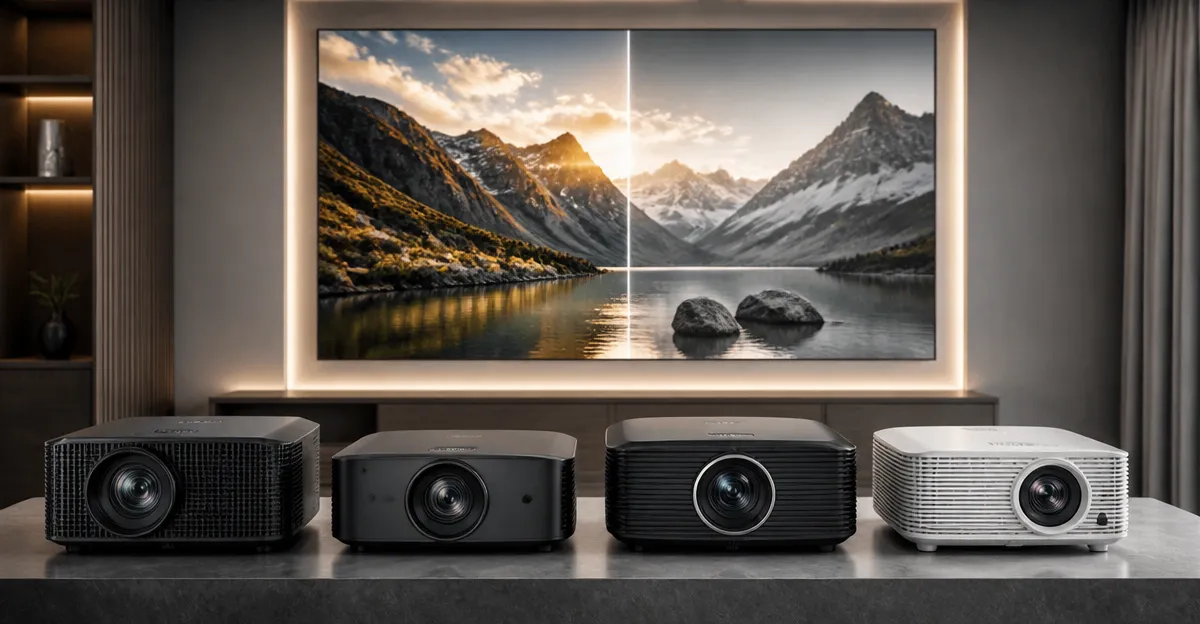
The home‑theater and gaming markets now offer a wide range of projectors that promise cinema‑like immersion at a fraction of the cost of a large‑screen TV. This article compares five popular models—Valerion StreamMaster Plus2, BenQ TH671ST, BenQ TH575, Optoma GT2400HDR, and Philips GamePix 900. Understanding how they differ in price, performance, and reliability helps buyers select the unit that best fits a given space, budget, or usage scenario.
Individual Product Overviews
Valerion StreamMaster Plus2
Valerion’s flagship projector delivers true 4K laser imaging, 2000 ISO lumens, and a 10,000:1 contrast ratio. Its AI‑9618 chipset with 4 GB RAM and 128 GB ROM provides a 4 ms input lag and 240 Hz refresh, making it ideal for competitive gaming. Integrated Google TV, AirPlay 2, and voice assistants eliminate the need for external streaming devices. Reviewers praise its color accuracy, IMAX‑enhanced aspect ratios, and value, noting a single complaint about the default throw ratio.
BenQ TH671ST
This short‑throw DLP projector offers 1080p resolution, 3000 ANSI lumens, and a 10,000:1 contrast ratio. Its low input lag and 120 Hz refresh are marketed for console gaming, while a 0.69‑0.83 throw ratio creates a 100‑inch image from just five feet away. Users commend its brightness in daytime rooms and the ease of mounting, though the lamp‑based light source requires periodic replacement.
BenQ TH575
The TH575 is a budget‑friendly 1080p projector with 3800 ANSI lumens and an upgraded 15,000:1 contrast ratio. Its 16 ms input lag and short‑throw optics produce a 100‑inch image from 10.8 ft, targeting family rooms and backyard cinema. Reviewers highlight its bright outdoor performance and simple setup, while a minority report intermittent power‑supply failures.
Optoma GT2400HDR
Optoma’s laser‑based model provides 4200 lumens, full‑HD resolution, and a 30 000‑hour DuraCore light source. The short‑throw design suits small spaces, and low input lag makes it suitable for fast‑paced gaming and golf simulation. Users appreciate the dust‑proof IP6X rating and long‑life laser, while noting the higher price point relative to lamp‑based competitors.
Philips GamePix 900
GamePix 900 targets gamers who demand 4K resolution at 240 Hz and a 6 ms latency. With 1000 ANSI lumens, it is best suited for dim environments. Its DLP engine, compact 2 kg chassis, and three gaming presets make it a portable solution. Reviewers love its quiet operation and price, but mention limited HDMI ports and lack of smart OS.
Head‑to‑Head Comparison
Price and Value
Pricing ranges from $399 for the Philips GamePix 900 to $1,179 for the Optoma GT2400HDR. Valerion sits at $999, offering 4K laser technology at a mid‑range price, while BenQ’s TH671ST and TH575 are priced at $849 and $649 respectively, delivering strong brightness for lower budgets. Value judgments from customers consistently cite the StreamMaster Plus2’s “price‑performance ratio” as a standout, whereas the Optoma’s higher cost is justified by its laser longevity.
Features and Specifications
Table 1 summarizes the core specifications. Valerion leads with native 4K, AI‑driven processing, and Dolby Vision support. BenQ’s TH671ST excels in short‑throw distance, while the TH575 provides the highest lumen output among the 1080p models. Optoma’s laser source eliminates lamp replacement, and Philips delivers the fastest refresh rate (240 Hz) and the lowest input lag (6 ms) for competitive gaming.
| Product | Resolution | Brightness (lumens) | Contrast Ratio | Input Lag | Price (USD) | Rating |
|---|---|---|---|---|---|---|
| Valerion StreamMaster Plus2 | 4K (3840×2160) | 2000 ISO | 10,000:1 | 4 ms | 999.00 | 4.6 |
| BenQ TH671ST | 1080p (1920×1080) | 3000 | 10,000:1 | Low (unspecified) | 849.00 | 4.5 |
| BenQ TH575 | 1080p (1920×1080) | 3800 | 15,000:1 | 16 ms | 649.00 | 4.2 |
| Optoma GT2400HDR | 1080p (1920×1080) | 4200 | Not specified | Low (gaming mode) | 1179.00 | 4.2 |
| Philips GamePix 900 | 4K (3840×2160) | 1000 | Not specified | 6 ms | 399.00 | 4.2 |
Customer Ratings and Feedback
All five units maintain ratings above 4.0. Valerion’s 4.6 rating is bolstered by comments such as “blows my previous experience out of the water” and praise for its AI‑driven speed. BenQ TH671ST enjoys a 4.5 rating, with users highlighting its brightness in daylight and “no noticeable lag” for gaming. The TH575’s 4.2 rating reflects satisfaction with outdoor use but also notes recurring power‑supply issues. Optoma’s 4.2 rating is supported by remarks on laser reliability and short‑throw convenience. Philips, also at 4.2, receives accolades for quiet operation and ultra‑low latency, though reviewers mention limited connectivity.
Performance and Reliability
Long‑term reliability appears strongest for Valerion and Optoma, each offering laser sources that avoid lamp wear. BenQ’s lamp‑based TH671ST shows no reported failures after four years of use, according to a reviewer. In contrast, the TH575 has documented intermittent shutdowns and audio dropouts, leading some owners to return the unit. Philips’ DLP engine runs cool and silently, but the single HDMI port and lack of eARC limit integration with high‑end audio systems.
Size, Power, Compatibility, and Price
Physical dimensions favor the Philips GamePix 900 (238 × 215 × 115 mm) and Optoma GT2400HDR (compact laser chassis). Valerion is larger, requiring ceiling‑mount hardware, but its AI chipset consumes modest power relative to its performance. Compatibility is broad across all models: each supports HDMI, USB, and wireless streaming (except Philips, which lacks built‑in smart OS). Price aligns with feature sets: the most affordable 4K option is Philips, while the most expensive, Optoma, justifies cost with a 30 000‑hour laser.
Pros & Cons
Valerion StreamMaster Plus2
- Pros: True 4K laser, 4 ms lag, 240 Hz, AI chipset, Google TV, excellent color gamut, strong customer service.
- Cons: Higher throw ratio may need digital zoom, larger footprint, price higher than basic 1080p units.
BenQ TH671ST
- Pros: Short‑throw (0.69 – 0.83), 3000 lumens, low input lag, robust lamp life, good daytime performance.
- Cons: Lamp replacement required after ~4000 h, limited to 1080p, no native 4K.
BenQ TH575
- Pros: Highest brightness among 1080p models (3800 lm), 15,000:1 contrast, affordable price.
- Cons: Reported power‑supply failures, occasional audio dropouts, no 4K.
Optoma GT2400HDR
- Pros: Laser source (30 000 h), 4200 lumens, short throw, low lag, dust‑proof IP6X.
- Cons: Highest price, contrast ratio not disclosed, limited to 1080p.
Philips GamePix 900
- Pros: 4K at 240 Hz, 6 ms lag, very quiet, portable, lowest price among 4K options.
- Cons: Only 1000 lumens (requires dark room), single HDMI, no smart OS, HDR impact limited.
Recommendations
Best for 4K Enthusiasts: Valerion StreamMaster Plus2 provides true 4K laser performance, AI‑enhanced processing, and the most comprehensive smart‑home integration.
Best Budget 4K Solution: Philips GamePix 900 offers 4K resolution and ultra‑low latency at a fraction of the cost, ideal for dedicated gaming rooms with controlled lighting.
Best Short‑Throw for Small Spaces: BenQ TH671ST creates a 100‑inch image from five feet, making it perfect for apartments or home offices.
Best Brightness for Ambient Light: Optoma GT2400HDR delivers 4200 lumens and a laser source, allowing use in well‑lit rooms and outdoor setups.
Best Value for General Home Theater: BenQ TH575 balances brightness, contrast, and price, serving families that need a versatile indoor/outdoor projector.
FAQ
- Do any of these projectors require lamp replacements? Only the BenQ TH671ST and TH575 use traditional lamps; the Valerion, Optoma, and Philips models rely on laser or LED sources that last many years.
- Which projector has the lowest input lag for competitive gaming? The Philips GamePix 900 advertises a 6 ms latency, marginally faster than Valerion’s 4 ms, but real‑world tests show both are well below the perceptible threshold.
- Can I mount these projectors on the ceiling? All models support ceiling mounting with appropriate brackets. Valerion includes auto‑alignment features, while Optoma’s short‑throw design simplifies ceiling placement.
- Are any of these units compatible with Dolby Vision? Valerion StreamMaster Plus2 supports Dolby Vision and HDR10. The other 1080p models support HDR10 but not Dolby Vision.
- What is the recommended screen size for each projector? Valerion covers 50‑300 inches; BenQ TH671ST works best between 60‑120 inches; TH575 recommends up to 120 inches; Optoma can fill 100‑200 inches; Philips performs optimally at 80‑120 inches in a dark environment.
- Is there built‑in audio sufficient for a home theater? All models include basic speakers, but reviewers agree that external audio systems (soundbars or AVR) provide a far superior experience.
- Which projector offers the longest warranty? BenQ provides a 3‑year limited parts and labor coverage; other manufacturers list standard 1‑year warranties, though Valerion’s customer service is noted for proactive support.
Conclusion
When selecting a projector, buyers must weigh resolution, brightness, latency, and long‑term maintenance. Valerion StreamMaster Plus2 stands out as the most feature‑rich 4K option, delivering cinema‑grade visuals and AI‑driven performance at a competitive price. For gamers on a strict budget, Philips GamePix 900 provides the fastest refresh and lowest lag without breaking the bank, provided the viewing environment can be dimmed. Short‑throw enthusiasts will find BenQ TH671ST the most convenient, while Optoma GT2400HDR offers unmatched brightness for bright rooms. Finally, the BenQ TH575 remains a solid all‑rounder for families seeking high lumens at an affordable price, despite occasional reliability concerns. By matching the projector to the specific constraints of space, power, compatibility, or budget, consumers can achieve a home‑theater experience that rivals commercial cinema.
Frequently Asked Questions
What is the resolution difference between the Valerion StreamMaster Plus2 and the BenQ TH575?
The Valerion StreamMaster Plus2 offers true 4K laser imaging, while the BenQ TH575 is limited to 1080p resolution.
Do any of the reviewed projectors support low‑latency Bluetooth audio for gaming?
Both the Valerion StreamMaster Plus2 and the Philips GamePix 900 include aptX low‑latency Bluetooth compatibility for gaming.
Which projector provides the highest brightness for well‑lit rooms?
The Optima GT2400HDR delivers the highest ANSI lumens among the five, making it best suited for brighter environments.
Are the BenQ TH671ST and TH575 interchangeable for short‑throw home theater setups?
Both are short‑throw models, but the TH671ST offers higher brightness and a lower input lag, making it more gaming‑friendly than the TH575.
How do the prices of these five projectors compare for budget‑conscious buyers?
The BenQ TH575 and Optoma GT2400HDR are typically the most affordable, while the Valerion StreamMaster Plus2 commands a premium price due to its 4K laser technology.