Introduction
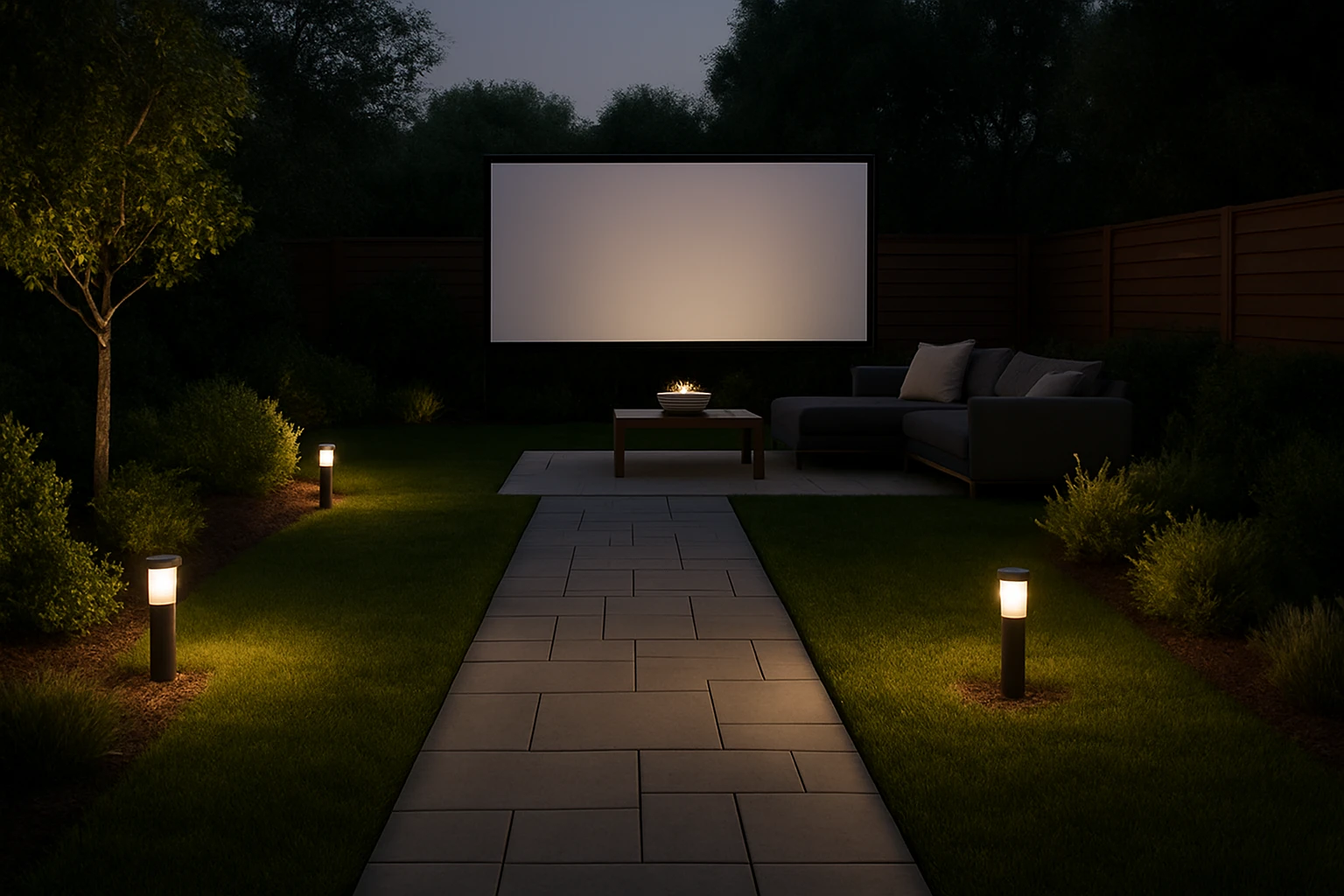
One of the most memorable ways to enjoy a warm summer evening is to host a backyard movie night under a subtle canopy of light. This guide explains how to design a low‑light pathway lighting layout that provides safety, ambience, and cinematic charm without overwhelming the dark sky. Readers will learn how to assess their space, choose appropriate solar fixtures, install them efficiently, and troubleshoot common issues. The result is a polished, budget‑friendly lighting plan that enhances the viewing experience while conserving energy.
What You’ll Need
- Solar ground lights for perimeter illumination – SOLPEX Solar Ground Lights
- Solar pathway lights for guiding guests – ELECLINK Solar Pathway Lights
- Measuring tape, garden shovel, and a level
- Garden hose or string to mark the intended path
- Optional: rechargeable battery pack for emergency power
Step 1: Assess the Viewing Area and Define the Pathway
Begin by measuring the distance between the screen location and the primary seating area. Mark the intended walking route with a garden hose or a lightweight string, ensuring the path is wide enough for two people to pass comfortably. Identify any obstacles such as flower beds, low fences, or uneven terrain that may require additional lighting or a slight reroute. This assessment creates a clear blueprint that guides the placement of each solar fixture.
Step 2: Choose Lighting Zones and Light Levels
Divide the pathway into three zones: entrance, midway, and exit. The entrance zone benefits from brighter, more visible fixtures to welcome guests, while the midway zone should employ softer illumination to preserve the cinematic atmosphere. The exit zone requires a modest glow to guide guests safely back to the house after the film ends. Selecting the appropriate brightness for each zone prevents glare on the screen and maintains a low‑light ambience.
Step 3: Install SOLPEX Solar Ground Lights for Perimeter Lighting
Place the SOLPEX Solar Ground Lights along the outer edge of the viewing area to delineate the space without spilling light onto the screen. Each unit measures 3.9 inches high by 3.3 inches in diameter and features an intelligent sensor that automatically turns on at dusk and off at dawn, eliminating the need for manual operation. The IP65 waterproof rating ensures reliable performance in rain, snow, or extreme heat, making these lights suitable for any climate. Install the lights by inserting the base into the soil and securing with the included screws if mounting on a deck or fence is desired; this flexibility allows for a tidy appearance even on hard‑scaped surfaces.
Step 4: Add ELECLINK Solar Pathway Lights to Guide the Walk
For the central walkway, use the ELECLINK Solar Pathway Lights. These fixtures incorporate a modern transparent stripe shade and high‑powered LED tungsten filament that delivers a soft, even glow for up to 12 hours after a full day of charging. The built‑in 800 mAh Ni‑MH battery and monocrystalline solar panel provide a 20 % higher energy conversion rate than standard panels, ensuring consistent illumination even on overcast days. The IP65 rating protects the lights from water and UV degradation, allowing them to endure harsh weather without loss of performance. Install each light by pushing the stake into the ground at a 45‑degree angle for stability; the adjustable height option lets you raise the pole for better visibility over tall grass.
Step 5: Align Lights with the Screen and Test the Layout
After all fixtures are in place, turn on the lights at dusk to evaluate the overall effect. Walk the pathway to verify that no dark spots remain and that the brightness does not reflect onto the screen surface. If any area appears too bright, consider raising the height of the ELECLINK lights or adding a small shade to diffuse the beam. Conversely, if a section is dim, add an extra SOLPEX ground light to fill the gap. This iterative testing ensures a balanced lighting scheme that enhances safety while preserving the cinematic darkness.
Step 6: Enhance Ambience with Optional Accessories
To further enrich the movie‑night atmosphere, add low‑profile LED string lights along the perimeter fence or drape them over nearby trees. Choose battery‑operated strips to avoid additional wiring and to keep the power source entirely solar‑based. Position a portable speaker near the screen, but keep it away from the lights to prevent acoustic interference. These accessories complement the primary pathway lighting without detracting from the low‑light design.
Tips & Pro Tips
- Place solar fixtures in locations that receive at least six hours of direct sunlight per day; shading from trees or buildings can reduce charging efficiency.
- For uneven terrain, use a small level to ensure each stake is planted at the same depth, preventing tilting that could affect the light beam.
- Clean the solar panels regularly with a soft cloth to remove dust and pollen, which can diminish energy absorption.
- Consider using a garden hose to create a temporary water‑proof barrier around the base of each light during heavy rain, extending the lifespan of the fixtures.
Troubleshooting
Problem: Lights do not turn on at dusk.
Solution: Verify that the light sensor is not obstructed by foliage or debris. Reset the fixture by briefly covering the solar panel with a dark cloth for ten seconds, then uncover it to trigger the auto‑on function.
Problem: Reduced brightness after several weeks.
Solution: Inspect the battery compartment for corrosion. If corrosion is present, clean with a cotton swab dipped in isopropyl alcohol and allow the battery contacts to dry before re‑installing.
Conclusion
By following this systematic approach, one can create a low‑light pathway that safeguards guests, enhances the cinematic experience, and operates sustainably with solar power. The combination of SOLPEX Solar Ground Lights for perimeter definition and ELECLINK Solar Pathway Lights for guided walking delivers a reliable, weather‑proof solution that requires minimal maintenance. Implement the tips, test the layout, and enjoy countless evenings of outdoor entertainment under a thoughtfully illuminated sky.
Products Mentioned in This Guide
Frequently Asked Questions
How many solar pathway lights are needed for a typical backyard movie night?
Plan for a light every 6‑8 feet along the walk to ensure even illumination without over‑lighting.
Can I use regular LED lights instead of solar fixtures for a low‑light layout?
Yes, but solar lights save energy and avoid wiring, making them ideal for temporary or budget‑friendly setups.
What is the best way to position lights to avoid glare on the screen?
Mount lights low and point them downward or use shielded fixtures, keeping them at least 10‑12 feet from the screen edge.
How do I troubleshoot dimming or non‑functioning solar lights?
Check the battery charge, clean the solar panel, and ensure the sensor isn’t blocked by debris or shadows.
Is a rechargeable battery pack necessary for a backyard movie night?
It’s optional but useful for backup power if a cloudy night reduces solar charging.