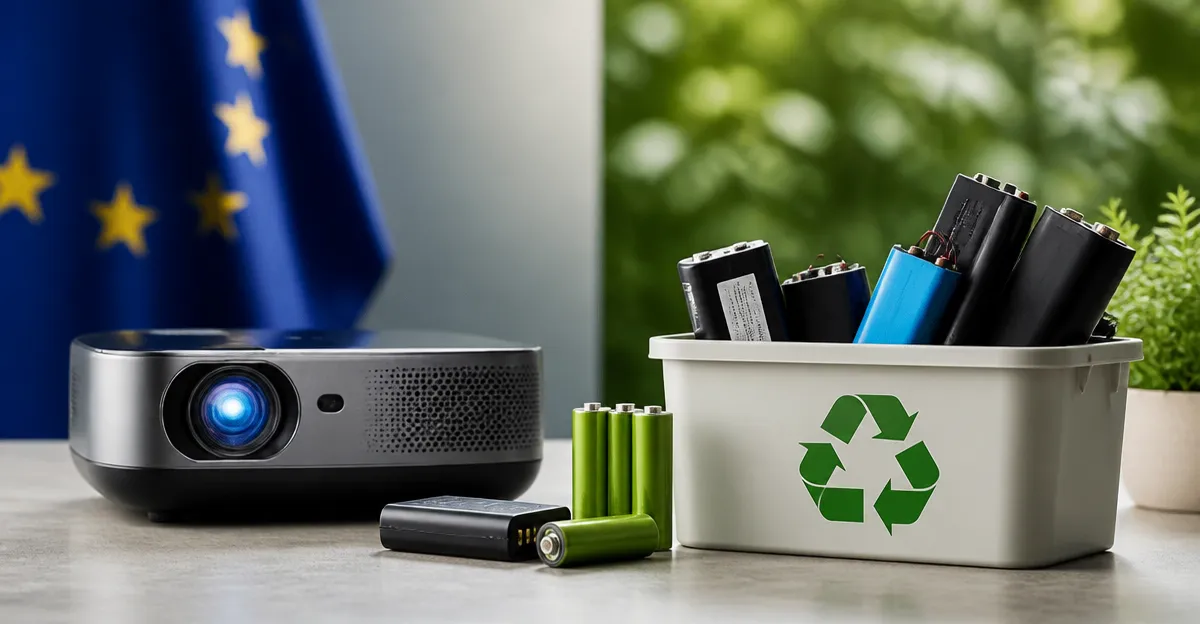
Portable Projector Battery Disposal in the EU: Complete Guide to Rules, Recycling & Compliance
Introduction
This guide explains the regulatory framework governing the disposal of portable projector batteries within the European Union. Readers will discover the legal obligations, practical recycling pathways, and how to select compliant battery solutions for their devices. The article also highlights four highly rated battery products that can extend projector runtime while meeting EU environmental standards. By the end of the guide, one will be equipped to manage battery waste responsibly and avoid costly non‑compliance penalties.
Background and Context
Portable projectors rely on rechargeable lithium‑ion or nickel‑metal‑hydride (NiMH) cells to deliver hours of on‑the‑go presentation power. The EU treats these cells as hazardous waste under the Waste Batteries and Accumulators Directive (2006/66/EC). The directive mandates collection, treatment, and recycling targets for all battery types sold in member states. In addition, the Restriction of Hazardous Substances (RoHS) directive limits the use of lead, mercury, cadmium, and certain flame retardants in electronic equipment, influencing battery design.
Member states implement the directive through national collection schemes, often accessible via retail drop‑off points, municipal recycling centers, or dedicated battery return kiosks. Failure to follow these rules can result in fines of up to €50,000 per infringement, making compliance a critical operational concern for businesses and individual users alike.
Understanding Battery Types Used in Portable Projectors
Projectors typically employ one of three battery chemistries:
- Lithium‑Ion (Li‑Ion): High energy density, low self‑discharge, but subject to strict transport regulations.
- Nickel‑Metal Hydride (NiMH): Safer handling, moderate capacity, and fully recyclable under the EU battery scheme.
- Alkaline (non‑rechargeable): Used for backup power; classified as hazardous waste when discarded.
Choosing a rechargeable NiMH solution can simplify compliance because NiMH batteries are fully covered by the EU collection system and do not require special transport labeling.
Key Compliance Requirements
The EU framework imposes four primary obligations:
- Marking: Batteries must display the crossed‑out wheeled bin symbol to indicate collection eligibility.
- Registration: Manufacturers and importers must register with national authorities and report the quantity of batteries placed on the market.
- Collection Targets: At least 45% of the weight of batteries sold must be collected and recycled.
- Reporting: Annual reports on collection, treatment, and recycling performance must be submitted to the European Chemicals Agency (ECHA).
Projector owners can support compliance by using batteries that already bear the required symbols and by returning spent cells to authorized collection points.
Recommended Battery Products for Portable Projectors
While the regulatory focus is on disposal, selecting batteries that are designed for longevity and recyclability reduces waste generation. The following products are well‑rated, incorporate recycled materials, and meet EU marking requirements.
Rechargeable AA Batteries
Many portable projectors accept AA NiMH cells. Two reliable options are:
- Energizer Power Plus AA (8‑Pack) – Priced at $23.50, this pack holds a 4.7‑star rating from 37,291 reviews. The batteries contain 22% recycled material, prevent leakage, and retain charge for up to 12 months in storage.
- Energizer Recharge Universal AA (16‑Pack) – At $43.99, it offers the same 4.7‑star rating and is engineered for up to 12‑year shelf life. The larger pack is ideal for households with multiple projectors or other AA‑powered devices.
Both products are pre‑charged, feature leak‑prevention technology, and are fully recyclable under the EU battery scheme.
AAA Alkaline Batteries for Backup Power
When a projector includes a low‑power standby mode, an AAA alkaline pack can serve as a short‑term backup. The Amazon Basics AAA (36‑Pack) costs $13.70, carries a 4.7‑star rating from over 674,000 reviews, and provides a 10‑year leak‑free shelf life. Although non‑rechargeable, the pack is inexpensive and easy to replace, and it is accepted by all EU battery collection points.
High‑Performance Eneloop AA Batteries
For professional users demanding maximum charge cycles, the Panasonic Eneloop AA (10‑Pack) offers up to 2,100 recharge cycles, retains 70% of its charge after ten years, and functions in temperatures down to –4 °F. Priced at $31.99 with a 4.7‑star rating from 981 reviews, these batteries are pre‑charged using solar power and are fully compliant with EU recycling directives.
Comparison and Selection Guide
| Feature | Energizer Power Plus AA (8‑Pack) | Energizer Recharge Universal AA (16‑Pack) | Amazon Basics AAA (36‑Pack) | Panasonic Eneloop AA (10‑Pack) |
|---|---|---|---|---|
| Battery Chemistry | NiMH | NiMH | Alkaline (single‑use) | NiMH (pre‑charged) |
| Recharge Cycles | Up to 500 | Up to 500 | Not applicable | Up to 2,100 |
| Storage Retention | 12 months | 12 months | 10 years | 70% after 10 years |
| Price (USD) | $23.50 | $43.99 | $13.70 | $31.99 |
| Average Rating | 4.7/5 (37,291 reviews) | 4.7/5 (37,291 reviews) | 4.7/5 (674,285 reviews) | 4.7/5 (981 reviews) |
| Recyclable in EU | Yes | Yes | Yes (hazardous waste collection) | Yes |
When selecting a battery, consider the projector’s voltage requirements, expected usage frequency, and the environmental impact of discarded cells. For occasional presentations, the 8‑pack offers a cost‑effective solution. For heavy‑use environments, the Eneloop’s extended cycle life reduces overall waste.
Best Practices & Tips for Battery Disposal
To ensure compliance and minimise environmental harm, follow these steps:
- Inspect before disposal: Verify that the battery shows no signs of swelling, leakage, or corrosion. Damaged cells must be handled as hazardous waste.
- Use designated collection points: Many EU cities provide labelled bins in supermarkets, electronics stores, and municipal facilities. Look for the crossed‑out wheeled bin symbol.
- Separate chemistries: Keep Li‑Ion, NiMH, and alkaline batteries separate to facilitate proper treatment.
- Document disposal: Businesses should retain receipts or collection certificates for audit purposes.
- Extend battery life: Store batteries in a cool, dry place and avoid deep discharge, which shortens cycle count.
Frequently Asked Questions
- 1. Are portable projector batteries covered by the EU battery directive?
- Yes. All rechargeable and single‑use batteries sold in the EU fall under the Waste Batteries and Accumulators Directive.
- 2. Can I recycle lithium‑ion batteries at the same point as NiMH cells?
- Most collection points accept all battery types, but some municipalities provide separate containers for lithium‑ion due to fire risk. Check local guidelines.
- 3. How often should I replace my projector’s rechargeable battery?
- Replace when the capacity falls below 80% of the original rating, typically after 300–500 charge cycles for standard NiMH and after 2,000 cycles for Eneloop cells.
- 4. Do I need to label the batteries before dropping them off?
- No additional labeling is required; the manufacturer’s crossed‑out wheeled bin symbol satisfies the directive.
- 5. What penalties exist for non‑compliance?
- Member states may impose fines up to €50,000 per violation, and repeat offenders can face additional administrative sanctions.
- 6. Are there tax incentives for using recycled‑content batteries?
- Some EU countries offer reduced VAT rates or subsidies for eco‑friendly products; consult national tax authorities for details.
Conclusion
Proper disposal of portable projector batteries in the EU is governed by clear legislation that aims to protect the environment and public health. By understanding the regulatory obligations, selecting compliant rechargeable batteries, and using authorized collection schemes, users can achieve full compliance while reducing operational costs. The featured battery products provide reliable performance, high recycling rates, and meet the EU’s stringent marking requirements, making them suitable choices for both casual presenters and professional AV technicians.
Products Featured in This Guide
Energizer Power Plus AA (8‑Pack)
Price: $23.50 | Rating: 4.7/5 (37,291 reviews)
Featured because it offers a cost‑effective, recyclable NiMH solution with 22% recycled content and leak‑prevention technology.
Energizer Recharge Universal AA (16‑Pack)
Price: $43.99 | Rating: 4.7/5 (37,291 reviews)
Featured for its larger quantity, long shelf life, and suitability for households with multiple projector or AA‑powered devices.
Amazon Basics AAA (36‑Pack)
Price: $13.70 | Rating: 4.7/5 (674,285 reviews)
Featured as an affordable, long‑lasting alkaline option for backup power, fully accepted by EU battery collection programs.
Panasonic Eneloop AA (10‑Pack)
Price: $31.99 | Rating: 4.7/5 (981 reviews)
Featured for its exceptional 2,100‑cycle lifespan, pre‑charged solar power, and performance in extreme temperatures, making it ideal for professional use.