Introduction
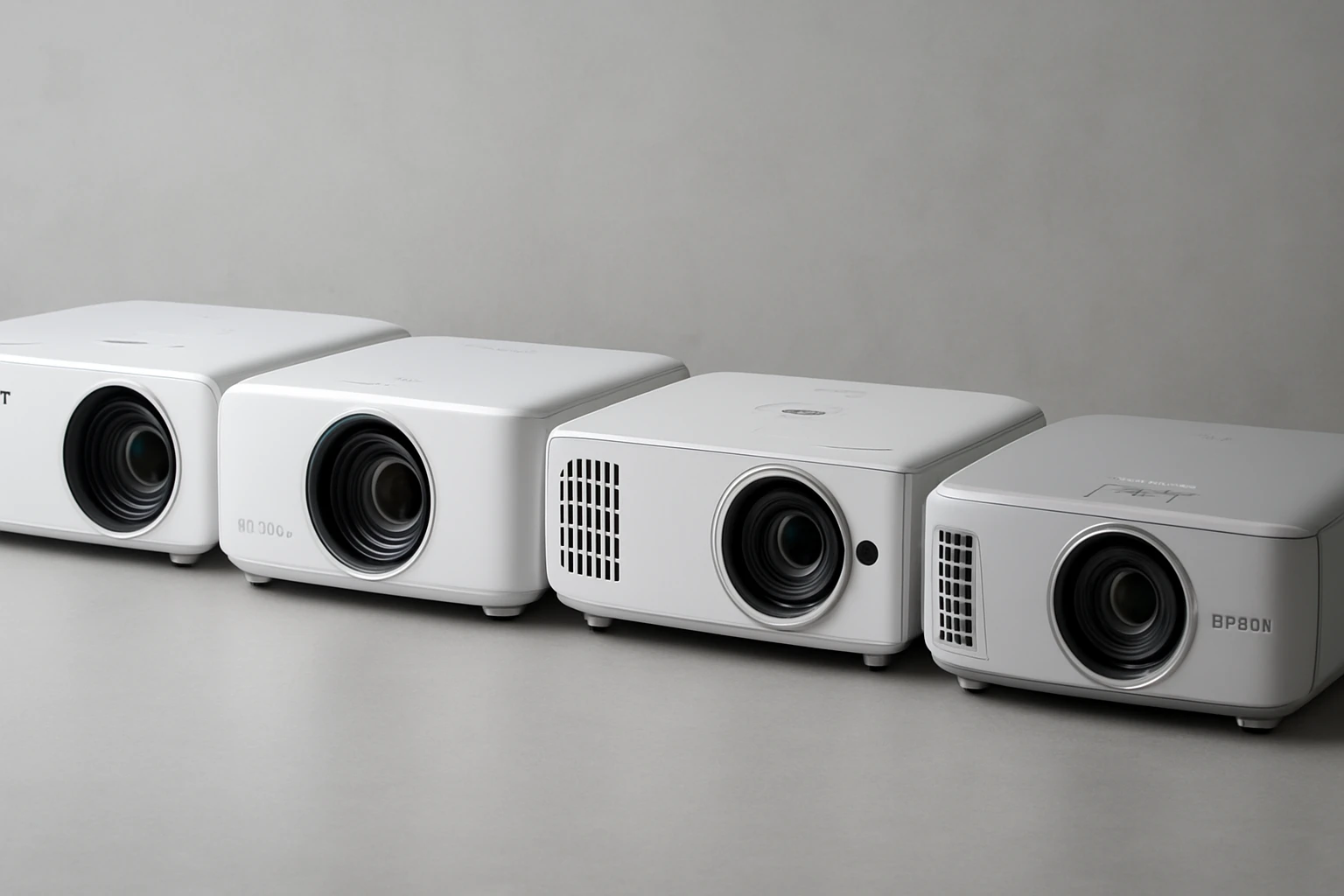
Projectors have become a mainstream alternative to traditional televisions for home entertainment, gaming and mobile presentations. This article compares five Amazon‑available models that span entry‑level, mid‑range and premium categories. By analysing price, specifications, customer feedback and real‑world performance, readers can determine which device best satisfies their specific needs. The comparison focuses on the Happrun 1080P Mini Bluetooth Projector, the Happrun 4K Google TV Smart Projector, the ONO5Pro 2.0 4K Smart Projector, the Optoma HD146X and the Epson Home Cinema 980. Understanding the trade‑offs among these devices is essential for anyone planning a home theater, outdoor movie night or portable presentation setup.
Individual Product Overviews
Happrun 1080P Mini Bluetooth Projector
At a price of $84.97, this compact unit offers native 1080p resolution, Bluetooth 5.1 connectivity and built‑in Hi‑Fi stereo speakers. Reviewers praise its ease of setup, lightweight design and the ability to project up to a 200‑inch image. One user noted, "the picture quality is clear and bright enough for evening use, especially in a dim or dark room," while another highlighted the convenient bottom hatch for lens cleaning. The projector lacks horizontal keystone correction, which may require careful placement.
Happrun 4K Google TV Smart Projector
Priced at $269.97, this model integrates licensed Google TV, voice control, 400 ANSI lumens brightness and a 5W Dolby‑enhanced speaker. Customers appreciate the out‑of‑the‑box streaming apps and the quick Wi‑Fi pairing. A reviewer wrote, "I’m seriously impressed with this projector. Setup took just a few minutes and I didn’t need any complicated instructions." The unit provides vertical keystone correction only and does not include a built‑in 4K panel; it up‑scales content to 4K.
ONO5Pro 2.0 4K Smart Projector
At $493.99, the ONO5Pro delivers true 3000 ANSI lumens, dual 40W Dolby‑tuned speakers and AI‑driven image processing. Reviewers repeatedly mention the automatic focus and keystone system that aligns the picture in under three seconds. One user declared, "this is the best projector I've owned!" and praised the vivid colors, 98% NTSC gamut and the ability to stream 1,500+ live channels without extra subscriptions. The device also supports HDMI 2.1, Wi‑Fi 6 and a dedicated game mode with 18 ms input lag.
Optoma HD146X
Costing $579.00, the Optoma offers 3600 lumens, a 25,000:1 contrast ratio and a 16 ms gaming response. Users value its bright image even in daylight and its 3D capability via DLP Link glasses. A reviewer stated, "the screen is fairly bright even during the day" and highlighted the quiet fan operation in eco mode. The projector includes a single HDMI port and lacks built‑in smart OS, requiring external streaming sticks.
Epson Home Cinema 980
For $699.99, Epson provides 4000 lumens of both color and white brightness, 3‑LCD technology and two HDMI inputs. Reviewers commend its vivid color reproduction and low fan noise. One comment reads, "Great, crisp, pictures. The colors are vivid and vibrant even when the room is full of light." The unit also features auto picture skew correction and a built‑in speaker, though many users add external audio for a true home‑theater experience.
Head‑to‑Head Comparison
Price and Value
- Happrun Mini: $84.97 – lowest entry price, excellent value for casual movie nights.
- Happrun 4K: $269.97 – mid‑range price adds smart TV platform and Dolby sound.
- ONO5Pro: $493.99 – premium price justified by 3000 ANSI lumens, AI focus and dual 40W speakers.
- Optoma HD146X: $579.00 – higher price for high lumen output and gaming‑focused features.
- Epson 980: $699.99 – top‑tier price with 4000 lumens, 3‑LCD color accuracy and dual HDMI.
Features and Specifications
| Feature | Happrun Mini | Happrun 4K | ONO5Pro | Optoma HD146X | Epson 980 |
|---|---|---|---|---|---|
| Native Resolution | 1920×1080 | Up‑scaled 4K (native 1080p) | 4K (supports 3840×2160) | 1920×1080 | 1920×1080 (3‑LCD) |
| Brightness (ANSI lumens) | Not specified (suitable for dim rooms) | 400 | 3000 | 3600 | 4000 |
| Built‑in Speaker Power | Hi‑Fi stereo (unspecified) | 5 W Dolby | Dual 40 W Dolby | Not specified (mono) | Built‑in (unspecified) |
| Bluetooth Version | 5.1 | 5.1 | 5.1 | None | None |
| Smart OS | None (requires TV stick) | Google TV | Smart TV OS 2.0 | None | None (streaming via HDMI) |
| Keystone Correction | Vertical only (wheel) | Vertical only | Auto 3‑second AI correction | Manual digital | Auto picture skew |
| Gaming Input Lag | Not measured | Not measured | 18 ms (HDMI 2.1) | 16 ms | Not specified |
| Portability | Very lightweight, tripod thread | Lightweight, 1/4" thread | Compact, ceiling‑mount friendly | Mid‑size, requires stable surface | Heavier, best for fixed installation |
Customer Ratings and Feedback
The Happrun Mini holds a 4.4‑star rating from 12,886 reviews, with customers highlighting its affordability, clear image and easy Bluetooth pairing. Common criticism includes the lack of horizontal keystone and occasional fan noise.
The Happrun 4K also carries a 4.4‑star rating from 610 reviews. Reviewers love the built‑in Google TV and quick Wi‑Fi setup, but note that the 5 W speaker may be insufficient for outdoor use.
The ONO5Pro enjoys the highest rating of 4.8 stars from 342 reviews. Users repeatedly commend its brightness, AI focus and powerful dual speakers, while a few mention a learning curve for the advanced remote.
Optoma HD146X has a 4.3‑star rating from 1,231 reviews. Praise centers on bright image, low fan noise and 3D support; criticism focuses on limited ports and lack of smart OS.
Epson 980 receives a 4.5‑star rating from 451 reviews. Customers appreciate the vivid colors and low noise, yet some desire more HDMI inputs for multiple sources.
Performance and Reliability
All five projectors demonstrate reliable operation in typical home environments. The Happrun Mini’s fan is audible but not disruptive, and the unit’s lamp life is not disclosed. The Happrun 4K’s built‑in Google TV reduces the need for external sticks, improving reliability of streaming connections.
The ONO5Pro’s AI auto‑focus and VisionlQ keystone correction dramatically reduce user error, and its 3000 ANSI lumens enable daytime viewing. Optoma’s 3600 lumens and 16 ms gaming response make it a solid choice for bright rooms and competitive gaming. Epson’s 3‑LCD engine eliminates rainbow artefacts common in DLP models, delivering consistent colour accuracy over long periods.
Best Use Cases
- Casual indoor/outdoor movie nights: Happrun Mini – portable, inexpensive, adequate brightness for dim environments.
- Smart‑TV streaming without extra hardware: Happrun 4K – integrated Google TV and voice control.
- High‑brightness daytime presentations and immersive gaming: ONO5Pro – 3000 ANSI lumens, AI focus, 18 ms lag.
- Dedicated gaming room with 3D support: Optoma HD146X – high lumens, low input lag, DLP‑Link 3D.
- Premium home‑theater with colour fidelity: Epson 980 – 4000 lumens, 3‑LCD, dual HDMI.
Pros & Cons
Happrun 1080P Mini Bluetooth Projector
- Pros: Very low price, native 1080p, Bluetooth 5.1, portable tripod thread, 200‑inch screen capability.
- Cons: No horizontal keystone, fan audible, speaker modest, HDMI adapter not included.
Happrun 4K Google TV Smart Projector
- Pros: Built‑in Google TV, voice assistant, 400 ANSI lumens, 5 W Dolby speaker, Wi‑Fi/Bluetooth.
- Cons: Only vertical keystone, speaker may be quiet outdoors, price higher than Mini.
ONO5Pro 2.0 4K Smart Projector
- Pros: 3000 ANSI lumens, dual 40 W Dolby speakers, AI auto‑focus, 18 ms lag, Wi‑Fi 6, extensive app library.
- Cons: Highest price, remote is feature‑rich which may overwhelm beginners.
Optoma HD146X
- Pros: 3600 lumens, 16 ms gaming response, 3D DLP‑Link support, quiet fan, solid lamp life.
- Cons: No smart OS, single HDMI port, limited built‑in audio.
Epson Home Cinema 980
- Pros: 4000 lumens, 3‑LCD colour accuracy, dual HDMI, auto picture skew, low fan noise.
- Cons: Heavier, premium price, built‑in speaker modest for large rooms.
Recommendations by Use Case
- Budget‑friendly portable projector: Happrun 1080P Mini Bluetooth Projector.
- All‑in‑one streaming device: Happrun 4K Google TV Smart Projector.
- Bright daytime or gaming‑centric setup: ONO5Pro 2.0 4K Smart Projector.
- Dedicated gaming and 3D enthusiast: Optoma HD146X.
- Premium home‑theater with colour precision: Epson Home Cinema 980.
Frequently Asked Questions
- Can the Happrun Mini project a 200‑inch image in a well‑lit room?
- The Mini is designed for dim or dark environments; its brightness is sufficient for a 200‑inch screen when ambient light is low, but performance will degrade in bright rooms.
- Does the Happrun 4K require an external streaming stick?
- No, the device includes licensed Google TV, giving direct access to major streaming services without additional hardware.
- How does the ONO5Pro achieve automatic focus?
- The projector uses VisionlQ AI calibration, which analyses the projected image and adjusts focus, keystone and zoom within three seconds.
- Is the Optoma HD146X suitable for outdoor use?
- While the HD146X provides 3600 lumens, it lacks weather‑proofing; it is best used in a sheltered patio or indoor space with low ambient light.
- What advantage does Epson’s 3‑LCD technology provide?
- 3‑LCD separates red, green and blue light paths, eliminating the rainbow effect common in DLP projectors and delivering more accurate colour reproduction.
- Can any of these projectors connect to a soundbar via Bluetooth?
- Both the Happrun Mini, Happrun 4K and ONO5Pro support Bluetooth audio output, allowing connection to external soundbars or headphones.
- Do any of the models support vertical and horizontal keystone correction?
- Only the ONO5Pro provides full AI‑driven keystone correction; the Happrun models and Optoma rely on vertical correction or manual digital adjustment.
Conclusion
Each projector examined serves a distinct segment of the market. The Happrun Mini delivers unbeatable value for casual, low‑budget viewing, while the Happrun 4K adds smart‑TV convenience at a modest price increase. The ONO5Pro stands out with its high brightness, AI focus and powerful audio, making it the optimal choice for daylight presentations and serious gamers. Optoma HD146X remains a solid mid‑range option for gamers who prioritize low input lag and 3D capability. Finally, the Epson Home Cinema 980 provides the most luminous and colour‑accurate experience for a dedicated home‑theater installation. Prospective buyers should match their primary use case with the strengths outlined above to achieve the best return on investment.