
Anti-Glare Projector Screen Coatings Explained: Ultimate Guide to Types, Benefits & How to Choose
Introduction
Projector screens are the bridge between a digital image and the viewer’s eye. While many users focus on resolution and brightness, the coating on the screen often determines whether the picture appears crisp or washed out. This guide explains the science behind anti‑glare coatings, outlines the main types available, and provides a step‑by‑step method for selecting the screen that best matches a specific environment. Readers will leave with a clear understanding of how coating technology works, why it matters for indoor and outdoor setups, and which Amazon‑listed products deliver the performance promised by their specifications.
Background and Context
Projector illumination is measured in lumens, but the perceived brightness on the screen depends heavily on how much ambient light is reflected back to the viewer. Traditional white matte screens scatter light in many directions, creating a soft image that is forgiving in dark rooms but vulnerable to glare in bright spaces. Anti‑glare (or ambient‑light‑reject, ALR) coatings employ microscopic surface structures or specialized pigments to redirect ambient light away from the viewing cone while preserving the projector’s light. The result is higher contrast, deeper blacks, and more vivid colors even when daylight streams through windows.
Two core concepts underpin anti‑glare performance: gain and viewing angle. Gain measures the ratio of reflected light compared to a standard white board; a gain of 1.0 reflects the same amount of light, while higher gain increases brightness but narrows the viewing cone. Anti‑glare coatings typically aim for a moderate gain (0.8–1.2) to balance brightness with a wide viewing angle, often around 140°–160°.
Types of Anti‑Glare Coatings
Understanding the technology helps users match a screen to their environment. The most common categories are:
- Matte White with Anti‑Crease Fabric: Uses a tightly woven polyester that resists wrinkles, providing a uniform surface. While not a true ALR screen, the matte finish reduces hot‑spot glare in moderately lit rooms.
- Grey (High‑Contrast) Screens: A darker base absorbs ambient light, improving perceived contrast. These screens are ideal for rooms with moderate ambient light but require a projector with higher lumens to maintain brightness.
- Ambient‑Light‑Reject (ALR) Screens: Feature layered optical coatings that act like a honeycomb, reflecting projector light toward the viewer while diffusing ambient light. ALR screens often incorporate a 50°–70° anti‑glare angle, making them suitable for bright indoor or outdoor environments.
Each type has trade‑offs. Matte white screens are inexpensive and easy to install, but they struggle in daylight. Grey screens improve contrast but may appear dimmer with low‑lumens projectors. ALR screens deliver the best performance under strong ambient light but are usually heavier and pricier.
Key Features to Evaluate
When comparing screens, focus on the following specifications:
- Screen Size and Aspect Ratio: Ensure the diagonal matches the projection distance and that the 16:9 format fits most modern content.
- Material and Thickness: Natural polyester fibers provide durability and anti‑crease properties. Thicker fabrics reduce surface waviness, preserving image sharpness.
- Gain and Viewing Angle: A gain near 1.0 with a 140°–160° viewing angle offers flexibility for multiple seating positions.
- Installation Options: Look for screens that support wall‑mounting, ceiling brackets, or portable frames, depending on the intended use.
- Portability: Foldable designs and carry bags are essential for outdoor movie nights or travel presentations.
Below are three Amazon‑listed screens that illustrate these features in real‑world products.
Product Recommendations
1. Mdbebbron 150 inch Projection Screen
The Mdbebbron 150 inch Projection Screen offers a 16:9 format with a 130"×73" viewing area. Constructed from natural polyester fabric, the screen provides anti‑crease performance and high light absorbance, resulting in sharper, brighter images. Users praise its lightweight, one‑piece folding design, which fits into a backpack for easy transport. Installation is straightforward with hooks, ropes, or double‑sided tape, making it suitable for both indoor home theaters and outdoor backyard cinemas. With a 4.5‑star rating from 4,170 reviews, it demonstrates strong consumer confidence.
- Size: 150" diagonal (130"×73")
- Material: Natural polyester, anti‑crease
- Gain: Approx. 1.0 (matte white)
- Portability: Foldable, fits in a backpack
- Rating: 4.5/5 (4,170 reviews)
2. AAJK 80in Portable Projector Screen
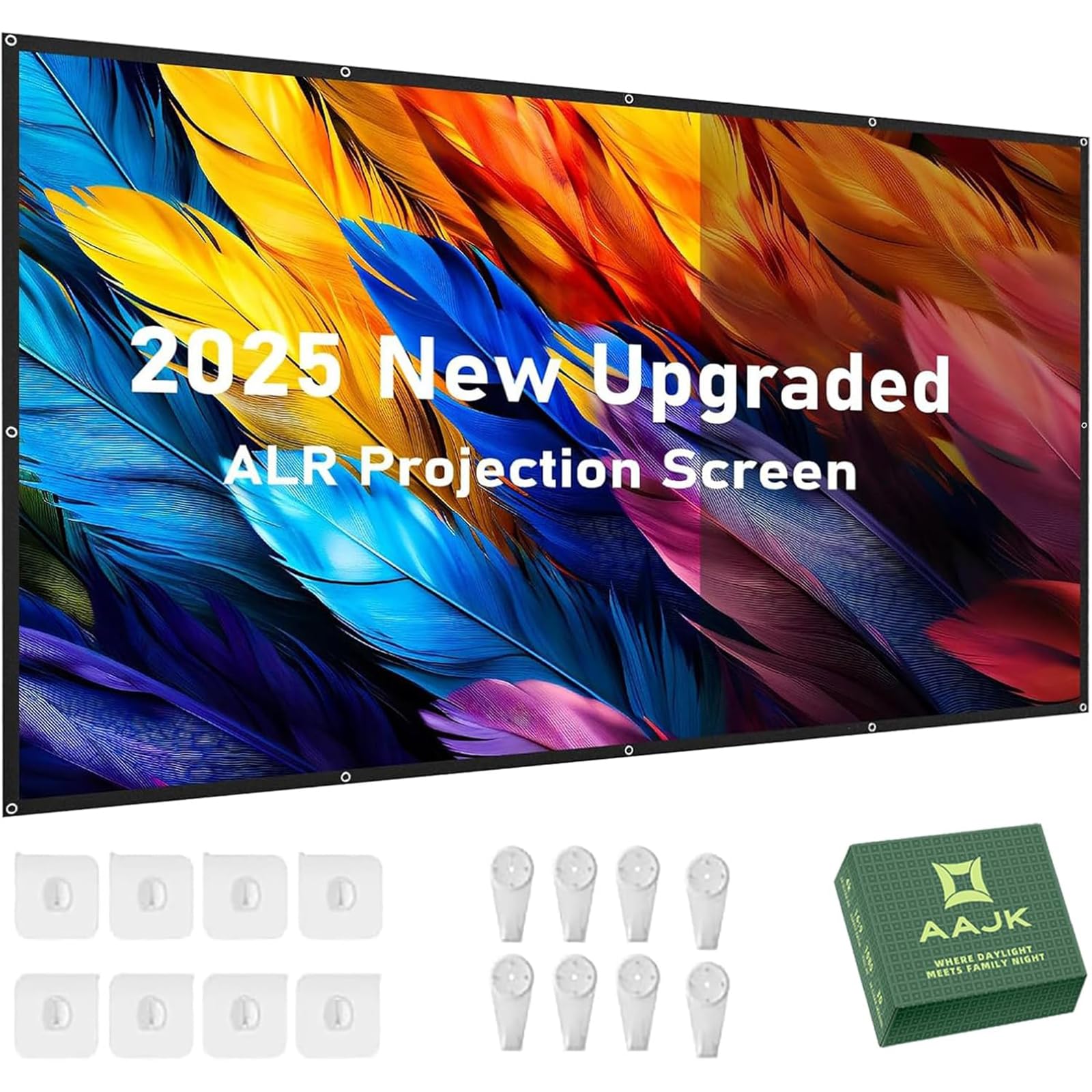
The AAJK 80in Portable Projector Screen introduces a 6‑layer PET optical coating that delivers 4K‑level clarity and a 160° wide viewing angle. Its anti‑light (ALR) surface features a 50° anti‑glare angle, effectively blocking ambient light and enhancing contrast in bright environments. The screen is foldable, wall‑mountable, and includes a stain‑resistant surface that can be cleaned with a microfiber cloth. Priced at $36.99 and backed by a 4.4‑star rating from 5,682 reviews, it represents a cost‑effective ALR solution for both indoor and outdoor use.
- Size: 80" diagonal (16:9)
- Material: 6‑layer PET with anti‑light coating
- Gain: Slightly above 1.0 (enhanced brightness)
- Viewing Angle: 160°
- Price: $36.99
- Rating: 4.4/5 (5,682 reviews)
3. TOWOND 150 inch Projector Screen with Stand
The TOWOND 150 inch Projector Screen with Stand combines a large 150" diagonal screen with a portable, tool‑free stand. Made from high‑quality natural polyester fiber, it supports both front and rear projection and offers a 160° viewing angle. The foldable stand assembles in under two minutes, and the entire package weighs 11.5 lb, making it easy to transport in a car trunk. With a 4.3‑star rating from 2,190 reviews, it is ideal for backyard cinema, corporate presentations, and temporary event setups.
- Size: 150" diagonal (16:9)
- Material: Natural polyester, anti‑crease
- Gain: Near 1.0
- Portable Stand: Tool‑free assembly
- Weight: 11.5 lb
- Rating: 4.3/5 (2,190 reviews)
Comparison and Selection Guide
Choosing the right screen depends on three primary factors: ambient light level, installation flexibility, and budget. The table below summarizes how each product aligns with these criteria.
| Feature | Mdbebbron 150" | AAJK 80" | TOWOND 150" with Stand |
|---|---|---|---|
| Screen Type | Matte White, anti‑crease | ALR, 50° anti‑glare angle | Matte White, anti‑crease |
| Ideal Lighting | Low to moderate ambient light | Bright indoor or outdoor daylight | Low to moderate ambient light |
| Portability | Backpack‑size foldable | Foldable, wall‑mountable | Foldable stand, 11.5 lb |
| Installation | Hooks, ropes, double‑sided tape | Wall mount or freestanding | Tool‑free stand, optional wall mount |
| Price (USD) | Not listed (premium) | $36.99 | Not listed (mid‑range) |
| Rating | 4.5/5 (4,170 reviews) | 4.4/5 (5,682 reviews) | 4.3/5 (2,190 reviews) |
For a permanent home theater with limited ambient light, the Mdbebbron screen provides a large, high‑quality surface at a reasonable price point. If the primary use case involves daytime backyard movies or presentations in well‑lit conference rooms, the AAJK screen’s ALR coating delivers superior contrast. The TOWOND model excels when a quick‑setup, portable solution is required, especially for events that move between indoor and outdoor venues.
Best Practices & Tips
- Control Ambient Light Whenever Possible: Even the best ALR screen benefits from curtains, blinds, or strategic positioning away from direct sunlight.
- Maintain a Proper Throw Ratio: Verify that the projector’s throw distance matches the screen size; oversized screens can cause pixelation.
- Clean the Surface Gently: Use a soft microfiber cloth; for ALR screens, avoid harsh chemicals that could degrade the optical coating.
- Secure Mounting: For permanent installations, use sturdy brackets or a tension‑rod system to keep the screen taut and prevent creasing.
- Consider Dual‑Side Screens if you need rear projection for events where space is limited behind the screen.
- Test Before Purchase: If possible, view a sample of the screen under your typical lighting conditions to confirm contrast and color fidelity.
Frequently Asked Questions
- What is the difference between matte white and grey screens? Grey screens have a darker base that absorbs ambient light, improving perceived contrast in bright rooms. However, they require a brighter projector to achieve the same luminance as a matte white screen.
- Can I use an ALR screen outdoors? Yes, provided the screen is rated for outdoor use and is protected from rain. The AAJK screen’s 50° anti‑glare angle makes it suitable for sunny patios when positioned under a shade or canopy.
- Do anti‑crease fabrics affect image quality? Anti‑crease fabrics prevent wrinkles that scatter light, preserving image sharpness and uniformity, especially on large screens like the 150‑inch models.
- How do I clean a PET‑coated ALR screen? Gently wipe with a dry microfiber cloth. If stains persist, a lightly dampened cloth is acceptable; avoid abrasive cleaners that could scratch the coating.
- Is a higher gain always better? Higher gain increases brightness but narrows the viewing cone, causing color shift for viewers seated off‑axis. For most home theaters, a gain of 0.8–1.2 offers the best balance.
- Do I need a special projector for ALR screens? No, but projectors with higher lumens (2,500 + for larger screens) will fully exploit the screen’s contrast benefits.
- Can I use the same screen for both front and rear projection? Some screens, such as the TOWOND model, are designed to work with both front and rear projection, offering flexibility for multi‑use venues.
Conclusion
Anti‑glare projector screen coatings transform a simple projection surface into a high‑performance display capable of delivering vivid images in challenging lighting conditions. By understanding the underlying technology—matte white, grey, and ALR—and evaluating key specifications such as gain, viewing angle, and material durability, users can select a screen that aligns with their budget and environment. The three Amazon products highlighted—Mdbebbron 150" screen, AAJK 80" ALR screen, and TOWOND 150" screen with stand—illustrate how different designs meet distinct needs, from permanent home theaters to portable outdoor cinemas. Applying the best‑practice tips ensures long‑term performance and maximizes the visual impact of every projected image.
Products Featured in This Guide
Mdbebbron 150 inch Projection Screen
Rating: 4.5/5 (4,170 reviews)
Why featured: Large 150" matte white screen with anti‑crease polyester fabric, lightweight foldable design, and versatile mounting options for both indoor and outdoor use.
AAJK 80in Portable Projector Screen
Price: $36.99 | Rating: 4.4/5 (5,682 reviews)
Why featured: 6‑layer PET ALR coating with 50° anti‑glare angle, 160° viewing angle, and stain‑resistant surface, offering excellent performance in bright environments at an affordable price.
TOWOND 150 inch Projector Screen with Stand
Rating: 4.3/5 (2,190 reviews)
Why featured: Portable 150" screen with tool‑free stand, dual‑side projection support, and a lightweight, anti‑crease polyester surface ideal for mobile events and backyard cinema.