How to Host an Unforgettable Silent Movie Night with Live Music: The Complete Step‑by‑Step Setup Guide
Introduction
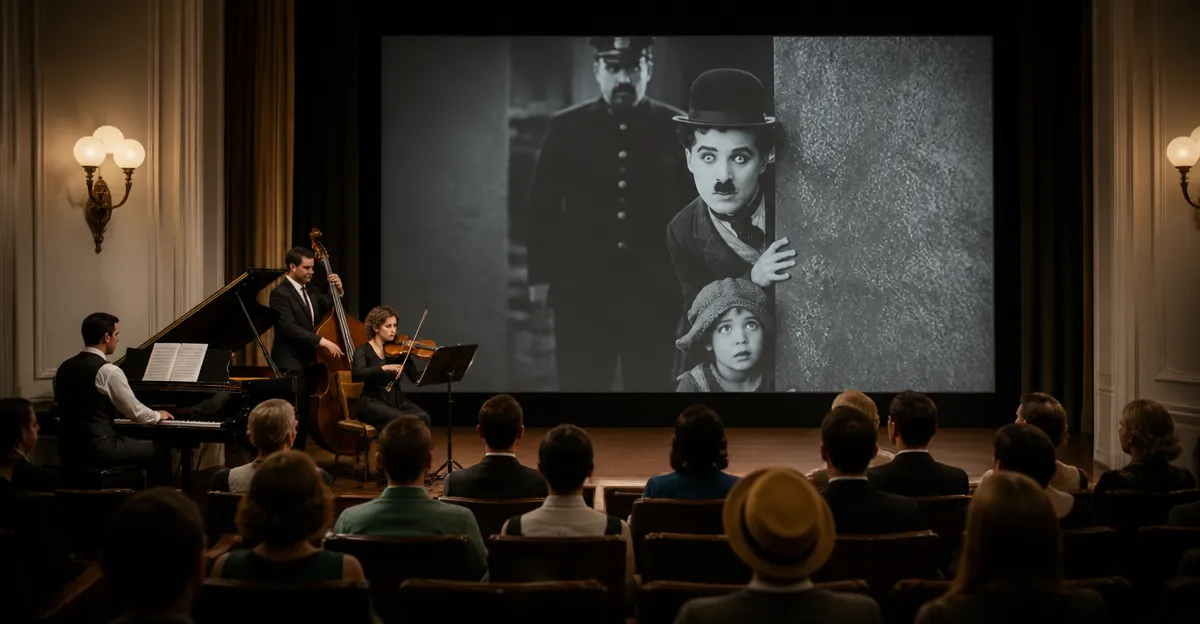
One can transform a simple backyard gathering into a memorable cultural experience by combining classic silent cinema with live musical accompaniment. This guide explains every stage of planning, equipment selection, installation, and execution so that hosts can deliver an immersive event without technical mishaps. Readers will learn how to choose the appropriate projection screen, arrange acoustic equipment, create atmospheric lighting, and manage audience interaction. By following the steps below, one will be able to host a silent‑movie night that feels both historic and contemporary.
Background and Context
Silent films were originally presented with live piano, organ, or small ensemble accompaniment, a practice that heightened emotional impact and masked the lack of synchronized sound. Modern technology allows the recreation of this tradition using high‑definition projectors, portable screens, and wireless audio distribution. The silent‑movie format also enables the use of headphones for a "silent cinema" experience, but many hosts prefer a live ensemble to preserve the communal atmosphere. Understanding the historical precedent helps the organizer select equipment that respects authenticity while meeting modern expectations for image quality.
Planning the Event
Successful execution begins with a clear plan that addresses venue, audience size, and budget. First, determine whether the event will be held indoors, outdoors, or in a hybrid space; this decision influences screen type, lighting, and weather protection. Second, estimate the number of guests and arrange seating that provides clear sightlines to the screen while allowing space for musicians. Third, allocate a budget for essential items such as a projection screen, projector, audio mixer, microphones, and lighting fixtures. Finally, create a timeline that includes setup, soundcheck, film loading, rehearsals, and post‑event cleanup.
Choosing the Projection Screen
The projection screen is the visual centerpiece of the night; its size, gain, and portability directly affect picture clarity and audience immersion. For most backyard settings a 120‑inch diagonal screen offers a generous viewing area without overwhelming the space. The following products are recommended because they combine high gain, wrinkle‑free material, and easy assembly.
- Mdbebbron 120" Projector Screen – A foldable, anti‑crease polyester screen with 16:9 aspect ratio, lightweight construction, and dual‑sided projection capability. It is priced at $20.39 and holds a 4.5‑star rating from 39,762 reviews.
- Silver Ticket 120" Fixed Frame Screen – A premium aluminum‑framed screen with 1.1 gain, 160° viewing angle, and a tension‑rod system that ensures a perfectly taut surface. It costs $279.98 and enjoys a 4.8‑star rating from 5,001 reviews.
- TOWOND 120" Projector Screen with Stand – A portable tripod stand, dual‑sided screen, and 160° viewing angle, ideal for quick setup in outdoor environments. Priced at $62.99 with a 4.4‑star rating from 2,011 reviews.
- Elite Screens 100" Pull‑Down Screen – A manual pull‑down screen featuring MaxWhite material, 1.1 gain, and an auto‑lock mechanism for variable height. It is available for $90.00 and carries a 4.6‑star rating from 4,556 reviews.
- STWUI 120" Projector Screen with Stand – A sturdy, quick‑assembly screen with stretch‑milk‑silk fabric, eight‑minute setup, and a weighted chassis for wind resistance. It sells for $59.99 and has a 4.3‑star rating from 1,205 reviews.
When selecting a screen, consider the following criteria:
- Screen size relative to projection distance and audience layout.
- Gain value – higher gain increases brightness but may narrow viewing angle.
- Portability – foldable or stand‑mounted options simplify transport.
- Durability – outdoor use requires weather‑resistant fabrics and sturdy frames.
Audio Equipment for Live Music
Live accompaniment requires a compact yet powerful audio system that can be heard clearly without overwhelming the visual experience. A small mixer with at least four channels allows a pianist, a violinist, and a vocalist to balance their levels independently. Wireless microphones reduce cable clutter and enable performers to move freely. Portable powered speakers with a minimum of 80 W RMS output provide sufficient volume for a 100‑person audience in an open space.
Recommended audio setup:
- 2‑channel mixer with built‑in EQ (e.g., Yamaha MG06X).
- Two wireless lavalier microphones for vocalists.
- One wired instrument cable for piano or keyboard.
- Two powered PA speakers placed on either side of the screen, angled toward the audience.
Ensure that all cables are labeled and that a short soundcheck is performed at least 30 minutes before the film begins. This practice prevents feedback and allows the musicians to adjust dynamics to match the on‑screen action.
Setting Up the Silent Film and Live Music
The technical workflow consists of four phases: projector placement, screen mounting, audio routing, and rehearsal.
- Projector placement: Position the projector at a distance that fills the screen while staying within the projector’s throw ratio. Use a tripod or a stable shelf to avoid movement.
- Screen mounting: Follow the manufacturer’s instructions. For the Mdbebbron 120" Projector Screen, attach hooks or double‑sided tape to a smooth wall; for stand‑mounted options, assemble the tripod and secure the screen with the supplied rigging ropes.
- Audio routing: Connect the mixer’s main outputs to the PA speakers. Route each microphone and instrument input to separate channels, and set initial levels to a moderate gain.
- Rehearsal: Play a short segment of the chosen film while the musicians perform the score. Adjust speaker placement, volume, and screen focus until the picture is sharp and the music blends naturally.
During the event, the conductor can cue musicians using visual signals, preserving the silent‑film tradition of real‑time musical interpretation.
Lighting and Atmosphere
Ambient lighting must be low enough to maintain screen contrast while providing safety for guests. String lights, lanterns, or LED uplights positioned behind the screen create a subtle glow that enhances the cinematic feel without washing out the image. If the event takes place after sunset, consider using battery‑operated floodlights with a diffuser to illuminate walkways. Adding period‑appropriate décor, such as vintage posters or a small marquee, deepens the thematic immersion.
Comparison and Selection Guide
| Feature | Mdbebbron 120" Screen | Silver Ticket Fixed Frame | TOWOND Stand‑Mount | Elite Screens Pull‑Down | STWUI Stand‑Mount |
|---|---|---|---|---|---|
| Price (USD) | 20.39 | 279.98 | 62.99 | 90.00 | 59.99 |
| Screen Size | 120" (16:9) | 120" (16:9) | 120" (16:9) | 100" (16:9) | 120" (16:9) |
| Gain | Standard (≈1.0) | 1.1 (white) | Standard (≈1.0) | 1.1 (MaxWhite) | Standard (≈1.0) |
| Portability | Foldable, backpack‑size | Fixed, wall‑mounted only | Tripod stand, tool‑free | Manual pull‑down, wall/ceiling | Quick‑assembly stand |
| Outdoor Suitability | Good with proper mounting | Indoor‑focused | Designed for outdoor wind | Indoor‑focused | Enhanced chassis for wind |
| Rating (Stars) | 4.5 (39,762 reviews) | 4.8 (5,001 reviews) | 4.4 (2,011 reviews) | 4.6 (4,556 reviews) | 4.3 (1,205 reviews) |
Hosts who prioritize budget and portability may select the Mdbebbron screen, whereas those seeking premium image uniformity and a permanent installation should consider the Silver Ticket model. For events that move between locations, the TOWOND or STWUI stand‑mounted screens provide the best balance of stability and ease of transport.
Best Practices & Tips
- Test the projector’s focus and keystone correction at least one hour before guests arrive.
- Run a brief soundcheck with the full ensemble to identify any feedback loops.
- Use a blackout cloth or portable curtains behind the screen to prevent ambient light from washing out the image.
- Provide a short program booklet that lists the film title, director, and composer, enhancing the educational aspect of the night.
- Offer a small intermission with refreshments; this also allows the screen to be cleaned of dust if necessary.
- Record the performance for future promotional use, but obtain consent from musicians and guests beforehand.
Frequently Asked Questions
- What projector brightness is required for outdoor use?
- A projector with at least 2,500 lumens will produce a vivid image in low‑ambient light; higher lumens are advisable for brighter evenings.
- Can I use a single speaker instead of a full PA system?
- For audiences under 30 people, a high‑quality bookshelf speaker may suffice, but a PA system ensures even coverage and prevents distortion.
- Is a fixed‑frame screen worth the higher cost?
- Fixed‑frame screens such as the Silver Ticket model provide a perfectly tensioned surface that eliminates wrinkles, delivering superior image uniformity for repeated use.
- How do I protect the screen from rain?
- Set up a simple canopy or waterproof tarp over the screen, and ensure the stand’s base is weighted with sandbags to prevent shifting.
- Do I need a separate power source for the audio equipment?
- Portable PA speakers often include built‑in rechargeable batteries; however, a small generator or power bank can supply continuous power for longer events.
Conclusion
Hosting a silent movie night with live music is a rewarding endeavor that blends cinematic history with modern convenience. By following the planning steps, selecting an appropriate projection screen, arranging reliable audio, and attending to lighting and atmosphere, one can create an event that captivates guests and honors the original silent‑film experience. The recommended products provide a range of options to suit different budgets and venues, ensuring that every host can achieve professional‑grade results without excessive complexity.
Products Featured in This Guide
Mdbebbron 120" Projector Screen
Price: $20.39 | Rating: 4.5/5 (39,762 reviews)
Featured because it offers an affordable, fold‑able solution with anti‑crease fabric, making it ideal for portable backyard setups.
Silver Ticket 120" Fixed Frame Screen
Price: $279.98 | Rating: 4.8/5 (5,001 reviews)
Featured for its premium aluminum frame, 1.1 gain surface, and tension‑rod system that delivers a cinema‑grade image.
TOWOND 120" Projector Screen with Stand
Price: $62.99 | Rating: 4.4/5 (2,011 reviews)
Featured for its robust aluminum stand, dual‑sided projection capability, and quick‑assembly design suitable for outdoor events.
Elite Screens 100" Pull‑Down Screen
Price: $90.00 | Rating: 4.6/5 (4,556 reviews)
Featured because its MaxWhite material and manual pull‑down mechanism provide a sleek, space‑saving solution for indoor venues.
STWUI 120" Projector Screen with Stand
Price: $59.99 | Rating: 4.3/5 (1,205 reviews)
Featured for its enhanced chassis, quick eight‑minute assembly, and stretch‑milk‑silk fabric that remains flat after repeated use.