Introduction
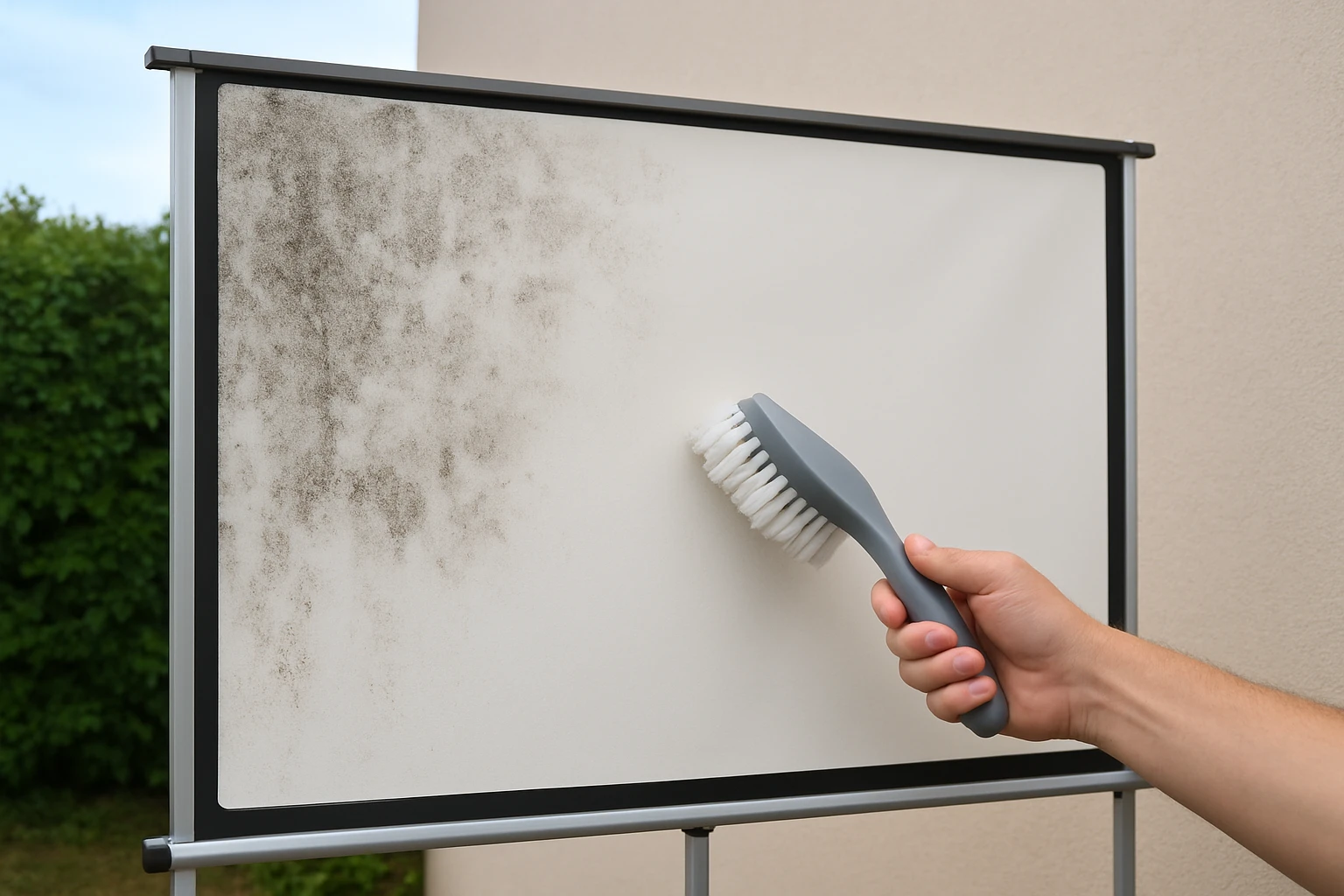
Outdoor projector screens provide a large, bright canvas for backyard movies, presentations, and events, but exposure to humidity and shade often invites mildew growth. Mildew not only mars the visual quality of the screen but can also degrade the material over time, leading to costly replacements. This guide will teach the reader how to safely eliminate existing mildew, restore the screen's appearance, and implement preventive measures that extend the screen's lifespan. By following these professional steps, one can maintain a pristine viewing surface without damaging delicate fibers or coatings.
What You'll Need
- iO CLEAN Screen Cleaner Kit – 16 oz spray, microfiber cloth, and dual‑nozzle applicator.
- 30 SECONDS Outdoor Stain Remover – 32 oz, 2‑pack, fast‑acting mold & mildew formula.
- Zep Hose‑End Outdoor Glass Cleaner – 32 oz concentrate for large‑area rinsing.
- Soft‑bristled brush, garden hose with adjustable pressure, clean water bucket, and a clean, lint‑free towel.
Step‑by‑Step Instructions
1. Inspect the Screen and Identify Affected Areas
Before applying any solution, walk around the screen and note the locations where mildew appears as dark, powdery patches. Use a flashlight at an oblique angle to reveal hidden growth in the folds or seams. Document the most heavily affected zones so that you can concentrate cleaning effort where it matters most. This preliminary assessment prevents over‑application of chemicals and ensures an even result.
2. Prepare a Safe Working Environment
Choose a calm day with low wind to avoid spray drift onto nearby plants. Wear protective gloves and safety glasses, as even biodegradable formulas can irritate skin or eyes. Lay a waterproof tarp beneath the screen to catch runoff and protect the ground. Having a controlled environment reduces the risk of accidental damage and simplifies cleanup.
3. Apply a Targeted Mildew‑Removing Solution
For stubborn mildew, the 30 SECONDS Outdoor Stain Remover is ideal. Its advanced formula dissolves organic growth without the need for pressure washing, making it safe for screen fabrics. Spray the remover directly onto the affected patches using the included motorized sprayer; the fine mist penetrates the weave while the larger nozzle covers broader areas. Allow the solution to dwell for 30 seconds, the time required for the chemicals to break down the spores.
This product is priced at $26.98 for a 2‑pack, carries a 4.3‑star rating from 2,712 reviewers, and is plant‑safe, meaning any runoff will not harm surrounding vegetation. Its quick‑action nature reduces labor time compared with traditional bleach mixtures, which often require multiple applications.
4. Rinse Thoroughly with a Hose‑End Cleaner
After the dwell time, attach the Zep Hose‑End Outdoor Glass Cleaner to a standard garden hose. Mix the concentrate according to the label (typically one capful per 10 gallons of water) and spray the entire screen surface. The hose‑end system delivers a uniform, low‑pressure stream that washes away loosened mildew without tearing the screen material.
At $9.98 for 32 oz and a 4.3‑star rating from 855 reviewers, this ammonia‑free formula leaves no streaks and rinses cleanly, which is essential for preserving the optical clarity of the projector screen. Ensure the water flow is gentle; high pressure can stretch the fabric or dislodge stitching.
5. Spot‑Clean Remaining Stains with a Microfiber Cloth
If faint spots persist, use the microfiber cloth supplied in the iO CLEAN Screen Cleaner Kit. Lightly mist the cloth with the kit’s screen‑safe spray, then wipe the area in a circular motion. The advanced formula contains anti‑static agents that repel dust, preventing immediate re‑accumulation of grime. This step ensures a streak‑free finish and restores the screen’s original sheen.
The kit costs $12.99, includes two interchangeable nozzles for precision application, and boasts a 4.6‑star rating from 12,406 reviewers. Its biodegradable composition makes it safe for families and pets, an advantage over harsher solvent‑based cleaners.
6. Dry the Screen Completely
After rinsing, allow the screen to air‑dry in direct sunlight if weather permits; UV light helps inhibit further fungal growth. If immediate use is required, use a clean, lint‑free towel to blot excess moisture, working from the top down to avoid water pooling. A fully dry surface is crucial because lingering humidity creates a breeding ground for new mildew spores.
7. Apply a Protective Anti‑Mildew Treatment
Once the screen is dry, consider a light coating of the iO CLEAN spray without wiping, allowing the protective layer to settle. The product’s anti‑static and anti‑glare properties create a barrier that discourages spore attachment. Re‑apply this protective coat quarterly, especially after heavy rain or seasonal humidity spikes, to maintain long‑term resistance.
8. Implement Ongoing Prevention Strategies
Regular maintenance is the most effective defense against mildew. Schedule a brief inspection after each rainstorm, and gently brush off any moisture buildup before it dries. Trim surrounding vegetation to improve airflow and reduce shade, as stagnant air accelerates fungal growth. Finally, store the projector screen in a dry, breathable cover when not in use; avoid plastic sheeting that traps moisture.
Tips & Pro Tips
- Test any cleaning solution on a small, inconspicuous area first to verify that the fabric does not discolor.
- For very large screens, divide the surface into zones and work methodically to ensure complete coverage.
- Combine the 30 SECONDS remover with a soft‑bristled brush for heavily textured screens; gentle agitation helps lift spores without tearing the material.
- Use a garden hose with a spray nozzle set to “mist” rather than “jet” to prevent high‑pressure damage.
- Store all cleaning products out of direct sunlight to preserve their efficacy over time.
Troubleshooting
| Problem | Possible Cause | Solution |
|---|---|---|
| Mildew returns within a week | Insufficient drying or lingering moisture | Increase sun exposure, use a dehumidifier in the storage area, and re‑apply the iO CLEAN protective spray. |
| Streaks appear after rinsing | Hard water minerals or high‑pressure rinse | Use distilled water for the final rinse or add a small amount of white vinegar to the hose‑end cleaner. |
| Screen fabric feels weakened | Over‑aggressive scrubbing or excessive chemical concentration | Reduce concentration of the 30 SECONDS remover and use only soft brushes. |
Conclusion
By following this comprehensive, step‑by‑step process, one can effectively eradicate mildew from an outdoor projector screen, restore visual clarity, and implement preventive habits that safeguard the investment for years to come. The recommended products—iO CLEAN Screen Cleaner Kit, 30 SECONDS Outdoor Stain Remover, and Zep Hose‑End Outdoor Glass Cleaner—provide safe, efficient, and environmentally responsible solutions that outperform generic household cleaners. Consistent maintenance, proper drying, and periodic protective treatments will keep the screen looking like new, ensuring every outdoor viewing experience is immersive and enjoyable.
Products Mentioned in This Guide
Frequently Asked Questions
What is the safest way to remove mildew from an outdoor projector screen?
Apply a dedicated screen cleaner like the iO CLEAN Screen Cleaner Kit, let it sit briefly, then gently wipe with a microfiber cloth to avoid damaging fibers.
Can household vinegar be used instead of commercial cleaners?
Yes, a 1:1 solution of white vinegar and water can help dissolve mild mildew, but rinse thoroughly and dry the screen to prevent residue.
How often should I clean my outdoor projector screen to prevent mildew buildup?
Clean the screen at least twice a year, or after heavy rain or high humidity periods, to keep mold from establishing.
What preventive measures keep mildew from returning?
Store the screen in a dry, shaded area, use a breathable cover, and apply a UV‑protective spray to inhibit mold growth.
Will pressure washing damage the screen’s surface?
No; high‑pressure water can tear delicate fibers and strip coatings, so always use gentle hand‑applied cleaning methods.