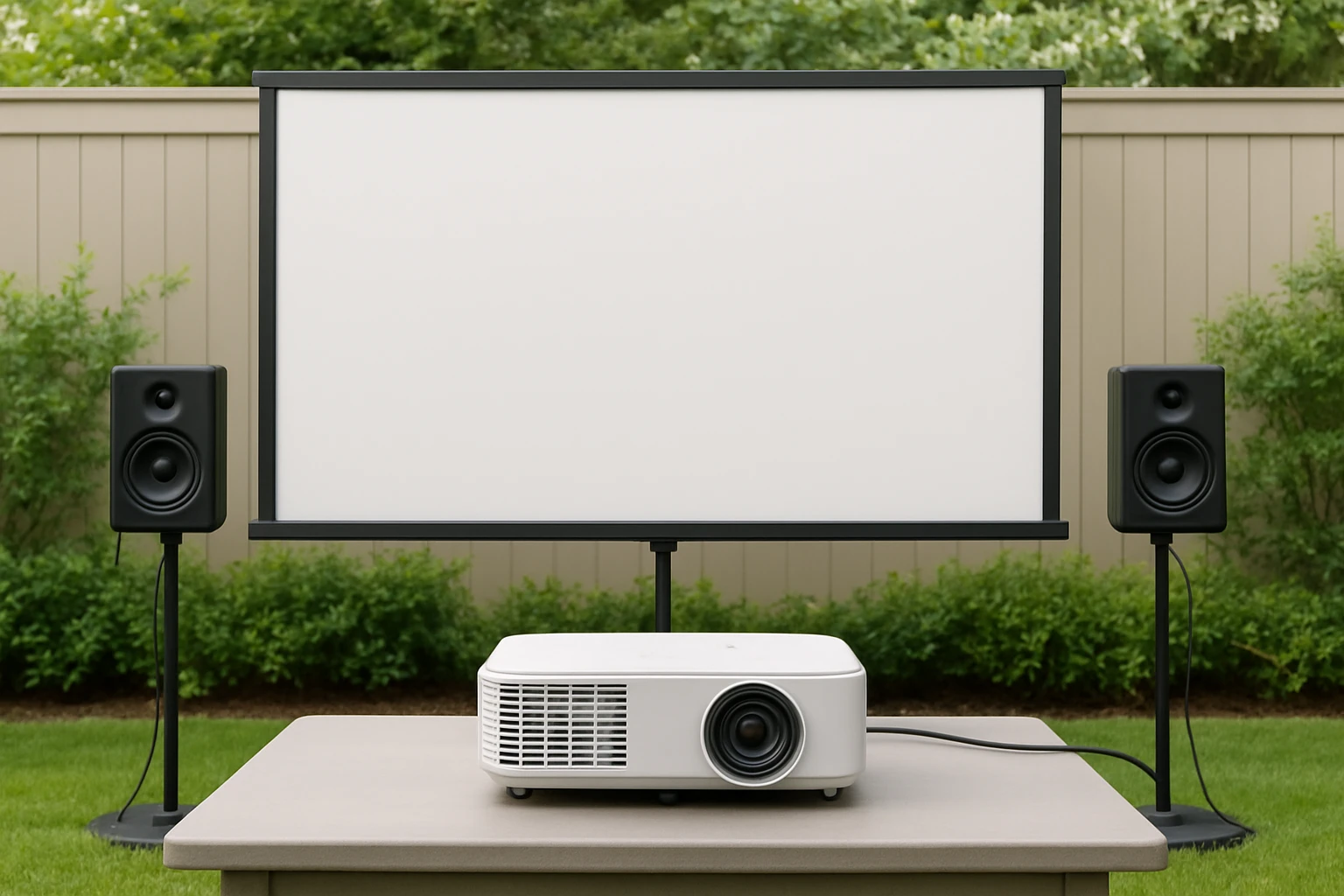
How to Wire Multiple Speakers for an Outdoor Movie Night: Step‑by‑Step Guide to Even, Powerful Sound
Introduction
Creating an outdoor cinema requires more than a projector and a screen; the sound system must deliver clear, balanced audio across the entire viewing area. This guide explains how to design, wire, and fine‑tune a multi‑speaker setup that provides even coverage and sufficient volume for an immersive movie experience. Readers will learn how to select appropriate speakers, calculate wire lengths, connect an amplifier, and troubleshoot common issues.
Even distribution of sound prevents hot spots and dead zones, ensuring that every guest enjoys dialogue and soundtrack details without straining. By following the systematic approach outlined here, one can achieve professional‑grade performance without the expense of a commercial installation.
The instructions assume basic familiarity with electrical tools, but no advanced engineering knowledge is required. Safety precautions are highlighted throughout the guide.
What You'll Need
- Outdoor‑rated speaker pair such as Pyle Waterproof Outdoor Speakers (2‑piece, $72.99, 4.5/5 rating) or Polk Atrium 4 Outdoor Speakers (pair, $249.00, 4.5/5 rating).
- Four‑channel amplifier such as Donner Stereo Audio Amplifier Receiver (440 W peak, $110.49, 4.2/5 rating).
- Speaker wire – 14‑gauge copper UF‑B rated for outdoor use (minimum 100 ft per channel).
- Wire connectors (quick‑connect terminals or spade lugs).
- Mounting hardware – spring‑loaded brackets (included with Pyle) or Speed‑Lock brackets (included with Polk).
- Power drill, screwdriver set, level, and measuring tape.
- Optional portable Bluetooth speaker for testing, e.g., Anker Soundcore 2 ($31.99, 4.5/5 rating).
Step 1: Plan the Speaker Layout
The first task is to map the listening area and decide where each speaker will be positioned. For a rectangular lawn, place two front left and right speakers at ear height (approximately 4 ft above ground) and two rear surround speakers slightly higher and angled toward the audience. Measure the distance between the front and rear rows; a 10‑12 ft separation typically yields a balanced soundstage.
Sketch the layout on graph paper, noting power outlet locations and potential obstacles such as trees or fences. This visual plan will guide wire length calculations and help you determine whether the amplifier’s four channels are sufficient. If you intend to expand to a larger property, consider a multi‑zone amplifier, but the Donner model already supports independent control of up to four speaker groups.
When the layout is finalized, calculate the total wire length for each channel. Add a 10 % safety margin to accommodate routing around obstacles and future adjustments.
Why this matters: Proper placement prevents acoustic interference, while accurate wire length estimation avoids unnecessary excess that can cause signal loss.
Step 2: Choose the Right Outdoor Speakers
Outdoor speakers must withstand moisture, temperature fluctuations, and UV exposure. The Pyle Waterproof Outdoor Speakers provide a 300 W maximum output, a 5.25 in aluminum injection‑cone woofer, and a 1 in Mylar tweeter. Their marine‑grade waterproof construction and rust‑proof grill make them suitable for poolside or patio installations. At $72.99 they offer an affordable entry point with a 4.5‑star rating based on 420 reviews.
For a premium option, the Polk Atrium 4 Outdoor Speakers feature a 4.5 in polypropylene woofer, ¾ in anodized aluminum dome tweeter, and patented Dynamic Balance technology that reduces distortion at high volumes. Their compact size allows discreet mounting, and the Speed‑Lock bracket simplifies installation. Although priced at $249.00, the superior fidelity and robust weather‑proofing justify the investment for audiophiles.
Both models include quick‑connect terminals (Pyle) or binding posts (Polk) that streamline wiring. Choose the model that aligns with your budget, aesthetic preferences, and desired sound pressure level.
Why these products: They are specifically engineered for outdoor environments, eliminating the need for additional protective enclosures and ensuring long‑term reliability.
Step 3: Run and Connect Speaker Wire
Begin by turning off power to any circuits that will be near the installation area. Lay the 14‑gauge UF‑B wire along the planned routes, securing it with outdoor‑rated zip ties every 2 ft. If you must cross a lawn, bury the wire 6‑8 in deep to protect it from foot traffic and moisture.
At each speaker location, strip ½ in of insulation from the wire ends. For Pyle speakers, insert the stripped conductors into the quick‑connect terminals and tighten the locking knob. For Polk speakers, wrap the conductors around the gold‑plated binding posts and secure with the provided set screw. Ensure polarity consistency (positive to positive, negative to negative) to preserve phase alignment across the array.
After all connections are made, use a multimeter to verify continuity and confirm that no short circuits exist. This step prevents audible clicks or blown amplifiers later in the process.
Why careful wiring matters: Proper gauge and secure connections minimize resistance, preserving the amplifier’s power delivery and maintaining tonal clarity.
Step 4: Connect the Amplifier and Power Source
Place the Donner Stereo Audio Amplifier Receiver in a sheltered location near a grounded AC outlet. The unit offers four independent channels, each with dedicated volume controls and speaker selector switches. Connect each speaker pair to the corresponding channel using the same gauge wire used for the speaker runs.
Plug the amplifier into the outlet and power it on. Use the built‑in LED display to set the input source to “AUX” or “Bluetooth” depending on your playback device. If you plan to stream music from a smartphone, pair it via Bluetooth 5.0; the receiver supports a stable connection up to 40 ft, which is sufficient for most backyard layouts.
Adjust the bass and treble knobs to a neutral flat setting (12 o’clock) before fine‑tuning. This baseline ensures that any subsequent EQ adjustments are based on the speakers’ natural response rather than amplifier coloration.
Why this amplifier: Its 440 W peak power can comfortably drive four 8‑ohm outdoor speakers, and the dual mic inputs allow for karaoke or public‑address use during gatherings, adding versatility to your movie night setup.
Step 5: Test, Balance, and Fine‑Tune
Play a familiar movie trailer or a test tone track at a moderate volume. Walk around the seating area and note any zones where sound is overly loud or too quiet. Use the amplifier’s individual channel volume controls to raise or lower levels until the sound pressure is uniform across the audience.
If you own an Anker Soundcore 2, you can use it as a portable reference speaker. Place the Soundcore near the front left position, play a mono test tone, and compare the output to the left outdoor speaker. Adjust the left channel until the two outputs match in perceived loudness.
For additional precision, consider using a SPL meter app on a smartphone to measure decibel levels at several points. Aim for a variation of no more than ±3 dB between the loudest and quietest spots.
Once the balance is satisfactory, secure all wire connections with zip ties, and cover any exposed terminals with waterproof heat‑shrink tubing. This final step protects the system from rain and humidity.
Tips & Pro Tips
- Mount speakers at least 6‑12 in away from direct sunlight to reduce heat‑induced distortion.
- Use a weather‑proof conduit for any wire that runs along walls or fences to extend lifespan.
- When wiring multiple speakers in series, maintain consistent impedance to avoid overloading the amplifier.
- Consider adding a small subwoofer (not covered in this guide) for deeper bass if your movies contain many action sequences.
- Label each wire with colored tape to simplify future troubleshooting or reconfiguration.
Troubleshooting
No Sound from One or More Speakers
Check the polarity at the speaker terminals and verify that the corresponding channel on the amplifier is not muted. Use a multimeter to confirm continuity through the wire run.
Distorted Audio at High Volume
Distortion often indicates that the amplifier is being asked to deliver more power than the speaker can handle. Reduce the channel volume, or consider upgrading to higher‑power speakers such as the Polk Atrium series.
Bluetooth Dropouts
Interference can occur if there are multiple Wi‑Fi routers or metal structures between the source device and the amplifier. Relocate the source closer to the amplifier or switch to a wired AUX connection for critical playback.
Conclusion
By following the steps outlined above, one can construct a reliable, evenly distributed outdoor sound system that enhances any movie night under the stars. Selecting weather‑proof speakers, correctly sizing and routing wire, and using a versatile amplifier such as the Donner model ensures both durability and high‑quality audio. With careful testing and fine‑tuning, the result will be a cinematic experience that rivals indoor theaters without the prohibitive cost.
Enjoy the newfound ability to host friends and family for unforgettable evenings, and feel confident that the sound will be as crisp as the picture.
Products Mentioned in This Guide
Frequently Asked Questions
What type of speakers are recommended for an outdoor movie night?
Use weather‑rated, full‑range speakers or outdoor‑rated pairs that can handle high SPL and resist moisture.
How do I determine the proper wire gauge for multiple speakers?
Calculate total length and current draw; for runs under 100 ft use 16‑AWG, and switch to 14‑AWG or 12‑AWG for longer distances or higher power.
Can a single amplifier power several speakers in an outdoor setup?
Yes, as long as the amp’s total RMS wattage exceeds the combined RMS rating of all speakers and the impedance remains within the amp’s safe range.
Where should I place speakers to avoid hot spots and dead zones?
Position speakers at ear level, spaced evenly around the viewing area, and aim them slightly inward to create overlapping coverage.
What safety precautions are essential when wiring outdoor speakers?
Turn off power before connecting, use outdoor‑rated cable and connectors, protect connections with weatherproof sealant, and follow local electrical codes.