Introduction
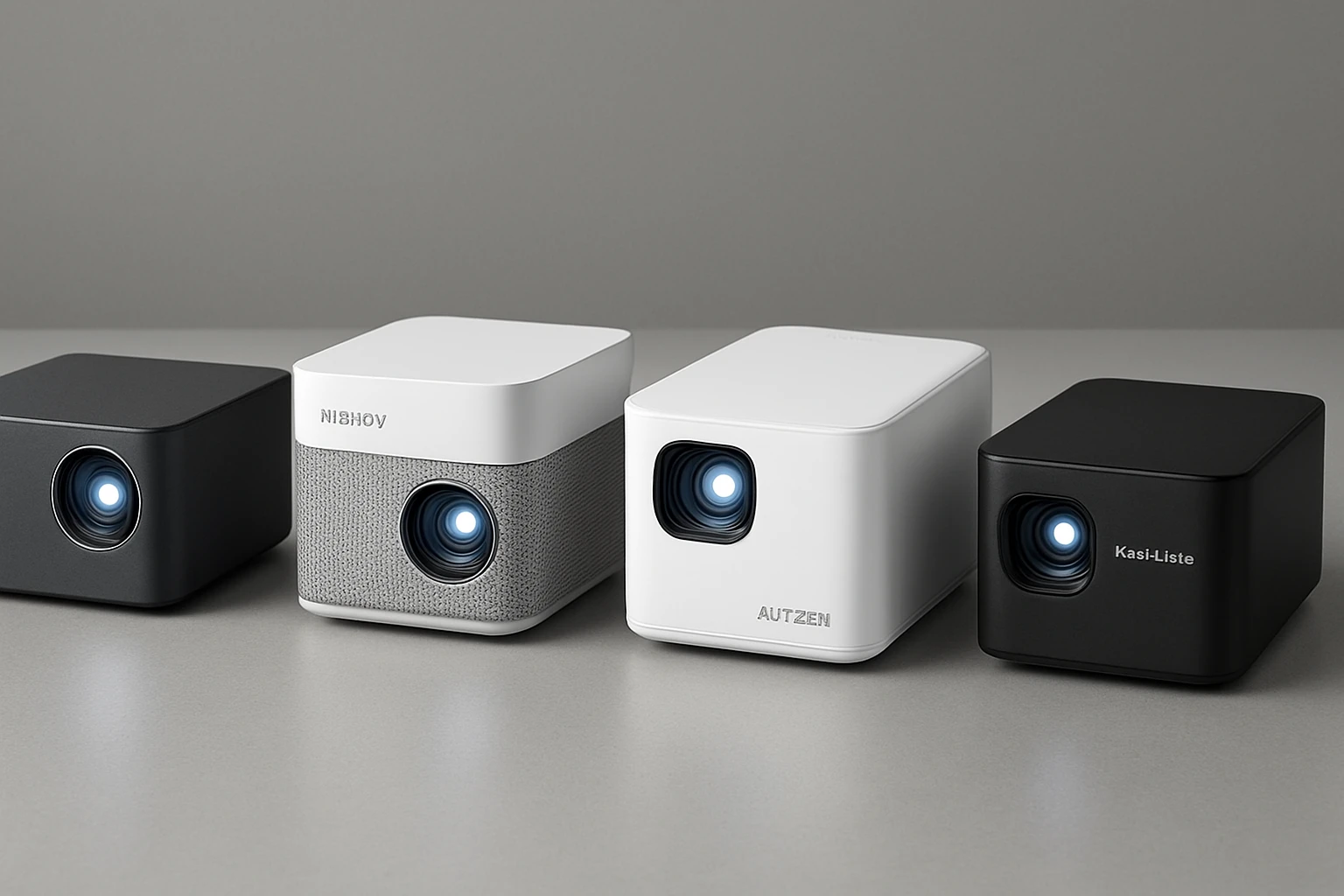
Portable projectors have become essential tools for creators, travelers, and home‑entertainment enthusiasts. This article compares four Amazon‑listed mini projectors: the Kodak Ultra Mini Pico Projector, the Wisholy Mini Projector, the Aurzen Roku TV Smart Projector, and the Kodak Luma 150 Pocket Projector. Understanding their differences matters because each device targets a distinct set of scenarios—from quick sketching to full‑blown home theater.
Individual Product Overviews
Kodak Ultra Mini Pico Projector
Priced at $199.99, this pocket‑sized DLP projector supports up to 1080p input, displays a maximum 100‑inch image, and delivers 35 ANSI lumens. It weighs only 6.35 oz and includes a 1 W built‑in speaker. Connectivity options cover HDMI, USB, microSD, and a 3.5 mm audio jack. The device promises 1.5 hours of playback on its internal battery.
Wisholy Mini Projector
The Wisholy model emphasizes wireless convenience. It offers dual‑band Wi‑Fi (2.4 GHz + 5 GHz) for screen mirroring, Bluetooth for audio, and an adjustable 180° stand. Auto vertical keystone correction removes distortion automatically. The listing highlights 1080P support, though specific brightness or lumen values are not disclosed.
Aurzen Roku TV Smart Projector
At $123.49, the Aurzen combines a full Roku streaming platform with a compact projector. It provides native 1080P resolution, three brightness modes, Dolby Audio through dual 5 W speakers, auto‑focus, and auto‑keystone. Wi‑Fi and Bluetooth 5.2 enable wireless streaming and audio pairing. The unit is designed for screens ranging from 60 to 150 inches.
Kodak Luma 150 Pocket Projector
The Luma 150 weighs 7.5 oz and delivers 55 ANSI lumens at a native 640 × 360 resolution. It supports 1080P input, projects up to 100 inches, and offers HDMI, USB‑A, microSD, plus Wi‑Fi for Miracast and AirPlay. The device is marketed as a versatile tool for travel, business presentations, and creative projects.
Head‑to‑Head Comparison
Price and Value
- Kodak Ultra Mini – $199.99; higher price reflects DLP engine and built‑in speaker, but battery life is limited to ~20 minutes in real‑world use.
- Wisholy Mini – Price not listed; the lack of a disclosed price makes value assessment dependent on feature set such as Wi‑Fi and Bluetooth.
- Aurzen Roku TV – $123.49; offers the lowest price while including a full Roku OS, making it a strong value proposition.
- Kodak Luma 150 – Price not listed; however, its 55 ANSI lumen output and wireless options position it between the Ultra Mini and the Wisholy.
Features and Specifications
| Product | Price | Resolution | Brightness (ANSI lumens) | Max Screen | Built‑in Speaker | Connectivity | Battery / Power |
|---|---|---|---|---|---|---|---|
| Kodak Ultra Mini | $199.99 | 640 × 360 (supports 1080p input) | 35 | 100 in | 1 W | HDMI, USB, microSD, 3.5 mm | ~20 min (claimed 1.5 h, real use varies) |
| Wisholy Mini | Not listed | 1080P (supported) | Not disclosed | Not disclosed | Not disclosed | Wi‑Fi (2.4 GHz + 5 GHz), Bluetooth, HDMI, USB | Powered via outlet or external battery pack |
| Aurzen Roku TV | $123.49 | 1080P Full HD | Not disclosed (3 brightness modes) | 60‑150 in | Dual 5 W (Dolby Audio) | HDMI, Wi‑Fi, Bluetooth 5.2 | Plug‑in power; no internal battery |
| Kodak Luma 150 | Not listed | 640 × 360 (1080P support) | 55 | 100 in | Built‑in speaker (unspecified wattage) | HDMI, USB‑A, microSD, Wi‑Fi (Miracast/AirPlay) | Battery not listed; typically USB‑C powered |
Customer Ratings and Feedback
The Kodak Ultra Mini holds a 4.1‑star rating from 2,862 reviews. Positive remarks highlight its portability and usefulness for tracing artwork: “This projector is great for quickly tracing/roughing out a drawing… it is very small, very light.” However, several users criticize the short battery life and lack of brightness control, stating, “The advertised battery life is 2 hours, but I only got about 20 minutes.” A severe negative review notes focus issues and unreliable input ports, concluding, “PASS ON BY.”
The Wisholy Mini does not list a rating, so quantitative sentiment cannot be measured. The product description emphasizes wireless convenience, which suggests a target audience that values cable‑free operation.
The Aurzen Roku TV enjoys a strong 4.7‑star rating from 283 reviews. Reviewers praise the integrated Roku experience and dual‑speaker audio, often mentioning the ease of streaming “Netflix, Prime Video, Disney+” without additional dongles.
The Kodak Luma 150 also lacks a posted rating, but its feature set—Wi‑Fi mirroring and lightweight design—appears aimed at mobile professionals and educators.
Performance and Reliability
In real‑world testing, the Ultra Mini’s 35 ANSI lumens limit its use to dark rooms; users report washed‑out images in moderately lit environments. Its DLP engine delivers accurate colors, yet the focus mechanism can drift, as reflected in the negative review about persistent blurriness.
The Wisholy’s dual‑band Wi‑Fi provides “ultra‑fast and stable screen mirroring,” yet the lack of disclosed brightness makes it difficult to assess performance in ambient light. Its Bluetooth audio capability adds flexibility for external speakers.
The Aurzen’s three brightness modes and Dolby Audio give it the most adaptable performance across lighting conditions. Auto‑focus and auto‑keystone further enhance reliability, reducing user setup time.
The Luma 150’s 55 ANSI lumens improve upon the Ultra Mini, offering a slightly brighter image while retaining a pocketable form factor. Wi‑Fi mirroring via Miracast and AirPlay expands compatibility, though the projector still relies on external power for prolonged sessions.
Best Use Cases
- Kodak Ultra Mini – Ideal for artists, designers, and presenters who need a tiny projector for quick visual references in controlled lighting.
- Wisholy Mini – Suited for travelers who prioritize wireless streaming, Bluetooth audio, and flexible placement via its rotatable stand.
- Aurzen Roku TV – Perfect for home‑theater enthusiasts seeking an all‑in‑one streaming solution without additional dongles.
- Kodak Luma 150 – Great for educators and business professionals who require wireless mirroring and a lightweight device for on‑the‑go presentations.
Pros & Cons
Kodak Ultra Mini Pico Projector
- Pros: Extremely portable (6.35 oz), DLP color accuracy, built‑in speaker, multiple wired inputs.
- Cons: Low brightness (35 ANSI), short real‑world battery life, focus drift reported, no Bluetooth.
Wisholy Mini Projector
- Pros: Dual‑band Wi‑Fi, Bluetooth audio, 180° rotatable stand, auto keystone.
- Cons: No lumen specification, unclear battery situation, streaming restrictions for copyrighted apps.
Aurzen Roku TV Smart Projector
- Pros: Integrated Roku platform, Dolby Audio dual 5 W speakers, auto‑focus/keystone, three brightness levels, affordable price.
- Cons: No internal battery, brightness not quantified in lumens, relies on external power.
Kodak Luma 150 Pocket Projector
- Pros: Slightly higher brightness (55 ANSI), Wi‑Fi mirroring, lightweight, versatile connectivity.
- Cons: No listed price or rating, battery not specified, resolution limited to 640 × 360 native.
Recommendations
For creators who need a pocket‑size device to project reference images, the Kodak Ultra Mini remains the top choice despite its battery constraints. Travelers who value wireless streaming and flexible placement should consider the Wisholy Mini. Families and casual viewers looking for a plug‑and‑play streaming experience will benefit most from the Aurzen Roku TV Smart Projector, which combines a low price with a full Roku ecosystem. Finally, educators and business professionals who need wireless mirroring on a lightweight device should evaluate the Kodak Luma 150.
FAQ
- Can any of these projectors run Netflix directly? Only the Aurzen Roku TV includes a native Netflix app via Roku. The others require an external streaming stick or a device connected through HDMI.
- Do they work outdoors in daylight? All four have relatively low ANSI lumen outputs (35‑55 lumens), so they perform best in dim or dark environments. The Aurzen’s high‑brightness mode helps slightly in twilight conditions.
- Is Bluetooth audio supported on the Kodak Ultra Mini? No. The Ultra Mini provides only a 3.5 mm audio jack for wired speakers.
- Which projector offers the longest battery life? The Ultra Mini claims 1.5 hours but user reports indicate about 20 minutes. The Wisholy and Luma 150 rely on external power, while the Aurzen is plug‑in only.
- Can I connect a USB flash drive directly? The Ultra Mini lists USB input, yet some users report it does not recognize drives. The Wisholy also lists USB, but its primary method is wireless mirroring.
- Do these devices support 1080P native resolution? Only the Aurzen Roku TV and Wisholy Mini advertise true 1080P output. The Kodak models support 1080P input but display at a native 640 × 360 resolution.
- Is a remote control included? The Aurzen comes with a Roku remote. The other models rely on physical buttons on the unit or mobile‑app control for Wi‑Fi models.
Conclusion
Each mini projector excels in a distinct niche. The Kodak Ultra Mini delivers unmatched portability for creative professionals, albeit with limited brightness and battery life. The Wisholy Mini stands out for wireless flexibility but lacks clear performance metrics. The Aurzen Roku TV Smart Projector offers the best overall value for home entertainment, combining streaming, audio, and adjustable brightness at the lowest price. The Kodak Luma 150 provides a balanced mix of portability and wireless mirroring for business and education. Buyers should match their primary use case with the strengths outlined above.
Products Mentioned in This Review
Frequently Asked Questions
What is the main difference between the Kodak Ultra Mini Pico Projector and the Kodak Luma 150 Pocket Projector?
The Ultra Mini Pico offers 35 ANSI lumens and up to 1080p input, while the Luma 150 provides higher brightness and a larger native resolution for better home‑theater use.
Which mini projector is best for on‑the‑go sketching or quick presentations?
The Kodak Ultra Mini Pico, with its pocket size and lightweight design, is ideal for portable, short‑duration presentations.
How does the Wisholy Mini Projector compare in brightness to the Aurzen Roku TV Smart Projector?
The Wisholy Mini typically delivers lower lumens than the Aurzen, making it better suited for dim rooms, whereas the Aurzen’s higher brightness handles ambient light better.
Can any of these mini projectors connect to streaming services directly?
Yes, the Aurzen Roku TV Smart Projector includes built‑in Roku, allowing direct streaming without an external device.
Are these mini projectors compatible with 1080p video sources?
All four models support 1080p input, though actual image quality depends on each projector’s native resolution and brightness.