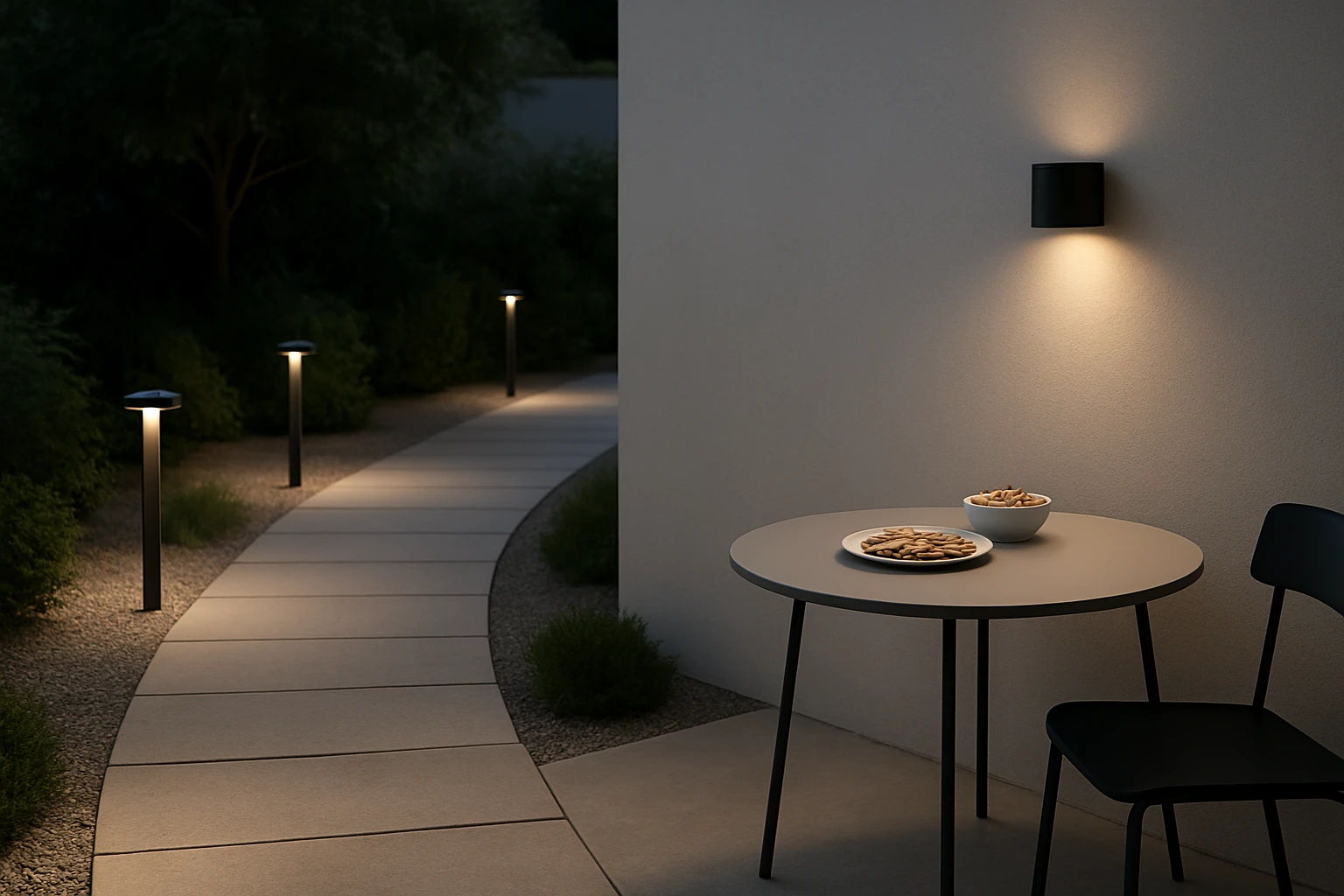

Pathway & Snack Lighting: Color Temperature Guide
Introduction
Outdoor lighting influences both safety and ambience, especially in areas where people walk and enjoy food. This guide explains how color temperature affects visibility, mood, and the visual appeal of snacks served outdoors. Readers will learn the science behind warm and cool light, how to match lighting to specific tasks, and which products provide the best performance for each scenario. By the end of the article, one will be equipped to make informed decisions that enhance safety, create inviting atmospheres, and highlight culinary presentations.
Background and Context
Color temperature is measured in kelvin (K) and describes the hue of light emitted by a source. Warm light, typically ranging from 2,700K to 3,500K, produces a golden glow that mimics sunset and encourages relaxation. Cool light, ranging from 4,000K to 6,500K, appears bluish and is associated with clarity and alertness, which can improve visual acuity on pathways. The human eye perceives contrast differently under each temperature, influencing how objects, textures, and food colors are rendered at night.
Safety standards for outdoor illumination recommend a minimum of 100 lux on walkways to prevent trips and falls. Lux is a measure of illuminance, and achieving it depends on both the brightness (lumens) and the distribution of light. In addition, food presentation benefits from lighting that renders colors accurately, which is often achieved with a neutral to slightly warm temperature around 3,500K. Understanding these fundamentals allows one to balance functional safety with aesthetic goals.
Choosing the Right Color Temperature for Pathways
For pathways, the primary objective is to provide clear visual cues without causing glare. Warm white LEDs around 2,700K to 3,000K create a comforting environment while still delivering sufficient contrast for step edges. However, in high‑traffic or low‑visibility areas, a cooler temperature of 4,000K to 5,000K can improve depth perception and reduce eye strain. The decision should consider the surrounding landscape, ambient light levels, and the desired emotional tone of the space.
When selecting products, consider those with adjustable temperature settings, allowing flexibility throughout the season. Some solar‑powered options incorporate sensors that dim or brighten based on ambient light, conserving energy while maintaining safety thresholds. The following products illustrate how different temperature ranges can be applied effectively.
For a warm, decorative approach, GIGALUMI Flickering Solar Lights emit a flame‑like amber glow that enhances garden pathways with a cozy ambience. Their IP65 waterproof rating ensures reliable operation in rain or snow, and the built‑in rechargeable battery provides up to 10 hours of illumination after a full day of charging.
For a cooler, more functional illumination, SOLPEX Solar Ground Lights deliver a crisp cool‑white output that highlights step edges and improves visibility. The product’s intelligent sensor automatically turns the lights on at dusk and off at dawn, offering a hands‑free solution that aligns with safety standards.
Optimizing Lighting for Outdoor Snack Areas
Snack stations and outdoor dining spaces benefit from lighting that accentuates food colors while maintaining a welcoming atmosphere. Warm white light around 3,000K to 3,500K is ideal because it enhances the richness of sauces, breads, and desserts without washing out hues. Additionally, a moderate intensity of 150–200 lux ensures that guests can see their plates clearly without feeling overexposed.
When space permits, layering light sources can create depth and visual interest. A primary overhead fixture can provide uniform illumination, while accent lights positioned near the serving table add focal points. The combination of warm and neutral tones can highlight the texture of grilled items and the freshness of salads alike.
BITPOTT Solar Pathway Lights offer a bright cool‑white output that can be used as task lighting for snack prep areas, ensuring precise visibility for chopping and plating. Their high‑capacity 2,200mWh battery delivers up to 24 hours of continuous light after a full charge, making them reliable for evening events.
For a more refined aesthetic, Mancra Metal Glass Solar Path Lights provide a warm white 3,000K glow through clear glass lenses, enhancing the visual appeal of food displays while adding a touch of elegance. The mono‑crystalline solar panel ensures rapid charging, and the IP44 rating protects the fixtures from light rain and dew.
Comparison and Selection Guide
| Product | Color Temperature | Brightness (Hours) | Waterproof Rating | Best Use Case | Rating |
|---|---|---|---|---|---|
| GIGALUMI Flickering Solar Lights | Warm (≈2,800K) | 10 hours | IP65 | Decorative pathways, garden ambience | 4.1/5 (17,793 reviews) |
| SOLPEX Solar Ground Lights | Cool White (≈4,500K) | 8‑10 hours | IP65 | High‑traffic walkways, safety lighting | 4.5/5 (1,045 reviews) |
| BITPOTT Solar Pathway Lights | Cool White (≈5,000K) | 11‑24 hours | IP65 | Outdoor snack prep, task lighting | 4.5/5 (4,233 reviews) |
| Mancra Metal Glass Solar Path Lights | Warm White (≈3,000K) | 8‑10 hours | IP44 | Elegant dining areas, decorative accents | 4.5/5 (1,104 reviews) |
When choosing a product, prioritize the color temperature that aligns with the intended function. Warm tones excel in creating a relaxed atmosphere for evening gatherings, while cool tones improve safety on frequently traversed paths. Battery life and waterproof rating are secondary considerations that become critical in regions with variable weather.
Best Practices & Tips
- Install lights at a height of 4‑6 feet for pathways to avoid glare and ensure even distribution.
- Use a combination of warm and cool lights to delineate zones; for example, warm lights for seating areas and cool lights for walkways.
- Ensure solar panels face true south (in the Northern Hemisphere) to maximize sun exposure and charging efficiency.
- Periodically clean solar panels and glass lenses to maintain luminous output; dust and debris can reduce efficiency by up to 30%.
- Consider motion sensors for high‑traffic zones to conserve energy while providing illumination only when needed.
Frequently Asked Questions
1. Does warm light make food look more appetizing?
Yes, warm light around 3,000K enhances the richness of colors in cooked foods, making them appear more inviting. It mimics the natural glow of candlelight, which has been shown to increase perceived taste intensity.
2. Can I mix different color temperatures in the same outdoor area?
Mixing is acceptable when each temperature serves a distinct purpose, such as using cool white for safety lighting and warm white for dining zones. Careful placement prevents visual conflict and maintains a cohesive aesthetic.
3. How long does a solar light need to charge to provide full brightness?
Most of the featured products require 6‑8 hours of direct sunlight to reach full charge, after which they deliver the advertised illumination duration.
4. Are IP65 and IP44 ratings sufficient for winter climates?
Both ratings protect against rain and snow, but IP65 offers higher resistance to water ingress, making it more suitable for regions with heavy snowfall or prolonged exposure to moisture.
5. What maintenance is required for solar pathway lights?
Regularly remove debris from the solar panel surface, check battery health annually, and replace any corroded connectors. Most units are designed for tool‑free installation, simplifying upkeep.
Conclusion
Choosing the appropriate color temperature for pathways and snack areas balances safety, ambience, and culinary appeal. Warm white lighting creates inviting spaces for dining, while cool white lighting enhances visibility and reduces the risk of accidents on walkways. By evaluating the specifications of each product, such as battery life, waterproof rating, and lumens, one can select fixtures that meet both functional and aesthetic goals. Implementing the best‑practice tips outlined in this guide will ensure a durable, energy‑efficient lighting system that enriches outdoor experiences.
Products Featured in This Guide
GIGALUMI Flickering Solar Lights
Price: $50.99 | Rating: 4.1/5 (17,793 reviews)
Featured for its warm, flame‑like illumination and IP65 waterproof construction, ideal for decorative pathway lighting.
SOLPEX Solar Ground Lights
Price: $23.99 | Rating: 4.5/5 (1,045 reviews)
Featured for its cool‑white output, intelligent dusk‑to‑dawn sensor, and robust IP65 rating, making it suitable for safety‑focused pathways.
BITPOTT Solar Pathway Lights
Price: $59.79 | Rating: 4.5/5 (4,233 reviews)
Featured for its high‑capacity battery, bright cool‑white illumination, and IP65 waterproof design, ideal for outdoor snack preparation areas.
Mancra Metal Glass Solar Path Lights
Price: $37.99 | Rating: 4.5/5 (1,104 reviews)
Featured for its elegant metal‑glass construction, warm‑white 3,000K output, and IP44 rating, perfect for enhancing the ambience of outdoor dining spaces.


