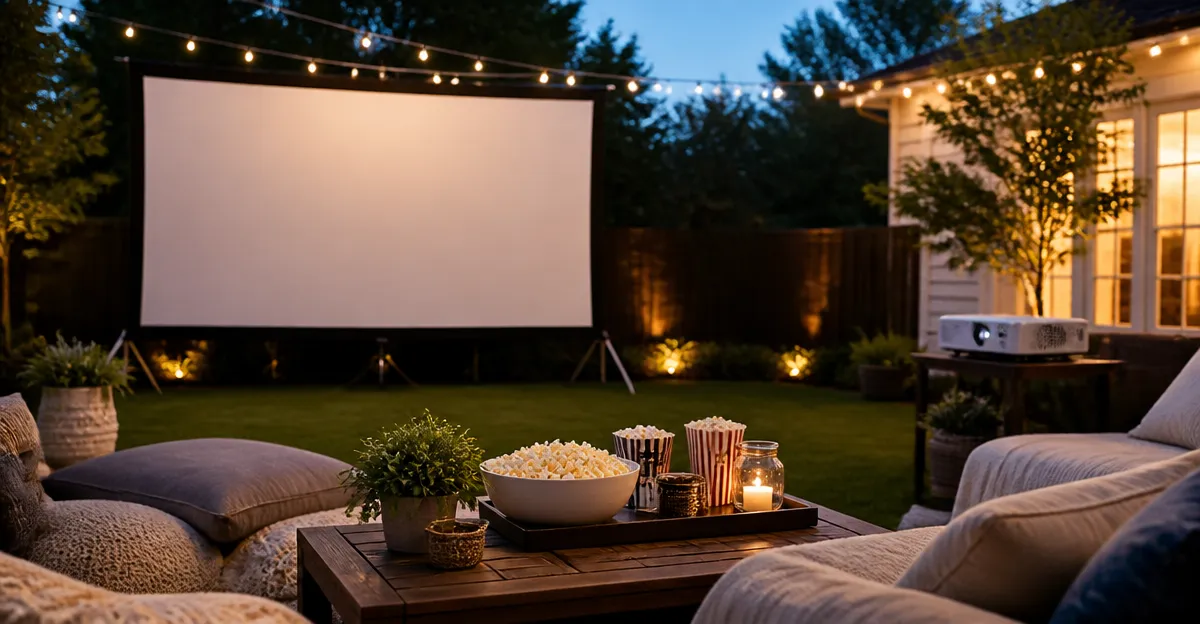
The Ultimate Backyard Film Festival Planning Guide: Step-by-Step Checklist to Host an Unforgettable Outdoor Movie Night
Introduction
Hosting an outdoor movie night transforms a simple evening into a communal celebration that can rival a professional cinema experience. This guide explains every essential element, from selecting the optimal projection screen to arranging seating, lighting, and audio. Readers will learn how to plan, budget, and execute a backyard film festival that leaves guests talking for weeks.
The checklist format provides a clear timeline, while expert recommendations ensure that each decision is backed by data and real‑world feedback. Whether the event is a family gathering, a neighborhood block party, or a corporate outdoor presentation, the principles outlined here apply universally.
Background and Context
Outdoor cinema has grown in popularity because modern projectors deliver bright, high‑definition images even in partially lit environments. However, the quality of the viewing surface remains the single most influential factor on picture clarity, contrast, and color fidelity. A well‑chosen screen can amplify a modest projector’s performance, while a poor screen can diminish even the most expensive equipment.
In addition to the screen, sound reinforcement, power management, and environmental considerations such as wind and ambient light affect the overall experience. Understanding these fundamentals empowers planners to allocate resources wisely and avoid common pitfalls.
Choosing the Right Projection Screen
Three core attributes define a suitable screen for backyard use: size, material, and portability. Size determines the viewing distance and immersion level; material influences gain (brightness) and wrinkle resistance; portability affects storage and transport.
For most residential backyards, a 120‑inch diagonal screen offers a balance between impact and space requirements. The Mdbebbron 120" Projector Screen provides a 16:9 aspect ratio, anti‑crease polyester fabric, and a lightweight folding design that fits into a backpack. At $20.39, it has a 4.5‑star rating from 39,739 reviewers, indicating strong value for budget‑conscious hosts.
When a built‑in stand is preferred, the TOWOND 120" Projector Screen with Stand delivers a sturdy aluminum tripod, sandbags, and a 5‑minute tool‑free assembly. Priced at $65.99 with a 4.5‑star rating from 2,006 reviews, it excels for users who need rapid deployment and reliable outdoor stability.
For larger gatherings, the AAJK 150" Projector Screen expands the viewing area to 132"×72" while retaining a crease‑free polyester surface. At $28.49 and a 4.4‑star rating from 5,775 reviews, it offers an economical solution for expansive backyards.
In situations where a permanent frame is unnecessary, the TOWOND 100" Projector Screen with Stand combines a lightweight tripod with a washable milk‑silk fabric. Although slightly smaller, its 100‑inch size reduces wind load and its $69.99 price reflects a robust construction with a 4.3‑star rating from 1,531 reviewers.
For truly spectacular events, the XHYCPY 16ft Inflatable Movie Screen creates a 16‑foot diagonal display that inflates in two minutes. At $98.99 and a 4.6‑star rating from 2,148 reviews, it provides front and rear projection capability, making it ideal for large audiences and themed parties.
Comparison and Selection Guide
| Product | Screen Size | Material | Portability | Stand Included | Price (USD) | Rating |
|---|---|---|---|---|---|---|
| Mdbebbron 120" Projector Screen | 120" (16:9) | Anti‑crease polyester | Backpack‑size folding | No | 20.39 | 4.5 (39,739) |
| TOWOND 120" Projector Screen with Stand | 120" (16:9) | High‑density polyester | Compact tripod bag | Yes | 65.99 | 4.5 (2,006) |
| AAJK 150" Projector Screen | 150" (16:9) | Soft‑touch white fabric | Foldable backpack | No | 28.49 | 4.4 (5,775) |
| TOWOND 100" Projector Screen with Stand | 100" (16:9) | Polyester milk silk | Detachable tripod | Yes | 69.99 | 4.3 (1,531) |
| XHYCPY 16ft Inflatable Movie Screen | 16 ft (~192") | Thickened polyester on 210D oxford frame | Inflatable with blower | No (stand optional) | 98.99 | 4.6 (2,148) |
When selecting a screen, consider the following decision points:
- Audience size: Larger groups benefit from the 150‑inch or inflatable options.
- Venue conditions: Windy locations favor the tripod‑based TOWOND models.
- Budget constraints: The Mdbebbron screen delivers the greatest value per inch.
- Setup frequency: Portable fold‑away screens suit occasional use, while inflatable screens excel for recurring festivals.
Step‑by‑Step Checklist
- Define the event scope: Estimate guest count, desired start time, and film genre. This determines screen size and audio power.
- Choose a screen: Refer to the comparison table and select the model that aligns with size, portability, and budget.
- Secure power: Arrange a 120 V extension cord, surge protector, and, if needed, a portable generator rated for the projector and audio system.
- Set up the screen: Follow the manufacturer’s instructions; for tripod models, anchor with sandbags and wind ropes. For inflatable screens, inflate using the included blower and tether the frame with stakes.
- Position the projector: Place the projector at a distance equal to 1.5–2.5 times the screen width. Adjust focus and keystone settings for a rectangular image.
- Arrange audio: Use outdoor‑rated speakers positioned left and right of the screen, aiming for a balanced stereo field. Connect via Bluetooth or wired AUX.
- Control ambient light: Schedule the screening after sunset, use blackout curtains on nearby windows, and consider a portable LED floodlight with a dimmer for safety without washing out the picture.
- Provide seating: Lay out blankets, lawn chairs, or inflatable cushions. Ensure pathways remain clear for emergency access.
- Test run: Play a short clip to verify image uniformity, sound levels, and stability. Make any necessary adjustments before guests arrive.
- Host the event: Offer concessions such as popcorn, drinks, and themed décor. Encourage social media sharing with a unique hashtag.
Best Practices & Tips
- Use a projector with at least 2,500 lumens for outdoor use; higher lumens improve visibility under residual light.
- Apply a matte black backdrop behind the screen to enhance contrast and reduce light spill.
- Invest in a weather‑proof speaker enclosure to protect audio equipment from dew.
- For rear projection, ensure the screen material is non‑transparent; the TOWOND 120" model explicitly supports rear projection.
- Store screens in dry, climate‑controlled conditions to prevent mold and fabric degradation.
- When using an inflatable screen, keep the blower plugged in for the entire duration; the noise level drops significantly after the screen is fully inflated.
Frequently Asked Questions
- What is the ideal projector brightness for a backyard screen?
- At least 2,500 lumens is recommended for a 120‑inch screen in a dark‑sky setting; larger screens may require 3,000 lumens or more.
- Can I use a regular indoor projector outdoors?
- Yes, provided the projector is rated for the ambient temperature and you protect it from moisture with a waterproof cover.
- How do I prevent wind from moving the screen?
- Anchor tripod legs with sandbags, use wind ropes attached to ground stakes, and, for inflatable screens, secure the frame with tethers.
- Is rear projection worth the extra effort?
- Rear projection eliminates shadows caused by audience movement and is valuable when space in front of the screen is limited.
- Do I need a separate audio system?
- External speakers are essential; most projectors have limited built‑in volume that cannot fill an outdoor area.
- How long does an inflatable screen stay inflated?
- As long as the blower remains powered; the unit includes a low‑noise motor that can run continuously for several hours.
Conclusion
By following the structured checklist, selecting a screen that matches the event’s scale, and applying the best‑practice tips, any host can transform a backyard into a memorable film festival venue. The combination of appropriate technology, thoughtful layout, and attention to environmental factors ensures a cinematic experience that rivals traditional theaters.
Remember that the most successful outdoor screenings balance technical quality with hospitality. When guests feel comfortable and engaged, the visual spectacle becomes only part of the lasting impression.
Products Featured in This Guide
Mdbebbron 120" Projector Screen
Price: $20.39 | Rating: 4.5/5 (39,739 reviews)
Featured for its ultra‑affordable price, anti‑crease polyester material, and backpack‑friendly folding design, making it ideal for occasional backyard events.
TOWOND 120" Projector Screen with Stand
Price: $65.99 | Rating: 4.5/5 (2,006 reviews)
Featured for its sturdy aluminum tripod, quick 5‑minute tool‑free setup, and dual‑sided projection capability, perfect for frequent outdoor use.
AAJK 150" Projector Screen
Price: $28.49 | Rating: 4.4/5 (5,775 reviews)
Featured for its expansive 150‑inch viewing area, washable soft‑touch fabric, and low price point, suitable for larger backyard gatherings.
TOWOND 100" Projector Screen with Stand
Price: $69.99 | Rating: 4.3/5 (1,531 reviews)
Featured for its lightweight detachable tripod, wrinkle‑free milk‑silk fabric, and robust anchoring accessories, ideal for windy environments.
XHYCPY 16ft Inflatable Movie Screen
Price: $98.99 | Rating: 4.6/5 (2,148 reviews)
Featured for its rapid inflation, front and rear projection flexibility, and large 16‑foot display, making it perfect for large‑scale backyard festivals.