Introduction
This guide explains how to obtain a permit for an outdoor movie screening in a community park and how to select equipment that meets municipal requirements. Readers will learn the essential paperwork, safety considerations, and practical product recommendations that simplify setup and enhance audience experience. By following the step‑by‑step checklist, organizers can avoid common delays and ensure compliance with local regulations. The guide also provides a comparison of popular projection screens and a smart projector to help planners make informed purchasing decisions.
Background/Context
Community parks are public assets managed by city or county agencies, and any organized gathering typically requires a formal permit. Permit processes exist to protect public safety, preserve park resources, and coordinate with other scheduled activities. Failure to obtain the proper authorization can result in fines, event cancellation, or liability exposure. Understanding the regulatory framework, such as noise ordinances, electrical codes, and insurance requirements, is therefore a prerequisite for a successful movie night.
Outdoor screenings have grown in popularity because they foster community engagement, provide affordable entertainment, and make use of existing open‑air spaces. Modern portable screens and compact projectors enable organizers to create a cinema‑like atmosphere without permanent infrastructure. However, the equipment must comply with the park’s specifications for size, illumination, and stability, especially in windy or rainy conditions.
Key Permit Requirements
Most municipalities request the following items when applying for a park movie night permit:
- A completed permit application form specifying date, time, and expected attendance.
- Proof of liability insurance covering public events, typically $500,000 per occurrence.
- A site plan showing equipment placement, audience seating, and emergency egress routes.
- Noise mitigation plan that respects local quiet hours, often limiting sound levels after 10 p.m.
- Electrical safety documentation, including extension‑cord ratings and grounding methods.
Submitting these documents at least two weeks in advance is advisable, as many parks operate on a first‑come‑first‑served basis for event dates. Early submission also allows the permitting authority to request clarifications before the deadline.
Selecting the Right Projection Screen
Choosing a screen that balances portability, durability, and visual performance is critical. The following products are frequently used by community organizers because they meet most park guidelines.
The first recommendation is the Skerell 100‑Inch Outdoor Projector Screen. This 100‑inch screen offers a 16:10 aspect ratio, 4K HD resolution, and a sturdy aluminum alloy frame. Its foldable design allows setup in five minutes without tools, and the included ropes, nails, and water bags provide extra stability in windy conditions. The screen is constructed from natural polyester fabric that resists wrinkles and curls, ensuring a smooth viewing surface. With a rating of 4.5 stars from 188 reviews and a price of $41.79, it delivers strong value for small‑to‑medium gatherings.
For larger audiences, the Mdbebbron 120‑Inch Foldable Projector Screen expands the viewing area to 104 × 58 inches. Its anti‑crease polyester material maintains a flat surface even after repeated folding, and the screen can be mounted using hooks, ropes, or double‑sided tape. The lightweight, one‑piece construction fits easily into a backpack, making transport to remote parks straightforward. Priced at $25.98 and backed by 4.4 stars from over 35,000 reviews, it is an economical choice for events that prioritize portability.
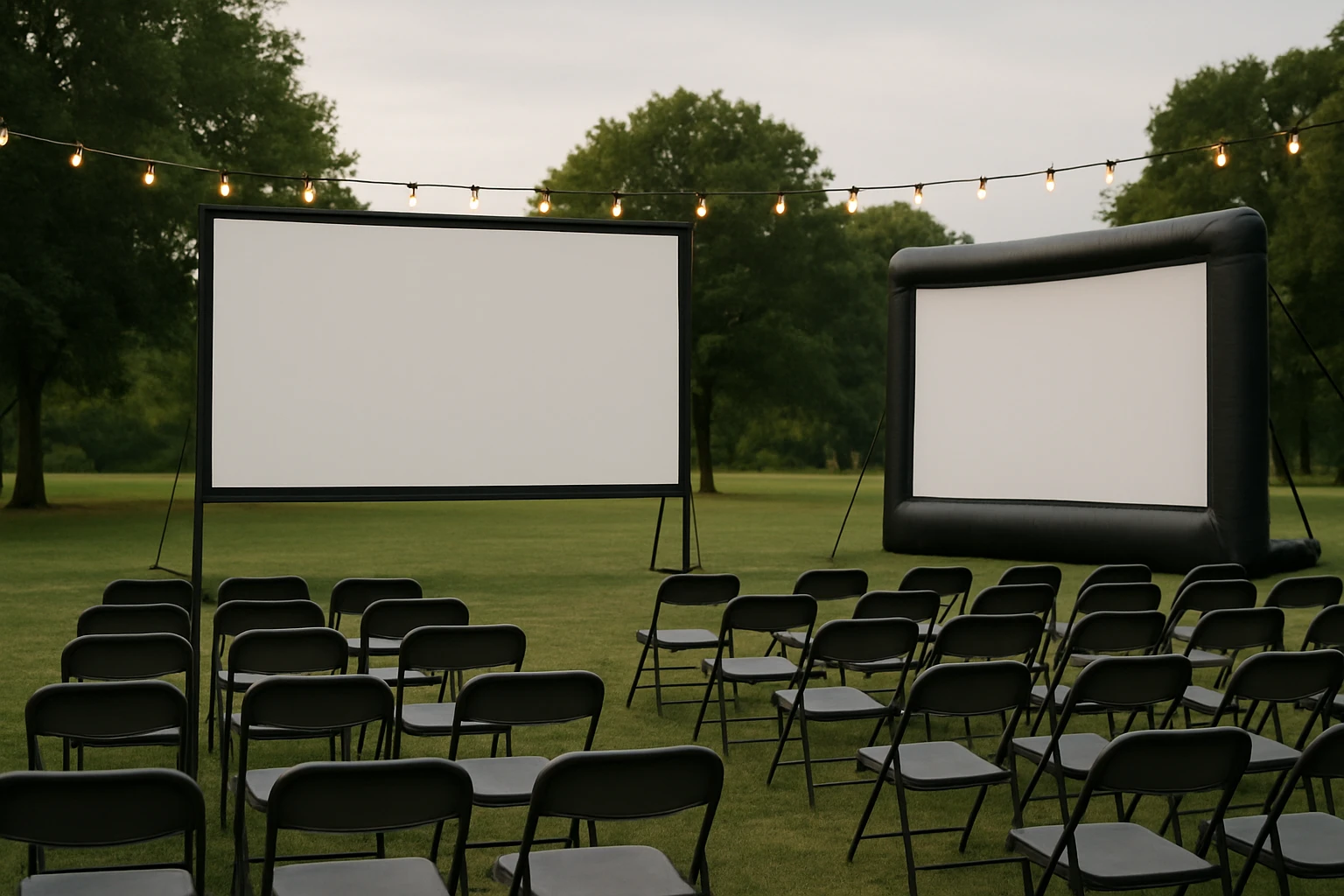
When a dramatic visual impact is desired, especially for festivals or large‑scale gatherings, the Popblow 16‑ft Inflatable Movie Screen provides a 16‑foot diagonal display with a 160° viewing angle. Constructed from 210T reinforced nylon and rated IP68 for waterproofing, it can withstand rain, snow, and high humidity. The built‑in blower inflates the screen in 60 seconds with a noise level below 30 dB, preserving the cinematic ambience. Although priced at $119.99, its durability and rapid deployment justify the cost for high‑visibility events.
For organizers who need a versatile, freestanding option, the Towond 150‑Inch Projector Screen with Stand combines a large 150‑inch surface with a foldable aluminum stand. The screen supports both front and rear projection, allowing flexibility in projector placement. Weighing only 11.5 lb, it can be carried in a single hand and stored in a car trunk. Its 4.3‑star rating from 2,167 reviews indicates reliable performance for outdoor cinema events. The price of $99.99 positions it as a mid‑range solution for community groups seeking a balance between size and portability.
Choosing a Compatible Projector
Even the best screen cannot compensate for a projector that lacks sufficient brightness or resolution. The Happrun 4K UHD Smart Projector integrates Google TV, voice control, and 400 ANSI lumens of brightness, making it suitable for both daytime and evening screenings. Its 5 W built‑in speaker supports Dolby sound, while Bluetooth connectivity allows pairing with external speakers for larger venues. At $269.99 and a rating of 4.4 stars from 595 reviews, it offers a comprehensive feature set without requiring separate streaming devices.
When budgeting for a projector, consider the ambient light conditions of the park. A minimum of 300 ANSI lumens is recommended for outdoor use, and a 4K resolution ensures crisp images on larger screens such as the Towond 150‑inch model. Additionally, verify that the projector includes a 1/4‑inch mounting thread if a tripod or ceiling mount is required.
Comparison/Selection Guide
| Feature | Skerell 100‑Inch | Mdbebbron 120‑Inch | Popblow 16‑ft Inflatable | Towond 150‑Inch with Stand | Happrun 4K Smart Projector |
|---|---|---|---|---|---|
| Screen Size (Diagonal) | 100 in | 120 in | 16 ft (≈192 in) | 150 in | N/A |
| Aspect Ratio | 16:10 | 16:9 | 16:9 | 16:9 (also 1:1) | 4K (16:9) |
| Portability | Carry bag, easy | Backpack‑size | Inflatable, blower | Foldable stand, 11.5 lb | Lightweight, 2 lb |
| Weather Resistance | Water bags, ropes | Standard polyester | IP68 waterproof | Aluminum stand, optional sandbags | Indoor/outdoor use, 400 lumens |
| Price (USD) | 41.79 | 25.98 | 119.99 | 99.99 | 269.99 |
| Average Rating | 4.5/5 | 4.4/5 | 4.2/5 | 4.3/5 | 4.4/5 |
Organizers should match screen size to expected audience capacity and available space. For parks with limited flat ground, a portable foldable screen such as the Skerell or Mdbebbron is advisable. For larger open fields, the Towond or Popblow options provide expansive viewing areas. Pair any screen with the Happrun projector to guarantee 4K image quality and integrated streaming capabilities.
Best Practices & Tips
- Submit the permit application at least fourteen days before the event to allow for review and revisions.
- Conduct a site walk‑through with park officials to confirm screen placement, power outlet availability, and emergency access routes.
- Use a battery‑operated or low‑wattage projector if the park does not provide electricity; the Happrun projector can run on a portable power station.
- Secure the screen with ropes, stakes, or sandbags, especially on windy evenings. The Skerell screen includes water bags for added stability.
- Test audio levels during setup to ensure compliance with local noise ordinances; consider using directional speakers to focus sound toward the audience.
- Provide clear signage indicating exit routes, restroom locations, and contact information for event organizers.
- Prepare a contingency plan for inclement weather, such as a rain‑proof canopy or the ability to reschedule.
Frequently Asked Questions
- How long does it take to obtain a park movie night permit?
- Processing times vary by jurisdiction, but most municipalities require a minimum of seven business days. Submitting the application fourteen days in advance reduces the risk of delays.
- Do I need a separate insurance policy for the equipment?
- Yes, most parks require liability insurance that covers equipment loss or damage. A standard event policy of $500,000 per occurrence is typically sufficient.
- Can I use a regular indoor projector for an outdoor screening?
- Indoor projectors often lack the brightness needed for daylight conditions. For outdoor use, select a projector with at least 300 ANSI lumens, such as the Happrun 4K UHD Smart Projector, which also offers weather‑resistant features.
- What power source is required for the inflatable screen?
- The Popblow inflatable screen includes a built‑in electric blower that operates on standard 110 V AC. If the park does not provide power, a portable generator or inverter can supply the necessary electricity.
- Is it permissible to charge admission fees for a community park movie night?
- Charging admission typically requires an additional special event permit and may be subject to different insurance and tax requirements. Consult the park’s permitting office for specific regulations.
- How can I protect the screen from dust and insects when stored?
- Store the screen in its original carry bag or a sealed container. The polyester fabrics used in the Skerell and Mdbebbron screens are resistant to dust, but a protective cover extends their lifespan.
Conclusion
Securing a community park movie night permit involves careful planning, documentation, and compliance with local regulations. By following the checklist outlined in this guide, organizers can navigate the application process efficiently and avoid common pitfalls. Selecting the appropriate screen and projector—such as the Skerell 100‑Inch screen, Mdbebbron 120‑Inch foldable screen, Popblow inflatable screen, Towond 150‑Inch stand‑up screen, and Happrun 4K Smart Projector—ensures a high‑quality viewing experience while meeting safety and weather‑resistance standards. Implementing the best‑practice tips and addressing frequently asked questions further enhances event success. With thorough preparation, community members can enjoy memorable outdoor cinema events that strengthen local bonds.
Products Featured in This Guide
Skerell 100‑Inch Outdoor Projector Screen
Price: $41.79 | Rating: 4.5/5 (188 reviews)
Featured because it offers a portable, weather‑resistant screen with quick setup, ideal for small to medium community events.
Mdbebbron 120‑Inch Foldable Projector Screen
Price: $25.98 | Rating: 4.4/5 (35,217 reviews)
Featured for its lightweight, anti‑crease design that folds into a backpack, making transport to remote parks effortless.
Popblow 16‑ft Inflatable Movie Screen
Price: $119.99 | Rating: 4.2/5 (44 reviews)
Featured because its IP68 waterproof fabric and rapid inflation system provide a large, durable display for festival‑scale screenings.
Towond 150‑Inch Projector Screen with Stand
Price: $99.99 | Rating: 4.3/5 (2,167 reviews)
Featured for its large 150‑inch surface, freestanding aluminum stand, and support for both front and rear projection.
Happrun 4K UHD Smart Projector
Price: $269.99 | Rating: 4.4/5 (595 reviews)
Featured because it integrates Google TV, voice control, and 400 ANSI lumens brightness, delivering a complete streaming solution without additional hardware.