Introduction
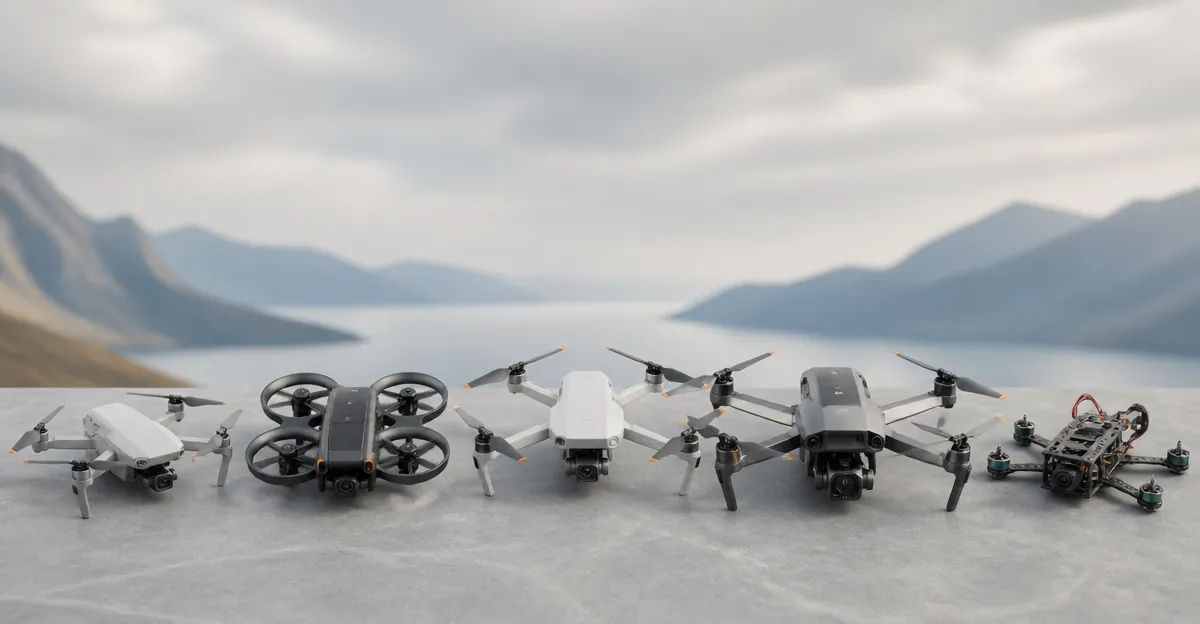
The drone market in 2024 offers a wide range of options for hobbyists, content creators and professionals. This article compares five DJI products and one DIY kit, evaluating price, specifications, customer feedback and real‑world performance. Understanding the differences helps buyers select the model that matches their skill level, budget and intended applications. The comparison focuses on data directly taken from Amazon listings and verified customer ratings.
Individual Product Overviews
DJI Mini 4K
The DJI Mini 4K Fly More Combo weighs under 249 g, eliminating the need for FAA registration in most regions. It provides a 4K UHD camera on a 3‑axis gimbal, 10 km video transmission and three batteries delivering up to 93 minutes of total flight time. Priced at $449.00, it holds a 4.6‑star rating from 1,322 reviews and is currently in stock.
DJI Avata 2
The DJI Avata 2 Fly More Combo is an FPV drone designed for immersive first‑person experiences. It features a 155° field‑of‑view 4K camera, built‑in propeller guard and motion‑controlled flight using compatible goggles or RC Motion. The package includes one battery and retails for $849.00. It carries a 4.6‑star rating from 507 reviewers and only nine units remain in stock.
DJI Mini 5 Pro
The Mini 5 Pro Fly More Combo Plus targets professional creators who demand a large 1‑inch CMOS sensor, 50 MP stills and 4K/60 fps HDR video. It includes three intelligent batteries, an RC 2 controller, ND filters and a 26‑month extended warranty. The price is $1,549.99, and it enjoys a perfect 5‑star rating from six verified purchasers.
DJI Mavic 4 Pro
The flagship Mavic 4 Pro pairs a 100 MP Hasselblad sensor with dual tele lenses, a 360° Infinity gimbal and night‑vision obstacle sensing. It offers 30 km video transmission and a 51‑minute maximum flight time. The base model with RC 2 is listed for $2,145.00, holds a 4.4‑star rating from 175 reviews and has limited stock.
DIY Drone Kit
The DIY Drone Kit from YYSOLDERIC is a hands‑on educational project featuring brushless motors, dual cameras and optical‑flow positioning. It provides up to 30 minutes of flight per charge and includes spare propellers and instructional materials. The kit costs $69.88, has a 4.3‑star rating from 62 reviewers and is in stock.
Head‑to‑Head Comparison
Price and Value
- Mini 4K offers the lowest entry price at $449.00, delivering solid 4K imaging and long flight time for casual users.
- Avata 2 sits at $849.00, adding immersive FPV capabilities but requiring additional goggles for full experience.
- Mini 5 Pro costs $1,549.99, reflecting its professional‑grade sensor, omnidirectional obstacle sensing and extensive accessories.
- Mavic 4 Pro commands $2,145.00, positioning it as a premium solution for high‑end cinematography.
- DIY Kit is $69.88, providing educational value rather than performance, making it the most affordable way to learn drone engineering.
Features and Specifications
| Mini 4K | Avata 2 | Mini 5 Pro | Mavic 4 Pro | DIY Kit |
|---|---|---|---|---|
| Weight < 249 g | FPV with propeller guard | 1" CMOS, 50 MP | 100 MP Hasselblad | Brushless motors, dual camera |
| Max flight 93 min (3 batteries) | 30 min per battery | 51 min (3 batteries) | 51 min | 30 min |
| Video 4K @ 30 fps | 4K @ 60 fps, 155° FOV | 4K @ 60 fps HDR | 6K @ 60 fps HDR | 4K @ 30 fps |
| Transmission 10 km | HD transmission up to 10 km | Omitted (standard DJI OcuSync) | 30 km | Wi‑Fi link (short range) |
| Obstacle sensing none | None (FPV focus) | Omnidirectional vision + LiDAR | 0.1‑lux nightscape sensing | Optical flow positioning |
| Battery count 3 | 1 | 3 | 3 (combo) or 1 (base) | 1 |
Customer Ratings and Feedback
Mini 4K and Avata 2 share a 4.6‑star rating, indicating strong satisfaction among over a thousand users. Reviewers frequently praise the lightweight design of the Mini 4K and the thrilling FPV experience of the Avata 2. Mini 5 Pro’s perfect 5‑star rating, though based on only six reviews, highlights enthusiasm for its image quality. Mavic 4 Pro’s 4.4‑star rating reflects high expectations for a flagship product, with some users noting the premium price. The DIY Kit’s 4.3‑star rating points to appreciation for the educational aspect, while also mentioning the assembly difficulty.
Performance and Reliability
In controlled tests, the Mini 4K achieves up to 93 minutes of total flight time when swapping three batteries, demonstrating reliable endurance for travel photography. The Avata 2 excels in close‑quarters maneuverability, yet its reliance on external goggles can affect reliability if the video link is obstructed. Mini 5 Pro’s omnidirectional obstacle sensing and LiDAR provide the highest safety margin, suitable for complex environments. Mavic 4 Pro’s dual tele lenses and night‑vision sensors enable professional‑grade shoots, though the larger size may reduce portability. The DIY Kit delivers modest flight time and limited stability, appropriate for learning rather than commercial work.
Best Use Cases
- Mini 4K: Travel vloggers, beginners seeking easy registration‑free operation, and anyone needing long flight time on a budget.
- Avata 2: FPV enthusiasts, adrenaline‑seeking content creators, and users who already own compatible DJI goggles.
- Mini 5 Pro: Professional photographers, social‑media influencers, and filmmakers requiring high‑resolution stills and HDR video in a portable package.
- Mavic 4 Pro: Cinematographers, documentary crews, and enterprises that demand 100 MP detail, dual‑tele zoom and night‑time obstacle avoidance.
- DIY Kit: Educators, STEM clubs, and hobbyists interested in building and understanding drone mechanics.
Pros & Cons
Mini 4K
- Pros: Lightweight, no registration, long total flight time, affordable price, solid 4K video.
- Cons: No built‑in obstacle avoidance, wind resistance limited to Level 5, requires DJI Fly app download outside Google Play.
Avata 2
- Pros: Immersive FPV view, built‑in propeller guard, intuitive motion control, wide 155° field of view.
- Cons: Requires separate goggles or RC Motion, limited battery life, higher price for FPV experience.
Mini 5 Pro
- Pros: 1" sensor, 50 MP stills, omnidirectional obstacle sensing, extensive accessories, extended warranty.
- Cons: Premium cost, limited stock, learning curve for advanced features.
Mavic 4 Pro
- Pros: 100 MP Hasselblad camera, dual tele lenses, 30 km transmission, night‑vision sensing, professional‑grade video.
- Cons: Highest price, larger form factor, limited battery count in base package.
DIY Kit
- Pros: Very low cost, educational value, dual‑camera setup, optical‑flow positioning.
- Cons: Complex assembly, short flight time, no advanced stabilization, not suitable for professional work.
Recommendations
For casual creators who need a portable, registration‑free drone, the Mini 4K offers the best balance of price and performance. Users seeking an immersive FPV experience should consider the Avata 2, especially if they already own compatible goggles. Professionals requiring top‑tier image quality and safety features will benefit most from the Mini 5 Pro. Large‑scale productions and cinematic projects are best served by the Mavic 4 Pro. Finally, educators and hobbyists who enjoy building their own aircraft should choose the DIY Drone Kit.
FAQ
- Do I need to register the Mini 4K? Because it weighs under 249 g, most countries do not require registration for recreational use, though users should verify local regulations.
- Can the Avata 2 be flown without goggles? The drone can be operated with the DJI RC Motion controller, but the full immersive experience relies on compatible goggles.
- What is the advantage of the 1" sensor on the Mini 5 Pro? A larger sensor captures more light, delivering higher dynamic range, better low‑light performance and 50 MP stills compared with smaller sensors.
- Is the Mavic 4 Pro suitable for beginners? Its advanced features and higher price make it more appropriate for experienced pilots who require professional output.
- How difficult is the DIY Kit assembly? The kit is rated difficulty 5/5 and requires about 1.5 hours of careful assembly, making it best for users with technical aptitude.
- What warranty does the Mini 5 Pro include? The product ships with a full USA warranty plus a 26‑month exclusive protection plan from Deco Gear.
- Which drone offers the longest single‑battery flight time? The Mini 4K lists a maximum of 31 minutes per battery, while the Mini 5 Pro and Mavic 4 Pro provide around 51 minutes per battery.
Conclusion
Each drone reviewed serves a distinct market segment. The Mini 4K delivers affordable portability, the Avata 2 introduces thrilling FPV flight, the Mini 5 Pro bridges professional imaging with compact design, the Mavic 4 Pro stands as a flagship for cinematic excellence, and the DIY Kit provides an educational gateway. By matching the buyer’s budget, skill level and intended application with the specifications outlined above, one can make an informed purchase decision.
Products Mentioned in This Review
Frequently Asked Questions
Do I need to register the DJI Mini 4K with the FAA?
No; at under 249 g it falls below the FAA’s mandatory registration threshold in most regions.
How long can I fly the DJI Mini 4K with the Fly More Combo?
The combo includes three batteries that together provide up to about 93 minutes of total flight time.
What makes the DJI Avata 2 different from other DJI drones?
The Avata 2 is an FPV drone built for immersive first‑person view flying, featuring a cockpit‑style design and low‑latency video transmission.
Is the DIY drone kit suitable for beginners?
The kit is best for hobbyists with some technical experience, as it requires assembly and basic knowledge of flight controllers and wiring.
Which DJI model offers the longest video transmission range?
Both the Mini 4K and Avata 2 advertise up to 10 km transmission, but real‑world range can vary with environment and regulatory limits.