Introduction
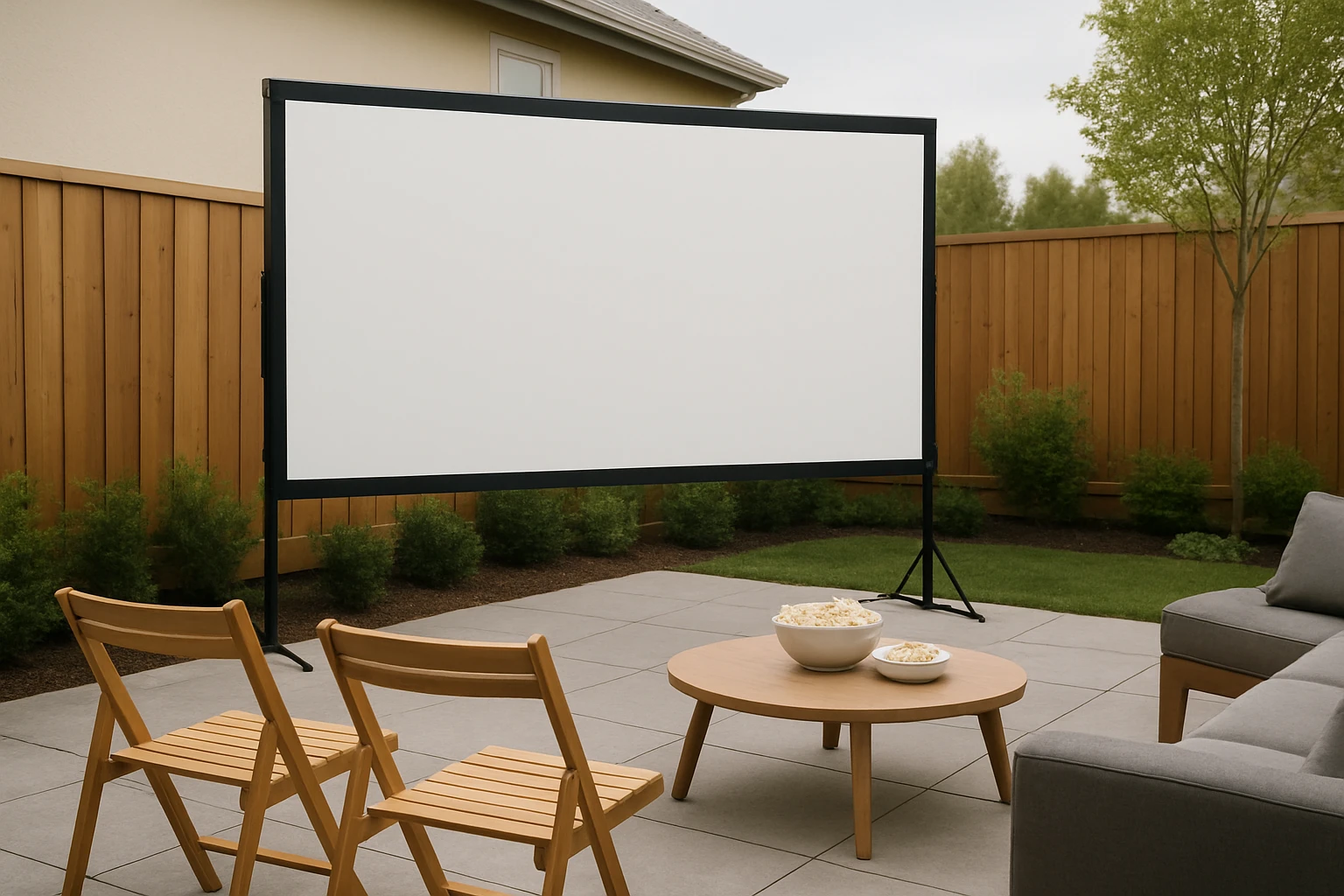
Backyard movie nights have become a popular way to enjoy cinema outside the traditional theater environment. This guide explains when a permit is required for recurring screenings, outlines the legal framework that governs outdoor entertainment, and recommends equipment that supports compliance while delivering high‑quality viewing experiences. Readers will learn how to assess local regulations, mitigate safety risks, and select the most suitable projector and screen for their specific circumstances.
By the end of this article, one will be able to determine whether a permit is necessary, understand the steps to obtain one, and implement best practices that protect both the host and the neighborhood. The information is based on common municipal codes and reflects the experiences of homeowners who have hosted multiple events.
The guide also integrates product recommendations that enhance the viewing experience without violating local statutes. Each recommendation is linked to a verified Amazon listing and includes key specifications, user ratings, and price points.
All advice is presented in a professional tone and is intended for readers who possess an intermediate understanding of home entertainment technology.
Background and Context
Municipalities regulate outdoor gatherings primarily to address noise, traffic, and public safety concerns. Permit requirements vary widely, ranging from a simple notification to a formal application that includes a site plan, insurance proof, and a fee schedule. In many jurisdictions, a one‑time event may be exempt, while a series of weekly screenings often triggers a recurring use permit.
Key concepts include zoning classifications (residential, mixed‑use, commercial), occupancy limits, and acceptable decibel levels after certain hours. Homeowners must also consider homeowners association (HOA) rules, which can impose stricter standards than municipal codes.
Understanding these frameworks before purchasing equipment prevents costly retrofits and legal disputes. It also ensures that the chosen projector and screen are suitable for the intended location, whether that is a shaded patio, a backyard with ambient light, or a portable setup for community events.
Compliance does not preclude creativity; rather, it provides a structured environment in which high‑quality entertainment can thrive.
Understanding Permit Requirements
Most cities define a “public entertainment” activity as any event that draws an audience beyond the immediate household. When the activity occurs more than three times per year, local authorities typically require a permit. The application process often includes a description of the equipment, projected audience size, and noise mitigation measures.
For example, a homeowner in a suburban district may need to submit a temporary use permit if the screenings exceed 50 attendees per event. The permit may stipulate a maximum sound level of 55 dB after 10 p.m., require directional speakers, and demand that the screen be positioned at least ten feet from the property line.
It is advisable to contact the planning department early in the planning stage. Many offices provide a checklist that outlines required documentation, such as a site layout diagram, proof of liability insurance, and a copy of the HOA covenant if applicable.
Failure to obtain a required permit can result in fines, cease‑and‑desist orders, or even the revocation of the right to use outdoor spaces for entertainment.
Zoning, Noise, and Safety Considerations
Zoning ordinances dictate where a screen may be erected. Residential zones often limit the height of temporary structures to eight feet and prohibit permanent installations without a building permit. Portable screens that can be disassembled after each event usually satisfy these requirements.
Noise ordinances are enforced through decibel monitoring. To remain compliant, hosts should use speakers with volume‑limiting features or place speakers away from neighboring properties. Directional speakers that focus sound toward the audience reduce spillover and help meet legal thresholds.
Safety is another critical factor. Electrical cords must be rated for outdoor use, and all equipment should be grounded. Fire safety considerations include keeping the projector at a safe distance from flammable materials and ensuring that any inflatable screen is anchored securely to prevent wind damage.
These considerations align with the features of several products highlighted later in this guide, which offer built‑in safety mechanisms and low‑noise operation.
Choosing the Right Projection Equipment
Selecting equipment that balances performance with regulatory compliance is essential. The following products have been identified for their ability to deliver high‑definition images while incorporating safety and noise‑reduction features.
Roconia 1080P Projector provides native 1080p resolution, 18,000 lumens brightness, and dual‑band 5G Wi‑Fi for low‑latency streaming. Its built‑in Hi‑Fi stereo speakers reduce the need for external amplification, thereby lowering ambient noise levels. The device is rated 4.4 out of 5 stars by more than one thousand reviewers and is priced at $105.27.
HAPPRUN Mini Projector offers native 1080p resolution in a compact form factor that fits easily into a backpack. Bluetooth 5.1 connectivity allows the use of external speakers only when higher volume is required, which helps maintain compliance with local noise ordinances. This projector is priced at $84.95 and holds a 4.4‑star rating from over thirteen thousand customers.
For screen selection, the TOWOND 150‑Inch Screen provides a portable, wrinkle‑free surface that supports both front and rear projection. Its lightweight aluminum stand can be assembled without tools in under two minutes, reducing setup time and minimizing disruption to neighbors. The screen costs $99.99 and carries a 4.3‑star rating.
The TOWOND 120‑Inch Screen offers a smaller footprint for tighter yards while still delivering a 4K‑compatible viewing surface. Its reinforced base improves stability in windy conditions, which is important for safety compliance. Priced at $59.98, it enjoys a 4.6‑star rating from nearly two hundred reviewers.
Finally, the CZGBRO Inflatable Screen delivers a 14‑foot diagonal display that inflates in under three minutes using a low‑noise blower. The inflatable design eliminates the need for a permanent frame, making it ideal for temporary events that require quick installation and removal. This product is listed for $82.99 and has a 4.5‑star rating.
Comparison and Selection Guide
| Feature | Roconia 1080P Projector | HAPPRUN Mini Projector | TOWOND 150‑Inch Screen | TOWOND 120‑Inch Screen | CZGBRO Inflatable Screen |
|---|---|---|---|---|---|
| Resolution | Native 1080p | Native 1080p | 4K‑compatible (150") | 4K‑compatible (120") | HD (14 ft) |
| Brightness (lumens) | 18,000 | Not specified (suitable for dark rooms) | Not applicable | Not applicable | Not applicable |
| Built‑in Speakers | Dual Hi‑Fi stereo | Hi‑Fi stereo | None (requires external) | None | None |
| Portability | Medium (includes screen) | High (backpack size) | Medium (foldable stand) | High (lightweight stand) | High (inflatable) |
| Price (USD) | 105.27 | 84.95 | 99.99 | 59.98 | 82.99 |
| Amazon Rating | 4.4/5 | 4.4/5 | 4.3/5 | 4.6/5 | 4.5/5 |
When selecting a system, consider the size of the viewing area, ambient light conditions, and the need for portability. For a permanent backyard setup with moderate ambient light, the Roconia projector paired with the TOWOND 150‑Inch Screen offers the brightest image and the largest display. For renters or those with limited storage, the HAPPRUN Mini Projector combined with the TOWOND 120‑Inch Screen delivers excellent image quality while occupying minimal space.
In windy climates, the inflatable screen provides the quickest deployment and the most robust wind resistance when anchored correctly. However, it requires a power source for the blower, which may affect noise compliance if not managed properly.
Best Practices and Tips for Legal Backyard Screenings
- Check local ordinances at least six weeks before the first event to determine whether a permit is required.
- Maintain a written log of each screening, including date, time, attendance, and noise measurements, to demonstrate compliance if questioned.
- Use directional speakers and set volume limits to stay within decibel restrictions after designated quiet hours.
- Secure all cables with outdoor‑rated conduit and ground the projector to prevent electrical hazards.
- Anchor inflatable or frame screens with rope or sandbags, especially in breezy conditions, to avoid accidental collapse.
- Provide clear signage that indicates the event is a private gathering and includes emergency contact information.
- Consider obtaining general liability insurance that covers outdoor entertainment; many municipalities require proof of coverage with the permit application.
Implementing these measures not only satisfies legal requirements but also enhances the overall safety and enjoyment of the event. Hosts who proactively address potential issues are more likely to receive positive feedback from neighbors and local officials.
Frequently Asked Questions
- Do I need a permit for a single backyard movie night? In most jurisdictions, a one‑time event with fewer than ten attendees does not require a permit, but it is advisable to verify local rules.
- What is the typical noise limit for outdoor events? Many municipalities enforce a maximum of 55 dB after 10 p.m.; however, limits can range from 50 dB to 65 dB depending on the district.
- Can I use a projector with built‑in speakers without a permit? Yes, provided the sound level remains within the allowed decibel range and the event does not exceed the permitted number of occurrences.
- How far should the screen be from the property line? A minimum distance of ten feet is common, but some cities require twenty feet for larger screens or higher brightness levels.
- Is liability insurance mandatory? While not universally required, many permit applications ask for proof of general liability coverage to protect against accidents.
- Do HOA rules supersede city ordinances? HOA regulations can be more restrictive; therefore, both sets of rules must be reviewed before planning an event.
- What is the best way to anchor an inflatable screen? Use the supplied D‑rings with sturdy rope or sandbags, and ensure the anchoring points are firmly grounded.
Conclusion
Recurring backyard screenings can be a rewarding way to share entertainment with family and friends, but they must be organized within the framework of local permits, zoning laws, and safety standards. By conducting early research, obtaining necessary approvals, and selecting equipment that supports low‑noise, portable, and safe operation, hosts can enjoy cinematic experiences without legal complications.
The products highlighted in this guide—Roconia 1080P Projector, HAPPRUN Mini Projector, TOWOND 150‑Inch Screen, TOWOND 120‑Inch Screen, and CZGBRO Inflatable Screen—offer a range of solutions that align with these requirements. Selecting the appropriate combination based on venue size, budget, and regulatory constraints will ensure a successful and compliant backyard movie night.
Adhering to best practices, maintaining documentation, and fostering good relationships with neighbors will further reduce the likelihood of disputes and create a welcoming environment for future gatherings.
Products Featured in This Guide
Roconia 1080P Projector
Price: $105.27 | Rating: 4.4/5 (1,148 reviews)
Featured because it delivers native 1080p resolution, high brightness, and built‑in Hi‑Fi speakers, which help meet noise regulations while providing a large, clear image.
HAPPRUN Mini Projector
Price: $84.95 | Rating: 4.4/5 (13,128 reviews)
Featured for its compact size, Bluetooth 5.1 connectivity, and portable design, making it ideal for temporary or frequent backyard events.
TOWOND 150‑Inch Screen
Price: $99.99 | Rating: 4.3/5 (2,179 reviews)
Featured because it provides a large, wrinkle‑free surface that supports both front and rear projection, and its lightweight stand enables quick setup and removal.
TOWOND 120‑Inch Screen
Price: $59.98 | Rating: 4.6/5 (192 reviews)
Featured for its compact size, reinforced base, and wrinkle‑free polyester surface, which together provide a stable viewing area for smaller backyards.
CZGBRO Inflatable Screen
Price: $82.99 | Rating: 4.5/5 (716 reviews)
Featured because it inflates quickly, provides a large 14‑foot display, and can be anchored for outdoor use, making it suitable for temporary events that require rapid deployment.