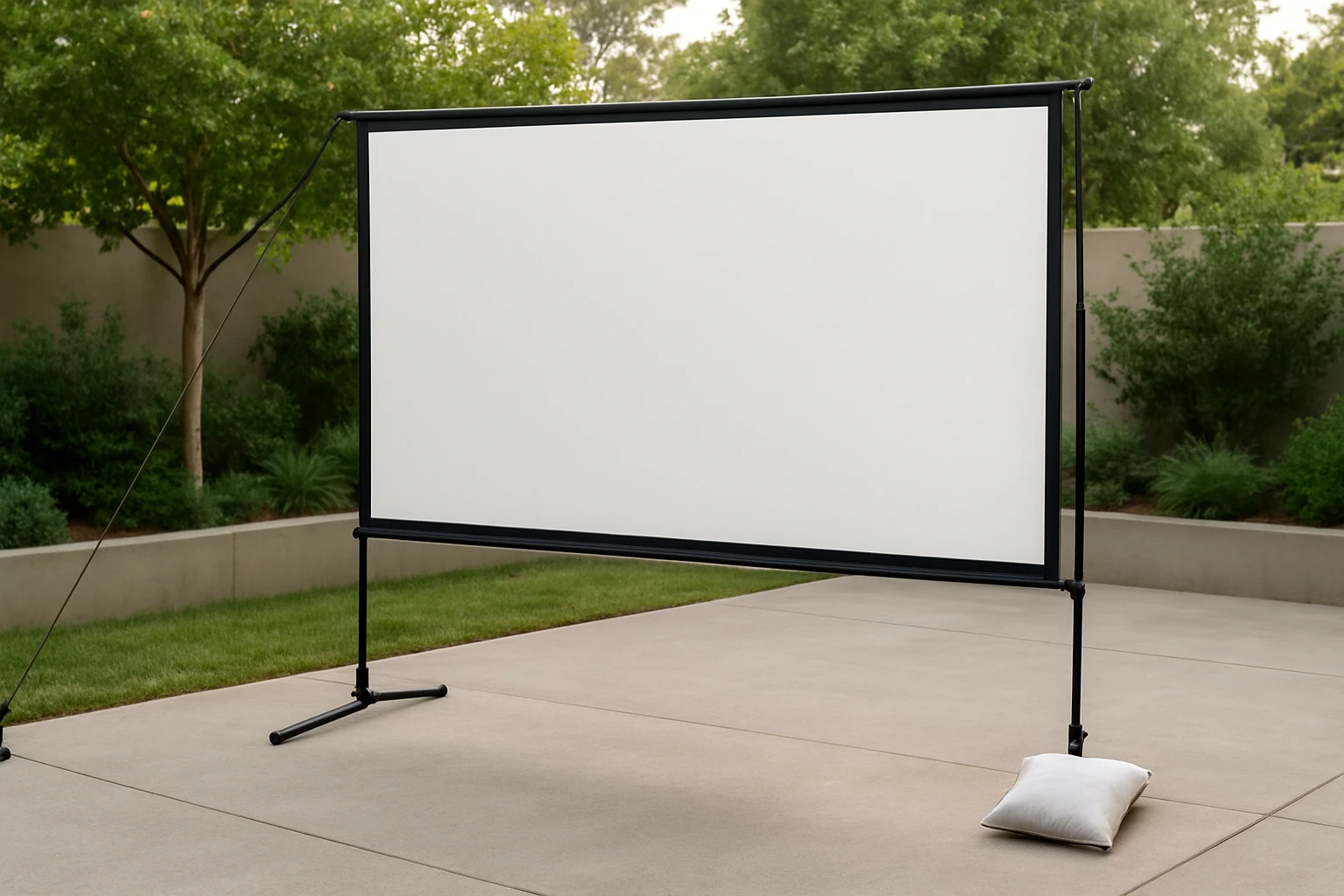
Introduction
Outdoor movie nights create memorable experiences, but wind can quickly turn a cinematic evening into a frustrating struggle. This guide teaches readers how to anchor a portable outdoor projector screen securely when gusts arise, ensuring a stable viewing surface for every gathering. The methods presented combine simple household items with purpose‑built tools, allowing anyone to protect their investment without extensive construction. By following these steps, one will enjoy crisp images, uninterrupted playback, and peace of mind even on breezy evenings.
What You'll Need
- Portable projector screen (e.g., STWUI 120” Outdoor Projector Screen or TOWOND 120” Portable Projector Screen)
- Ground stakes or nails (included with the TOWOND screen)
- Heavy‑duty sandbags or water‑filled bags
- UV‑resistant rope or bungee cords
- Adjustable tripod or sturdy frame (the TOWOND tripod is lightweight and detachable)
- Measuring tape, hammer or mallet, and a level
1. Choose a Level, Sheltered Location
Begin by selecting a flat area that is naturally shielded from prevailing winds, such as behind a fence, a garden wall, or a row of trees. Use a level to confirm that the ground is even; an uneven surface can cause the screen frame to wobble, amplifying wind effects. Position the screen so that the windward side faces the smallest possible opening, reducing direct pressure on the surface. This initial decision minimizes the amount of additional anchoring required later.
2. Secure the Base with Ground Stakes
Most portable screens include a chassis with pre‑drilled holes for anchoring. Insert ground stakes through these holes and drive them into the soil at a 45-degree angle, pointing away from the screen. The TOWOND 120” Portable Projector Screen supplies six ground nails, making this step straightforward. Stakes provide a mechanical lock that resists uplift forces, preventing the frame from tipping when gusts arise.
3. Add Weighted Sandbags for Extra Stability
Place sandbags or water‑filled bags at each corner of the screen frame and, if possible, along the central support bar. Each bag should weigh at least 10 lb (4.5 kg) to counteract lateral forces. The weight distribution creates a low center of gravity, making it harder for wind to lift the screen. Sandbags are inexpensive, reusable, and can be stacked to increase stability as wind speeds rise.
4. Tension the Frame with Rope or Bungee Cords
Thread UV‑resistant rope through the frame’s built‑in eyelets, then anchor the rope to sturdy objects such as garden posts, trees, or the ground stakes themselves. Tighten the rope until the screen surface is taut but not overstretched; excessive tension may cause the material to rip. The TOWOND screen includes velcro straps and rope, allowing quick attachment without additional hardware. Proper tension distributes wind load evenly across the frame, reducing stress on any single point.
5. Use a Portable Tripod to Raise the Center
Elevating the screen’s central bar with a tripod adds vertical rigidity. The lightweight, detachable tripod that ships with the TOWOND 120” Portable Projector Screen is engineered for both indoor and outdoor use, and its all‑metal construction withstands moderate wind. Position the tripod in the middle of the screen, secure the crossbar, and verify that the height aligns with the screen’s top edge. This central support prevents sagging and helps the frame resist sideways motion.
6. Create a Simple Windbreak Fence
If the chosen site lacks natural protection, construct a temporary windbreak using plywood panels, garden fencing, or even a row of large potted plants. Space the barrier at least three feet from the screen to allow airflow while diffusing wind pressure. A windbreak reduces the effective wind speed hitting the screen by up to 50 percent, dramatically lowering the anchoring load. Ensure the fence is securely anchored itself, otherwise it may become a projectile in strong gusts.
7. Test Stability Before the Show
After all anchoring measures are in place, perform a manual shake test. Grasp the frame at several points and apply a firm push; the screen should resist movement and return to its original position without wobbling. If any component feels loose, tighten ropes, add another sandbag, or drive stakes deeper. Conduct this verification at least 15 minutes before the movie begins, allowing time to make adjustments while the wind is still calm.
Tips & Pro Tips
- Check the weather forecast; postponing a screening when wind exceeds 15 mph can protect equipment.
- Use a laser level to align the screen perfectly horizontal; uneven tension can create pockets where wind catches.
- Apply a water‑resistant spray to the screen material before use; this prevents moisture absorption that can add weight and cause sag.
- For large gatherings, consider a double‑layer screen (front and rear projection) to distribute wind load across two surfaces.
- Store ground stakes in a dry container to prevent rust, ensuring they remain reliable for future events.
Troubleshooting
Problem: The screen flutters despite anchors.
Solution: Increase sandbag weight, add additional rope lines, and verify that stakes are driven at the correct angle. If the wind is consistently strong, relocate the screen to a more sheltered spot.
Problem: The frame collapses when the wind picks up suddenly.
Solution: Reinforce the central support with a second tripod or a sturdy wooden pole. Ensure that all connection points are locked using the metal brackets supplied with the STWUI or TOWOND models.
Conclusion
Anchoring a portable outdoor projector screen against wind does not require professional contractors; a combination of ground stakes, weighted sandbags, tension cords, and a central tripod provides reliable stability. By selecting a sheltered location, using the appropriate anchoring tools, and testing the setup before the show, one can enjoy uninterrupted cinematic evenings regardless of breezy conditions. Implement these seven methods, and future outdoor movie nights will be both safe and spectacular.
Products Mentioned in This Guide
Frequently Asked Questions
How can I keep a portable outdoor projector screen from blowing away in wind?
Secure the screen with ground stakes or heavy‑duty sandbags and reinforce the frame using UV‑resistant rope or bungee cords.
What anchoring options work if my screen doesn’t include ground stakes?
Use weighted sandbags or water‑filled bags tied to the screen’s corners, or attach a portable tripod with built‑in anchor points.
Can sandbags replace stakes, and how many should I use?
Yes; typically two 10‑lb sandbags per corner (four total) provide enough weight for moderate breezes.
How do I properly attach rope or bungee cords to the screen frame?
Loop the cord around the frame’s grommets, pull tight, and knot or clip it to a stake or bag to eliminate slack.
What maintenance should I do on anchors and sandbags after each use?
Dry and store sandbags in a sealed container, and inspect stakes for rust or bends before the next event.