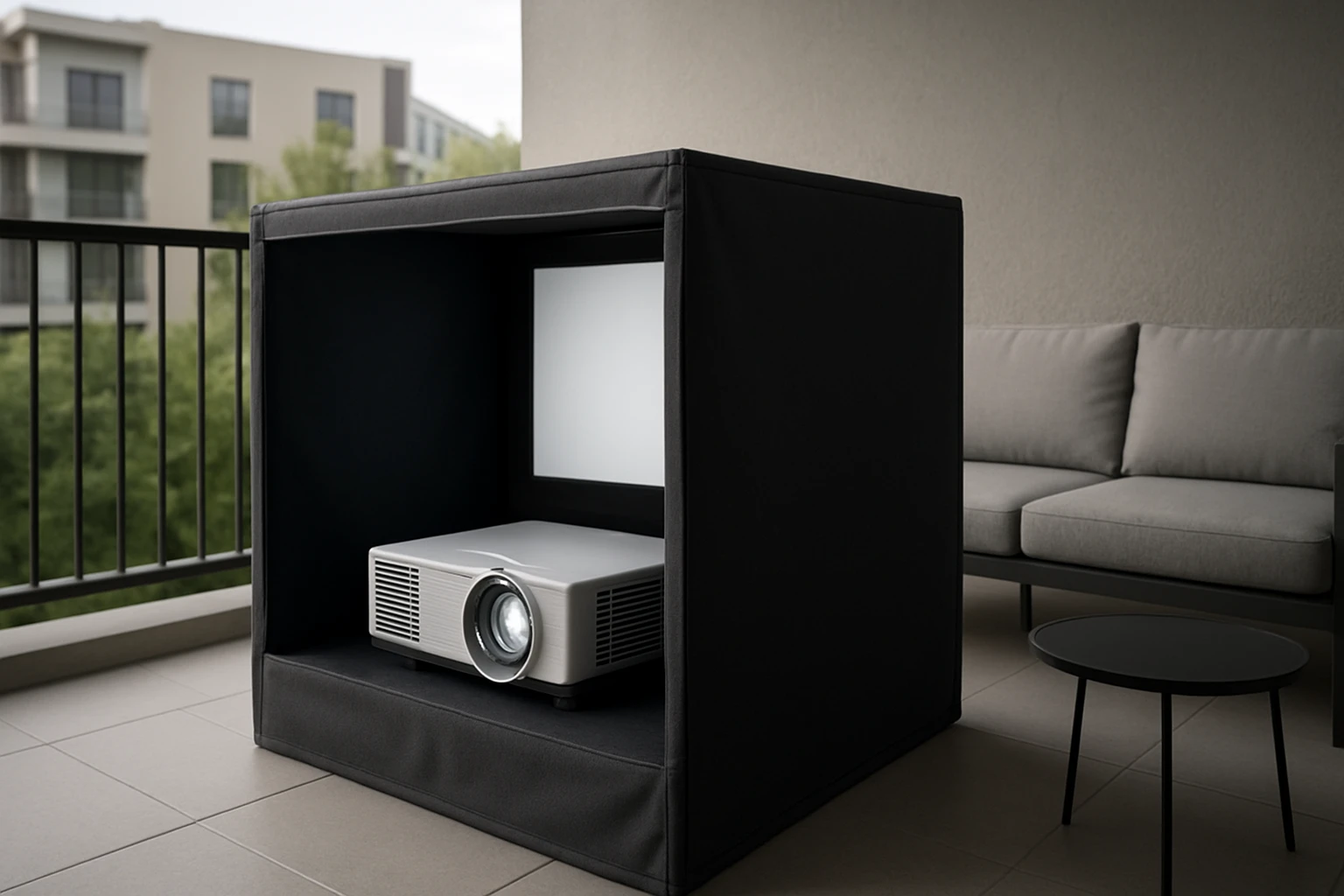
How to Build a DIY Blackout Enclosure for Your Balcony Projector — Step‑by‑Step Guide
Introduction
In this guide the reader will learn how to construct a portable, light‑tight enclosure that transforms a balcony into a home‑theater space. The solution combines a projector screen, blackout curtains, and a simple frame to achieve cinema‑quality darkness even in bright outdoor environments. By following each step one can enjoy movies, presentations, or gaming without compromising on image clarity or ambient light control. The guide is designed for an intermediate audience that possesses basic DIY skills and access to common tools.
What You’ll Need
- Mdbebbron 120‑inch Projector Screen – $25.98, 4.4 stars (35,256 reviews)
- STWUI 120‑inch Projector Screen with Stand – $66.46, 4.4 stars (1,198 reviews)
- Joydeco Burgundy Patio Blackout Curtain – $25.19, 4.7 stars (2,535 reviews)
- LEMOMO Red Blackout Curtains – $26.99, 4.6 stars (49,994 reviews)
- Light‑weight aluminum or PVC pipe (1‑inch diameter) – 4 pieces, 8 ft each
- Corner brackets, screws, and a drill
- Measuring tape, level, and pencil
- Heavy‑duty double‑sided tape or adhesive hooks
Step 1 – Measure and Plan the Enclosure
The first task is to determine the exact dimensions of the balcony area that will host the projector and screen. One should measure the width, height, and depth, then add a margin of ten percent to accommodate framing material. Recording these numbers on paper ensures that the selected screen and curtains will fit without excessive tension. For most balconies a 120‑inch diagonal screen provides a viewing area of roughly 104 in × 58 in, which aligns well with a standard balcony width of eight to nine feet.
At this stage the builder decides whether to use a freestanding frame or to attach the screen directly to a wall. A freestanding frame offers flexibility and can be disassembled for storage, while a wall‑mounted solution saves floor space. The decision influences which of the two projector screens will be most appropriate.
Step 2 – Build the Frame
Using the measured dimensions, cut the aluminum or PVC pipe to create a rectangular perimeter that matches the screen’s 104‑inch width and 58‑inch height. One should cut two vertical pieces slightly longer than the height to allow for a secure attachment to the balcony railing or wall studs. Connect the pieces with corner brackets and tighten with screws, ensuring that the frame is square by checking with a level.
The frame acts as a rigid backbone for both the screen and the blackout curtains. A sturdy frame prevents sagging, which can cause image distortion. If the balcony has a railing, the vertical members can be anchored with zip ties or clamps, providing additional stability without drilling into the structure.
Step 3 – Install the Projector Screen
For a lightweight, portable solution the Mdbebbron 120‑inch Projector Screen is ideal. This screen folds flat, weighs only a few pounds, and includes hooks, ropes, and double‑sided tape for easy installation. The anti‑crease polyester fabric delivers a sharp, bright image, and the screen’s double‑sided design permits flexibility in mounting orientation.
Attach the screen to the top edge of the frame using the supplied hooks and rope. The rope can be tied to the upper horizontal pipe, creating a taut surface that remains wrinkle‑free. The included double‑sided tape can reinforce the attachment points on the frame, preventing slippage during use. The screen’s price of $25.98 and rating of 4.4 stars make it a cost‑effective choice compared with fixed, motorized alternatives.
If a more permanent, stand‑alone configuration is desired, the STWUI 120‑inch Projector Screen with Stand provides a lightweight metal frame that folds into a carry bag. The stand includes pre‑drilled holes for quick assembly and can be positioned directly on the balcony floor, eliminating the need for wall mounting. At $66.46 it offers added convenience for users who anticipate frequent relocation of the enclosure.
Step 4 – Hang the Blackout Curtains
To achieve a true blackout environment the builder should drape heavy, light‑blocking curtains over the frame. The Joydeco Burgundy Patio Blackout Curtain is a single panel measuring 84 inches in length, sufficient to cover the top and sides of the screen when gathered with a rod. Its polyester fabric blocks more than 75 % of sunlight and the rust‑proof grommets simplify hanging on a curtain rod or directly on the frame’s upper pipe.
Install a thin metal rod or sturdy cord along the top edge of the frame, then thread the curtain through the grommets. Pull the fabric tight and secure the ends with double‑sided tape to eliminate light leaks. The curtain’s price of $25.19 and high rating of 4.7 stars indicate strong performance for its price point.
For a more decorative or color‑coordinated option, the LEMOMO Red Blackout Curtains come in a set of two panels, each 84 inches long. The triple‑weave construction blocks up to 99 % of light, providing superior darkness for daytime viewing. The bright red hue can add a visual accent to the balcony while still delivering thermal insulation. At $26.99 the set offers excellent value, especially for users who wish to cover both sides of the screen.
Step 5 – Seal Light Gaps and Test the Setup
After the curtains are in place, inspect the perimeter for any remaining light gaps. Use heavy‑duty double‑sided tape or additional strips of blackout fabric to seal the edges where the curtains meet the frame. Even small gaps can reduce contrast and affect image quality, particularly when projecting in bright daylight.
Position the projector at a suitable distance from the screen, typically 1.5 to 2 times the screen width for a 1080p source. Adjust focus and keystone settings until the image fills the screen uniformly. Conduct a brief test by playing a high‑contrast video clip; observe any residual light spill and address it before the first movie night.
Tips & Pro Tips
- Use a hair dryer on low heat to gently relax any minor wrinkles in the screen fabric before final mounting.
- Apply a weather‑proof sealant to the frame’s lower corners if the balcony is exposed to rain, protecting the screen and curtains from moisture.
- Store the Mdbebbron screen folded inside a backpack when not in use; its compact design prevents damage.
- For optimal sound, position a portable Bluetooth speaker behind the screen, using the curtain’s thickness to dampen echo.
- If the balcony railing interferes with the frame, consider using adjustable pipe clamps that can slide along the railing without drilling.
Troubleshooting
Problem: Screen appears dim or washed out.
Solution: Verify that the curtains are fully closed and that no light leaks exist around the sides. Increase the distance between projector and screen slightly, or raise the projector’s brightness setting.
Problem: Curtains sag and create pockets of light.
Solution: Tighten the curtain rod or replace the rope with a sturdier cord. Adding additional grommets or using a tension wire can keep the fabric taut.
Problem: Frame wobbles due to wind.
Solution: Anchor the vertical pipes to the balcony railing with zip ties and add sandbags at the base of the frame for extra weight.
Conclusion
The reader now possesses a complete, step‑by‑step method for constructing a DIY blackout enclosure that converts a balcony into a personal home‑theater. By selecting the appropriate projector screen, employing high‑quality blackout curtains, and building a simple yet sturdy frame, one can enjoy cinema‑grade darkness in an outdoor setting. The guide emphasizes practical techniques, safety considerations, and cost‑effective product choices, empowering the reader to implement the solution without professional assistance.
Products Mentioned in This Guide
Frequently Asked Questions
What materials do I need to build a DIY blackout enclosure for a balcony projector?
You’ll need a 120‑inch projector screen, blackout curtains, a lightweight frame (wood or PVC), fasteners, and basic tools like a drill and measuring tape.
How can I make the enclosure completely light‑tight?
Overlap the curtains on all sides, seal any gaps with Velcro or magnetic strips, and tuck the screen edges into the frame to prevent light leaks.
Is the enclosure portable and easy to store when not in use?
Yes, using a modular frame and removable curtains lets you disassemble and fold the enclosure for compact storage or seasonal removal.
What screen size is optimal for a typical balcony setup?
A 120‑inch screen balances image size and viewing distance for most balcony dimensions while remaining manageable to install.
Why does a blackout enclosure improve image quality outdoors?
By blocking ambient light, it boosts contrast and perceived brightness, delivering clearer, cinema‑like visuals even in bright conditions.