Introduction
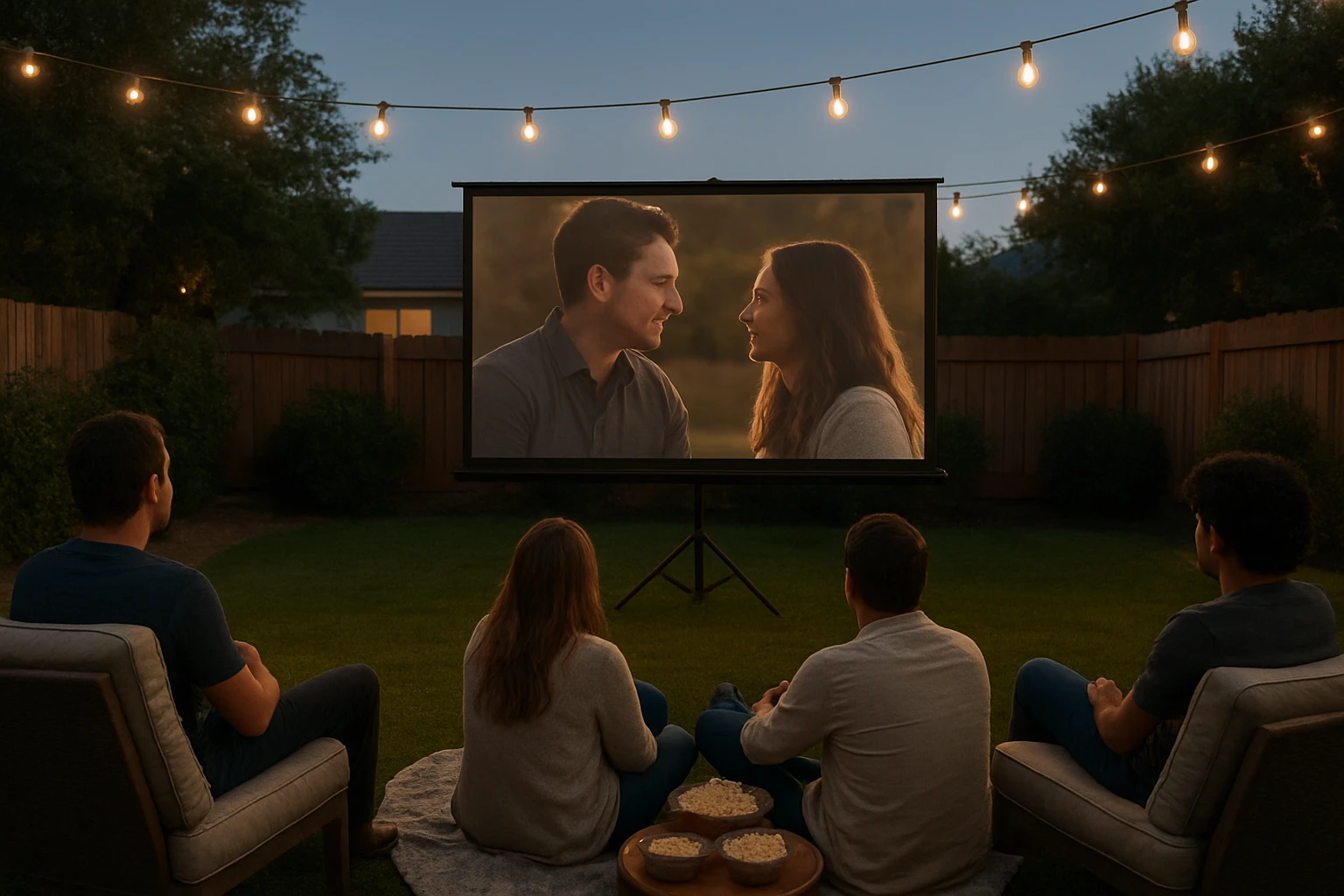
This guide explains how to host a backyard movie night while complying with public performance rights. Readers will learn the legal framework, licensing sources, and practical steps to secure permission. The article also recommends high‑quality projection screens that enhance the viewing experience without compromising compliance. By the end of the guide, one will be able to plan, promote, and execute an outdoor film screening that respects copyright law and delivers professional‑grade entertainment.
Background and Context
Public performance rights protect the exclusive right of copyright owners to display their works to an audience outside the private home. When a film is shown in a backyard, the event is considered a public performance because the audience is not limited to a single household. In the United States, the Copyright Act grants these rights to the copyright holder, and any unlicensed exhibition may constitute infringement.
Licensing agencies such as Swank Motion Pictures, Movie Licensing USA, and Criterion Pictures represent studios and independent filmmakers. They issue blanket licenses that cover multiple titles or provide per‑title permissions for a specific event. Obtaining a license typically involves providing event details, audience size, and venue information, after which a fee is calculated based on factors such as the film’s popularity and the number of attendees.
Understanding the distinction between private and public use is essential. A family watching a DVD on a personal television does not require a license, whereas a community gathering of ten or more people does. Local municipalities may also require permits for amplified sound or temporary structures, so organizers should consult city ordinances before setting up equipment.
Key Legal Concepts and Licensing Strategies
First, identify the copyright holder of the desired film. Major studios often route requests through Swank Motion Pictures, while independent titles may be handled directly by the filmmaker or a smaller agency. Second, determine the scope of the performance: is it a single screening, a series, or a recurring event? A single screening usually incurs a lower fee, whereas a series may benefit from a blanket license that offers cost savings.
Third, calculate the audience size. Many licensing agreements set thresholds; for example, a fee schedule might differentiate between audiences of 10‑30, 31‑100, and over 100 viewers. Fourth, submit a licensing request well in advance of the event. Agencies often require at least two weeks for processing, and some require proof of insurance or a signed indemnity agreement.
Finally, retain documentation of the license. A copy of the agreement, receipt of payment, and any correspondence should be kept on file in case of an audit. Displaying a brief notice at the event, such as "Film licensed by Swank Motion Pictures," demonstrates good faith and transparency.
Equipment Recommendations for Legal Outdoor Screenings
Choosing the right projection screen can influence both image quality and the perceived professionalism of the event. The following products are selected for their ease of setup, durability, and compatibility with a range of projectors.
The STWUI 120‑inch Projector Screen offers a lightweight, portable frame with a wrinkle‑free milk‑silk surface. Its 16:9 aspect ratio and 160° viewing angle provide clear images even in partially lit environments. The screen folds into a compact bag measuring 7.8 × 17.7 in, making transport to a backyard straightforward. With a rating of 4.4/5 from 1,217 reviewers and a price of $66.46, it balances affordability with performance.
The Mdbebbron 120‑inch Foldable Screen is an ultra‑lightweight option that folds into a backpack‑size package. Constructed from anti‑crease polyester, it resists wrinkles and delivers bright, sharp images. Installation requires only hooks, ropes, or double‑sided tape, which is ideal for venues without permanent mounting points. At $22.99 and a rating of 4.5/5 from over 35,000 reviews, it is the most economical choice for occasional gatherings.
The LVAOSTT 16FT Inflatable Screen provides a dramatically larger viewing area of 5.84 ft × 10.36 ft. Its inflatable design inflates in 2–4 minutes and supports both front and rear projection, allowing flexibility in projector placement. The 210D oxford cloth construction ensures durability against wind and weather. Priced at $88.99 with a 4.6/5 rating from 518 reviewers, it suits larger audiences and community events.
The TOWOND 150‑inch Screen with Stand expands the viewing surface to 150 inches, delivering an immersive cinematic experience. The stand folds without tools, and the entire unit weighs 11.5 lb, making it portable despite its size. Its anti‑crease polyester fiber and 160° viewing angle support high‑definition content. At $99.98 and a 4.3/5 rating from 2,184 reviewers, it is a premium option for larger backyard venues.
The CPLIRIS 120‑inch Screen with Stand combines a sturdy metal chassis with a three‑pocket, wrinkle‑free polyester milk‑silk surface. The chassis includes weighted extensions and ground nails for stability on uneven ground. Weighing only 9.5 lb, it remains highly portable. With a rating of 4.4/5 from 769 reviews and a price of $52.99, it offers a balanced blend of durability and cost‑effectiveness.
Comparison and Selection Guide
| Feature | STWUI 120‑inch | Mdbebbron 120‑inch | LVAOSTT 16FT Inflatable | TOWOND 150‑inch | CPLIRIS 120‑inch |
|---|---|---|---|---|---|
| Price (USD) | 66.46 | 22.99 | 88.99 | 99.98 | 52.99 |
| Screen Material | Milk silk (wrinkle‑free) | Polyester (anti‑crease) | 210D Oxford cloth | Polyester fiber | Polyester milk silk (3‑pocket) |
| Size (Diagonal) | 120 in | 120 in | 16 ft (≈192 in) | 150 in | 120 in |
| Portability | Fits bag 7.8×17.7 in | Backpack‑size fold | Inflatable with bag | Foldable stand, 11.5 lb | One‑piece fold, 9.5 lb |
| Setup Time | ~3 minutes | ~5 minutes | 2‑4 minutes inflate | ~2 minutes | ~3 minutes |
| Ratings | 4.4/5 (1,217) | 4.5/5 (35,412) | 4.6/5 (518) | 4.3/5 (2,184) | 4.4/5 (769) |
When selecting a screen, consider audience size, venue layout, and budget. For small gatherings of 10‑30 people, the Mdbebbron model provides sufficient image quality at minimal cost. For larger events where a cinematic impact is desired, the TOWOND 150‑inch screen or the LVAOSTT inflatable screen deliver the necessary visual magnitude. The STWUI and CPLIRIS models occupy a middle ground, offering professional‑grade surfaces with easy transport.
Best Practices and Tips for a Successful Backyard Screening
Secure the necessary public performance license at least two weeks before the event. Keep a digital copy of the license on a mobile device for quick reference. Obtain any required municipal permits for amplified sound and temporary structures, and verify noise ordinances to avoid complaints.
Choose a flat, level surface for the screen. If the ground is uneven, use the ground nails and ropes provided with the STWUI or CPLIRIS screens to anchor the chassis securely. For inflatable screens, ensure the base is anchored with the supplied spikes to prevent movement in windy conditions.
Position the projector at a distance that matches the screen’s throw ratio. Most consumer projectors recommend a distance of 10‑15 feet for a 120‑inch screen. Verify focus and keystone correction before the audience arrives. Use a portable power source, such as a quiet inverter or generator, to avoid power interruptions.
Provide comfortable seating with blankets, lawn chairs, or portable sofas. Offer refreshments in a designated area to keep foot traffic away from the screen and projector. Finally, display a brief notice indicating that the film is licensed, reinforcing the legal compliance of the event.
Frequently Asked Questions
- Do I need a license to show a movie to my family in the backyard? If the audience is limited to members of a single household, a license is not required. However, once the gathering includes friends or neighbors beyond the household, a public performance license becomes mandatory.
- How much does a public performance license typically cost? Fees vary widely based on the film’s popularity, audience size, and licensing agency. A single screening for a small audience may cost as little as $20, while a series of popular titles for larger crowds can exceed $200 per event.
- Can I use a streaming service like Netflix for a backyard screening? Streaming platforms grant only private, personal use rights. Using a Netflix stream for a public audience violates the terms of service and does not satisfy public performance requirements.
- What is the difference between front and rear projection? Front projection places the projector in front of the screen, casting light directly onto the surface. Rear projection positions the projector behind a translucent screen, allowing viewers to stand in front without obstruction. Some screens, such as the LVAOSTT inflatable model, support both configurations.
- Do I need to worry about copyright for short film clips? Even brief excerpts are protected by copyright. Unless the clip falls under a specific exemption, such as fair use—which is a complex legal analysis—a license is required for public exhibition.
Conclusion
Hosting a backyard movie night can be a rewarding community activity when it is conducted within the bounds of copyright law. By securing the appropriate public performance license, adhering to local regulations, and selecting a suitable projection screen, organizers can deliver a memorable cinematic experience without legal risk. The equipment recommendations provided balance cost, portability, and image quality, enabling hosts to tailor their setup to the size and scope of the event.
Products Featured in This Guide
STWUI 120‑inch Projector Screen
Price: $66.46 | Rating: 4.4/5 (1,217 reviews)
Featured for its lightweight frame, wrinkle‑free milk‑silk surface, and quick three‑minute setup, making it ideal for portable backyard use.
Mdbebbron 120‑inch Foldable Screen
Price: $22.99 | Rating: 4.5/5 (35,412 reviews)
Featured for its ultra‑affordable price, compact foldable design, and anti‑crease polyester material, suitable for occasional small gatherings.
LVAOSTT 16FT Inflatable Screen
Price: $88.99 | Rating: 4.6/5 (518 reviews)
Featured for its large 16‑foot format, rapid inflatable setup, and support for both front and rear projection, ideal for larger community events.
TOWOND 150‑inch Screen with Stand
Price: $99.98 | Rating: 4.3/5 (2,184 reviews)
Featured for its expansive 150‑inch diagonal, sturdy foldable stand, and anti‑crease surface, providing a cinematic experience for larger audiences.
CPLIRIS 120‑inch Screen with Stand
Price: $52.99 | Rating: 4.4/5 (769 reviews)
Featured for its robust metal chassis, three‑pocket wrinkle‑free fabric, and lightweight portability, offering a reliable solution for varied outdoor settings.